Car Computer Module Programming Irving TX: ECU, ECM & PCM Explained
2026 guide to car computer module programming in Irving TX. What ECU, ECM, PCM, BCM and TCM do, when your car needs programming, and mobile OBD costs.
Car Computer Module Programming in Irving, TX: ECU, ECM, and PCM Explained
Modern cars are computers on wheels. A vehicle built in 2026 can carry dozens of small computers, called modules or control units, that manage everything from fuel injection to your door locks. When one of those modules is replaced, fails, or loses its configuration, it usually has to be programmed before the car will run correctly again. This is the part of automotive repair most drivers have never heard of until they suddenly need it, and it is one of the core services Irving Locksmith Pros provides on-site throughout the Irving and DFW area. Call or text (817) 842-1751 and we bring the diagnostic and programming equipment to your location.
This is our pillar guide to car computer module programming. It explains, in plain English, what module programming is, the difference between the engine-side computers (ECU, ECM, PCM) and the body-and-transmission computers (BCM, TCM), when your car actually needs programming and not just a new key, and how mobile OBD programming works. As of July 2026, module work is no longer exotic; it is part of routine ownership for almost any vehicle on the road.
What Is Car Computer Module Programming?
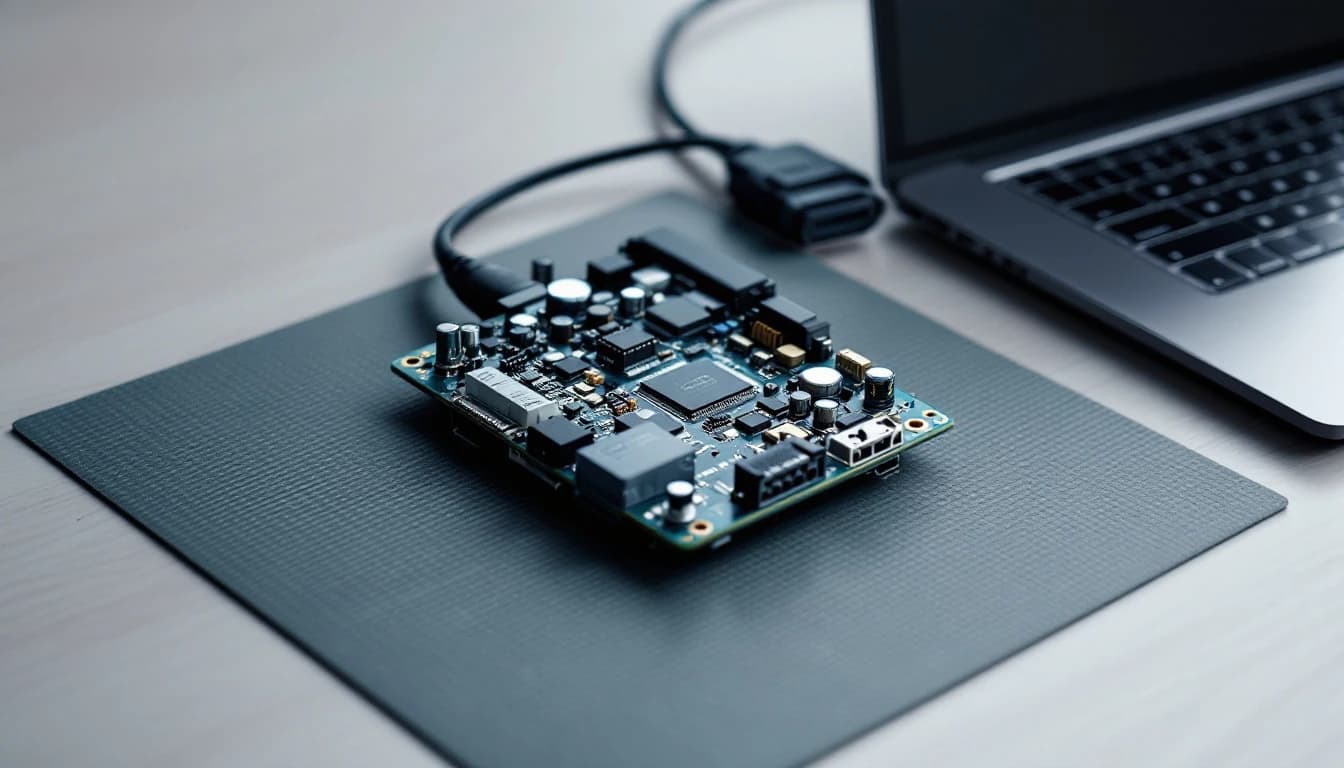
A control module is a small dedicated computer. It runs software (often called firmware) and stores configuration data specific to your vehicle: its VIN, options, calibrations, and, in the case of security modules, the codes that pair with your keys. When a module is brand-new from the parts supplier, it usually ships blank or with generic software. It does not yet know which car it belongs to.
Module programming is the process of loading the correct software and configuration into that module so it works with your specific vehicle. In the industry you will hear several overlapping terms:
- Flashing or reflashing means writing new firmware to the module, often to update or replace corrupted software.
- Programming broadly means installing the software the module needs to function.
- Coding or configuration means telling the module about the car's options and features so it behaves correctly.
- Adaptation or calibration means teaching the module the learned values it needs, such as throttle position or key data.
Most of this work is done through the vehicle's OBD-II port, a standardized diagnostic connector that every car sold in the United States has carried since 1996. The standards behind that port and the underlying communication protocols are developed by SAE International and administered in an emissions context by the U.S. Environmental Protection Agency. A technician connects a programming tool to the OBD-II port, communicates with the module, and writes the correct data. Some jobs require direct access to the module's memory chip when the OBD path is not enough, particularly on security modules.
As one NASTF-registered locksmith on our team explains it: "People think programming is one thing, but it is really a family of tasks. Sometimes we are teaching a module a new key. Sometimes we are reflashing software after a replacement. The car has to end up knowing exactly what it is and what it is connected to."
The Modules in Your Car: A Quick Map
Here is how the most common control modules break down, what each one does, and when programming enters the picture.
| Module | Full Name | What It Controls | When Programming Is Needed |
|---|---|---|---|
| ECU | Engine Control Unit | Broad term for the engine computer; sometimes used for any control unit | After replacement, reflash, or key/immobilizer work |
| ECM | Engine Control Module | Fuel, ignition timing, emissions, engine sensors | New/used ECM install, software update, immobilizer sync |
| PCM | Powertrain Control Module | Combined engine + transmission control in one unit | Replacement, reflash, VIN write, immobilizer relearn |
| TCM | Transmission Control Module | Shift points, torque converter, gear logic | Replacement or adaptation relearn after service |
| BCM | Body Control Module | Locks, lights, windows, and often key/security data | Replacement, VIN coding, key-related faults |
| Smart-key / immobilizer module | Varies by brand | Stores key codes; authorizes engine start | New keys, all-keys-lost, module replacement |
Understanding this map matters because the fix for a stalling engine, a car that will not shift, and a car that will not recognize a key are completely different jobs even though all three might trace back to "a module."
ECU, ECM, and PCM: The Engine-Side Computers
These three acronyms cause the most confusion, so let us untangle them.
ECU (Engine Control Unit) is the oldest and broadest term. Strictly, it means the computer that runs the engine. In casual use, people apply "ECU" to almost any control unit in the car, which is why you will see it used loosely. When someone says "my ECU needs programming," they usually mean the main engine computer.
ECM (Engine Control Module) is the more precise term for the engine computer. It manages fuel delivery, ignition timing, the throttle, emissions systems, and the network of engine sensors. When an ECM is replaced, it typically has to be programmed with the correct calibration for your engine and, on many vehicles, synchronized with the immobilizer so the car will start.
PCM (Powertrain Control Module) is what you get when the manufacturer combines the engine computer and the transmission computer into a single unit. Many domestic vehicles, including a lot of Ford, GM, and Stellantis (Chrysler/Dodge/Jeep/RAM) models, use a PCM rather than separate ECM and TCM units. Because the PCM controls both the engine and the transmission, programming it correctly is critical: a mismatched or unprogrammed PCM can cause no-start conditions, rough shifting, or a car that will not move at all.
The key point: whenever one of these engine-side computers is replaced, whether with a new unit or a used one from another vehicle, it almost always needs to be programmed. A used PCM pulled from a salvage car still carries the other car's VIN and configuration, and it has to be reprogrammed for yours, or in security terms, cleared and relearned. Our module repair and programming service covers exactly this kind of work on-site.
BCM and TCM: The Body and Transmission Computers
Beyond the engine, two more modules come up constantly.
BCM (Body Control Module) manages the "body" electronics: interior and exterior lighting, power windows, door locks, wipers, the horn, and often significant parts of the anti-theft and keyless-entry systems. On many vehicles the BCM stores or coordinates the key and immobilizer data. That is why a failing BCM can cause your keys to stop working even though nothing is wrong with the keys themselves. When a BCM is replaced, it typically requires VIN coding and configuration so it recognizes your car and your keys. We cover the BCM in depth in a dedicated companion article, and you can also read our overview of no key detected and immobilizer service for how security faults present.
TCM (Transmission Control Module) manages automatic transmission behavior: when to shift, how the torque converter locks up, and the logic that keeps shifts smooth. After a TCM is replaced or after certain transmission service, the module often needs an adaptation relearn so it recalibrates to your specific transmission. Skipping that step can leave you with harsh or delayed shifts.
When Does Your Car Actually Need Module Programming?
Not every problem is a programming problem, and a good technician tells you when it is not. Here are the situations where module programming genuinely enters the picture.
You replaced a module. This is the most common trigger. New and used ECM, PCM, TCM, and BCM units almost always require programming before the car runs right. A used module additionally has to be dissociated from its previous vehicle.
You need keys, and the security module is involved. Adding a key, replacing a smart key, or recovering from an all-keys-lost situation is fundamentally a programming task against the immobilizer or BCM. This is where automotive locksmithing and module programming overlap, and it is a large part of what we do. Our car key replacement and key fob programming services both rely on this kind of module access.
A module's software is corrupted or out of date. Sometimes a module's firmware needs to be reflashed to fix a bug or a known issue. This is a software rewrite rather than a hardware change.
A module failed and killed a related function. A dead or failing module can take out seemingly unrelated features. A bad BCM might disable your keys; a bad PCM might cause a no-start; a bad TCM might cause shifting problems. Diagnosis comes first, then programming or repair.
You bought a car with a known module fault. Used-car buyers sometimes inherit a module problem. We can diagnose whether the fix is a reflash, a VIN recode, or a component-level module repair.
If your only issue is a lost or broken key on a healthy vehicle, you do not need full module programming in the engine sense; you need key programming, which is a targeted security procedure. The value of a proper diagnosis is knowing which of these you are actually dealing with before you spend money.
How Mobile OBD Module Programming Works
Here is what a typical mobile module-programming visit looks like with Irving Locksmith Pros.
- Diagnosis. We connect to your OBD-II port and read the modules and fault codes. This tells us which module is involved and whether the fix is programming, repair, or replacement.
- Confirm the vehicle. We verify the VIN, year, make, model, and trim so we load the correct software and configuration. This is why we always ask for the VIN.
- Program, code, or reflash. Depending on the job, we write the correct firmware, code the module to your car, perform a VIN write, or run the immobilizer relearn so keys are recognized.
- Adaptation and relearn. Some modules, especially TCMs and certain engine calibrations, require a relearn cycle so the car adapts to the newly programmed unit.
- Verify. We clear codes, test the affected functions, and confirm the car behaves correctly before we leave.
Doing this at your location avoids towing an immobilized vehicle to a shop and avoids the multi-day wait common at dealer service departments. It does require the right tools; module programming is not a job for generic code readers, and a botched flash can brick a module. That is why the correct equipment and procedure matter, and why we confirm the vehicle before we touch anything.
What Module Programming Costs in Irving
Module programming is harder to band than a simple key because the scope varies so widely, from a quick key relearn to a full PCM replacement and reflash. What we can be honest about is the framework.
For key-and-security programming, our published bands apply: a transponder key runs about $150 to $275, a smart or proximity key runs about $300 to $500, and European luxury vehicles run about $400 to $700 because of their specialized security systems. All-keys-lost and immobilizer-module work is quoted after we read the VIN, because the time and tooling vary.
For engine, powertrain, transmission, or body module programming (ECM, PCM, TCM, BCM reflash, coding, or VIN write), the cost depends on the module, the brand, whether the unit is new or used, and how much relearning is required. We do not publish a single flat number for this because an honest quote requires knowing your exact module and vehicle. We give you an exact quote after we confirm your VIN and identify the module. If any locksmith or shop quotes complex module work sight-unseen with total confidence, treat that as a red flag; the Federal Trade Commission offers general guidance on avoiding vague or bait-and-switch service pricing.
European vehicles deserve a special note: brands like BMW, Mercedes-Benz, and Audi use particularly complex module and security architectures. If you drive one, see our European car specialists service, our BMW brand page, and our companion article on European car key programming in Irving.
Who Regulates This Work
Locksmith and vehicle-security work in Texas is regulated under the state's private security program administered by the Texas Department of Public Safety (DPS), not by any trade-licensing board unrelated to security. Secure access to manufacturer key and immobilizer data for legitimate locksmiths and repairers is coordinated through the National Automotive Service Task Force (NASTF), and the profession's standards body is the Associated Locksmiths of America (ALOA). Vehicle safety and anti-theft standards more broadly fall under the National Highway Traffic Safety Administration. We verify ownership before performing security-related module work, and we ask for photo ID, proof of ownership, and the VIN.
Frequently Asked Questions
What is the difference between ECU, ECM, and PCM?
ECU (Engine Control Unit) is a broad term for the engine computer and is sometimes used loosely for any control unit. ECM (Engine Control Module) is the more precise term for the engine computer. PCM (Powertrain Control Module) is a single unit that combines engine and transmission control, common on many domestic vehicles.
Does a new or used module always need programming?
Almost always. A new module usually ships blank or generic and must be programmed for your vehicle. A used module additionally carries the previous car's VIN and configuration, so it has to be cleared and reprogrammed for yours before the car runs correctly.
Can module programming be done at my location?
Yes. Most module programming is done through the OBD-II port, so we perform it on-site in Irving with mobile diagnostic and programming equipment. This avoids towing an immobilized vehicle and the wait at a dealer service department.
Is car key programming the same as module programming?
Key programming is a specific type of module programming that works against the immobilizer or body control module to teach the car a new key. Broader module programming can also involve the engine, powertrain, transmission, or body computers for reasons unrelated to keys.
How much does module programming cost in Irving?
Key and security programming follows set bands: about $150 to $275 for transponder keys, $300 to $500 for smart keys, and $400 to $700 for European vehicles. Engine, powertrain, transmission, or body module reflashing and coding varies by module and vehicle, so we give an exact quote after confirming your VIN and identifying the module.
Can the wrong programming damage my car?
An incorrect or interrupted flash can corrupt or brick a module, which is why the correct tools and procedure matter. Proper module programming uses the right software for your specific VIN and is verified before the job is considered complete.
Why do you always ask for my VIN?
The VIN identifies your exact vehicle, engine, and configuration, which determines the correct software and procedure for any module. Programming the wrong data can cause faults, so confirming the VIN is how we make sure the module ends up matched to your car.
Get Module Programming Done in Irving
Whether your car needs a replaced computer programmed, a corrupted module reflashed, or keys relearned to the immobilizer, Irving Locksmith Pros handles module programming on-site across Irving and the DFW area. Serving Irving and surrounding communities, we diagnose first, quote after confirming your VIN, and complete the work at your location. Call or text (817) 842-1751 or email contact@irvinglocksmithpros.com to get started.
References
- SAE International — https://www.sae.org
- U.S. Environmental Protection Agency (EPA) — https://www.epa.gov
- National Automotive Service Task Force (NASTF) — https://www.nastf.org
- Associated Locksmiths of America (ALOA) — https://www.aloa.org
- National Highway Traffic Safety Administration (NHTSA) — https://www.nhtsa.gov
- Federal Trade Commission (FTC) — https://www.ftc.gov