
FRM Footwell Module Repair Irving TX: BMW Fix
2026 BMW FRM footwell module repair in Irving TX. Lighting faults, window and mirror failures, corrupted EEPROM after a battery drain, recover vs replace.
BMW FRM Footwell Module Failure in Irving TX: What Actually Breaks
If you drive a BMW around Irving and suddenly your headlights, turn signals, windows, and mirrors all stop working at once — often right after a dead battery, a jump start, or a battery replacement — you are almost certainly looking at a failed FRM. FRM stands for Footwell Module (Fussraummodul in German), and despite the humble name it controls far more than the pedals area. On many E-series BMWs it is the body-electronics hub for exterior and interior lighting, power windows, mirrors, and several convenience functions. When its memory corrupts, the car can behave as if half its electrical system has gone dark.
As of July 2026, Irving Locksmith Pros diagnoses and repairs BMW FRM faults on-site across Irving, Las Colinas, Coppell, Grapevine, and the surrounding DFW cities. This guide explains what the FRM does, why a low-voltage event corrupts its EEPROM, the exact symptoms that point at the module rather than a blown bulb or fuse, and the honest choice between recovering the original module and replacing it.
Call or text 817-842-1751 with your BMW's year, model, and a description of what stopped working. FRM faults have a recognizable fingerprint, and describing it well often lets us bring the right tooling on the first visit.
What the FRM Controls on Your BMW
The Footwell Module is a control unit mounted low in the footwell, usually on the driver's side. On the platforms where it is most common — the E90/E91/E92/E93 3 Series, the E82/E88 1 Series, the E70 X5, the E71 X6, and several related chassis — the FRM acts as a gateway for body functions rather than a single-purpose relay. Depending on model and revision (FRM2 or the more failure-prone FRM3), it manages:
- Exterior lighting: low and high beams, turn signals, tail lights, brake lights, and the lighting-fault checks that drive the dashboard warnings.
- Power windows, including one-touch and anti-pinch logic.
- Exterior mirror functions and, on some cars, folding and heating.
- Interior lighting and certain comfort features.
- Tire-pressure and other status messages routed through the body network.
Because so many functions funnel through one module, a single corrupted memory chip produces a cascade of unrelated-looking symptoms. That is the tell.
Why a Battery Event Corrupts the EEPROM
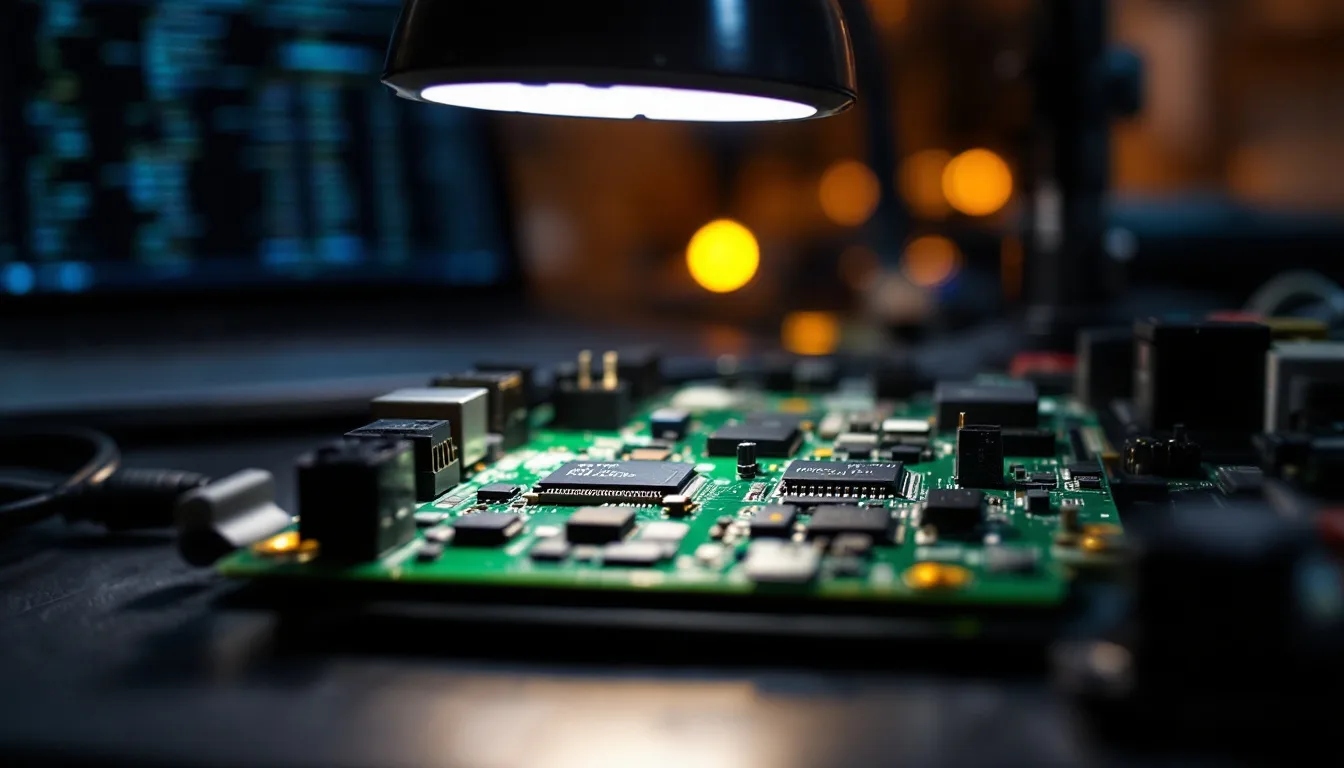
The FRM3 stores its calibration and coding data in an EEPROM — a small non-volatile memory chip. The well-documented weakness is that during a low-voltage event, the module can be in the middle of a memory write when the voltage sags. If the supply drops below the chip's safe threshold mid-write, the data is left half-written and corrupt. The module then fails its own startup integrity check and refuses to operate normally.
The most common triggers Irving drivers report are:
- A battery that discharged fully (lights left on, a parasitic drain, weeks of sitting).
- A jump start, where voltage spikes and dips as the donor connects.
- A DIY battery replacement without a memory saver, or a replacement done with the ignition or accessories active.
This is why the failure so often appears immediately after "we just put a new battery in." The battery is rarely the villain — the voltage transient during the swap is what tipped an already-vulnerable module over the edge. BMW and the wider service community treat proper battery-registration and stable-voltage procedures as standard for exactly this reason, and organizations like the Society of Automotive Engineers document how sensitive modern automotive electronic control units are to supply-voltage quality (sae.org).
"When a customer tells me the headlights, windows, and mirrors all quit the same day they got a battery, I don't start pulling bulbs. That combination is the FRM's signature, and chasing individual circuits wastes everyone's afternoon." — Licensed automotive locksmith technician, Irving Locksmith Pros
The Symptom Fingerprint: How to Know It's the FRM
A blown bulb kills one light. A bad fuse kills one circuit. The FRM is different because it takes down a group of unrelated systems together. Watch for this pattern:
- Headlights or turn signals dead or stuck, sometimes with the lighting throwing a fault message even when bulbs are fine.
- Power windows non-responsive from the door switches.
- Mirror adjustment dead.
- A flurry of dashboard warnings that don't match one another.
- On some cars, the vehicle cranks and runs but the lighting and window functions are simply gone; on others the fault interacts with comfort-access and start behavior.
Diagnosing it properly means reading the body-network fault codes with a BMW-capable tool, confirming the module is failing its integrity check rather than a wiring or bulb problem, and checking supply voltage and grounds so you don't "fix" a module that was actually starved by a bad battery. Because the FRM is a coding-dependent module, this is squarely a job for our module repair and programming service rather than a parts-swap at a general shop. If your BMW is one of the marques we specialize in, our BMW service page covers the platforms we handle.
Recover the Original or Replace It: The Honest Choice
There are two legitimate paths, and the right one depends on your specific module, its revision, and its condition.
Recover the original module. In many FRM3 corruption cases the hardware is perfectly healthy — only the EEPROM data is scrambled. The module can often be recovered by reading the salvageable data, repairing or rewriting the corrupted memory, and restoring the module's coding so it re-passes its integrity check and returns to service. When recovery works, it is the cleaner outcome: your car keeps its original, correctly-coded module and there is no VIN-matching or fresh coding of a stranger's unit.
Replace with a coded module. If the memory chip itself is physically failing, or the corruption is beyond recovery, a replacement module is fitted and then coded and programmed to your VIN so the car accepts it and all functions map correctly. A replacement that is dropped in without proper coding will not restore the lost functions — the coding is the real work, just as with a key.
We will tell you plainly which path your module needs after diagnosis, rather than defaulting to the more expensive one. Some very new BMW platforms and revisions also require dealer-level software for certain module operations; where that is genuinely the case, we say so instead of guessing.
BMW FRM Repair Cost in Irving (2026 Ranges)
Module work does not fit a single flat price the way a basic key does, because the labor depends on whether the module recovers or needs replacing, the platform, and parts availability. The ranges below are realistic mobile-service figures for Irving as of July 2026, and every job gets an exact quote after the module is inspected. For context, the table also shows adjacent locksmith services so you can see where module work sits relative to a straightforward key or lockout.
| BMW / Service Scenario | Typical Price Range | What Drives It |
|---|---|---|
| Diagnosis and fault-code read (on-site) | $75–$145 | Confirming FRM vs. wiring, bulb, or battery |
| Basic transponder key (spare, working key present) | $150–$275 | Chip cut plus enrollment |
| Smart / proximity key or fob programming | $300–$500 | Encrypted fob, coding to the car |
| European smart key (BMW comfort-access) | $400–$700 | Higher-cost fob, European-tier tooling |
| FRM module work (recover or coded replacement) | Honest range, quoted after inspection | Recovery vs. replacement, platform, parts |
We deliberately don't publish a single "FRM number" because doing so would be dishonest — a recoverable module and a physically-failed one are different amounts of work. What we commit to is a transparent, itemized quote before any work begins, and never charging replacement labor for a recovery job. For a broader view of automotive pricing, see our guide to car key replacement cost in Irving TX, which puts module work in context with everyday key services.
Platform Notes: E90, E70, E82 and Relatives
E90/E91/E92/E93 3 Series. This generation is where most Irving drivers meet the FRM3 failure. The symptom set is the classic lighting-plus-windows-plus-mirrors combo, and it very frequently follows a battery replacement done without a stable supply. These are among the most-documented recovery candidates.
E70 X5 / E71 X6. The larger SAV/SAC platforms share the vulnerability. Because these vehicles are heavier on electrical accessories, a marginal battery is more likely to produce the low-voltage transient that triggers corruption, so battery health is worth checking as part of the diagnosis.
E82/E88 1 Series and relatives. Compact platforms of the same era use the same family of body modules and show the same fingerprint. The specific revision on your car determines the exact procedure, which is why we confirm it on-site rather than assuming.
Across all of these, the non-negotiable first step is confirming the FRM is truly the fault and that the car's battery and grounds are healthy — otherwise a repaired module can be corrupted again by the same weak battery. Our key fob programming service handles the related coding work if a key or comfort-access function is also affected.
What We Verify Before FRM Work
Texas regulates locksmiths through the Texas Department of Public Safety Private Security program, and responsible automotive electronics work — like key work — means confirming you're entitled to service the vehicle. The U.S. Federal Trade Commission also advises consumers to insist on identification and a clear written estimate before any locksmith service begins (ftc.gov). Before we touch a BMW FRM we confirm:
- Photo ID matching the registration or title.
- Proof of ownership — registration, title, insurance card, or lease showing your name and the VIN.
- The 17-character VIN, which we use to identify the exact platform, module revision, and coding data.
- The event history — recent battery work, a jump start, or a long sit — because that shapes the diagnosis.
Having this ready when you call speeds the quote and keeps the on-site visit efficient. Professional standards bodies such as the Associated Locksmiths of America and the National Automotive Service Task Force both stress verified ownership and proper secure-data handling for modern vehicle electronics (aloa.org, nastf.org), and vehicle-security research from bodies like the Insurance Institute for Highway Safety and the National Highway Traffic Safety Administration underscores why these systems are locked down in the first place (iihs.org, nhtsa.gov).
Frequently Asked Questions
What are the symptoms of a failed BMW FRM footwell module?
The tell is several unrelated systems failing at once: headlights and turn signals dead or faulting, power windows unresponsive, mirror adjustment dead, and a cluster of mismatched dashboard warnings. It usually appears right after a dead battery, a jump start, or a battery replacement. A single blown bulb or fuse affects only one circuit — the FRM takes down a whole group together.
Can a corrupted FRM module be repaired, or does it need replacing?
Often it can be recovered. In many FRM3 failures the hardware is fine and only the EEPROM data is corrupted, so the module can be read, its memory repaired or rewritten, and its coding restored. If the memory chip is physically failing or the corruption is beyond recovery, a replacement module is fitted and coded to your VIN. We diagnose which path your module needs before quoting.
Why did my BMW FRM fail after a battery replacement?
The FRM3 can be mid-write to its EEPROM when supply voltage sags during a battery swap or jump start. If voltage drops below the safe threshold during that write, the data is left half-written and corrupt, and the module fails its startup integrity check. The battery itself is rarely the fault — the voltage transient during the swap is what tips the module over.
How much does BMW FRM repair cost in Irving TX?
As of July 2026, on-site diagnosis runs $75 to $145, and the FRM work itself is quoted as an honest range after the module is inspected, because a recoverable module and a physically-failed one are genuinely different amounts of labor. We provide a transparent, itemized quote before any work begins and never charge replacement labor for a recovery job.
Which BMW models are most affected by FRM failure?
The E90/E91/E92/E93 3 Series is the most common, followed by the E82/E88 1 Series, the E70 X5, and the E71 X6, along with several related E-series chassis of the same era. The specific module revision on your car — FRM2 or the more failure-prone FRM3 — determines the exact procedure, which is why we confirm it from the VIN on-site.
Will fixing the FRM stop it from happening again?
It helps, but only if the underlying cause is addressed. If a weak battery, a parasitic drain, or poor grounds caused the low-voltage event, a repaired module can be corrupted again by the same condition. That is why our diagnosis checks battery health, charging, and grounds — restoring the module without fixing a bad battery would just set up a repeat.
Do I need to tow my BMW to a dealer for FRM work?
Usually not. We diagnose and perform FRM recovery or coded replacement on-site across Irving and the surrounding DFW cities, so there is no tow and no multi-day service-bay wait. The dealer is the better path only when your BMW is under covered warranty or when a very new platform needs software not yet available to independent specialists, and we will tell you honestly if that applies.
Get Your BMW FRM Diagnosed in Irving Today
A BMW that lost its lights, windows, and mirrors all at once isn't a random electrical gremlin — it's a recognizable module fault with a clear repair path. Irving Locksmith Pros brings BMW-capable diagnosis and FRM recovery or coded replacement to your driveway, office, or roadside across Irving, Las Colinas, Coppell, and the surrounding DFW cities, and we quote the real work honestly instead of defaulting to the priciest fix.
Call or text 817-842-1751 or email contact@irvinglocksmithpros.com for a VIN-based diagnosis. Explore our full module repair and programming service, and see the BMW platforms we specialize in.
References
- National Highway Traffic Safety Administration — vehicle electronics and theft prevention: https://www.nhtsa.gov
- Society of Automotive Engineers (SAE) — automotive electronic control unit standards: https://www.sae.org
- Associated Locksmiths of America (ALOA) — professional standards and automotive programming: https://www.aloa.org
- National Automotive Service Task Force (NASTF) — secure vehicle data access: https://www.nastf.org
- Federal Trade Commission — hiring a locksmith and avoiding scams: https://www.ftc.gov
- Insurance Institute for Highway Safety — vehicle anti-theft technology: https://www.iihs.org
Reviewed by a licensed automotive locksmith technician at Irving Locksmith Pros. Texas DPS Private Security regulated. Mobile service; ownership verification required.