GM Security Light No-Start Irving TX: PassLock & Theft Fix
2026 GM security light no-start in Irving TX. PassLock and VATS fix, the 10-minute relearn, and when it's the ignition cylinder, sensor, or BCM.
GM Security Light No-Start in Irving TX: What PassLock Is Doing
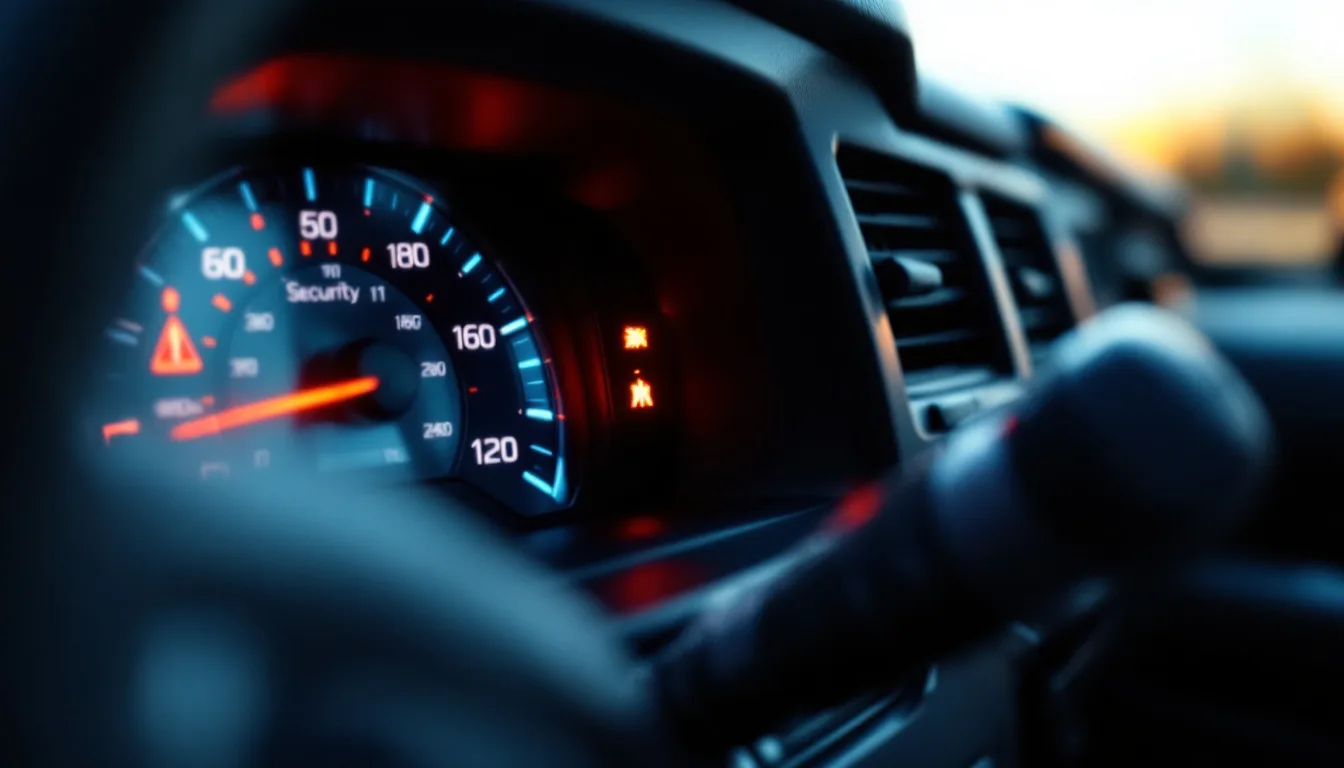
You turn the key on your Chevy, GMC, or Cadillac, the little "SECURITY" light glows, the dash reads "Service Theft Deterrent System," and the engine cranks but won't fire — or won't crank at all. It's one of the most common no-start conditions on older GM vehicles, and it almost always comes down to a system called PassLock (and its older cousin VATS). The upside: the underlying anti-theft logic is well understood, one of the fixes is a simple relearn that costs almost nothing, and even the harder repairs are straightforward for a technician who knows the platform.
As of July 2026, Irving Locksmith Pros diagnoses and repairs GM theft-deterrent no-starts on-site across Irving, Las Colinas, Coppell, Grapevine, and the surrounding DFW cities. This guide explains how PassLock and VATS decide whether to let your engine run, the 10-minute relearn procedure and when it actually works, and how to tell whether you're facing a cheap relearn or a cylinder, sensor, or body control module (BCM) repair.
Call or text 817-842-1751 with your GM's year, model, and exactly what happens — security light behavior, whether it cranks, and whether it ever starts and then stalls. Those details point straight at the cause.
How PassLock and VATS Authorize Start
GM has used a few generations of theft deterrent. Understanding which one you have explains the symptom:
- VATS (Vehicle Anti-Theft System). The oldest, found on earlier GM cars. It uses a small resistor pellet embedded in the key blade. The ignition lock reads the resistance value; if it matches, start is allowed. A worn contact or a wrong resistance value trips the security lockout.
- PassLock. The more common system on the Chevy, GMC, and Cadillac platforms most Irving drivers ask about. Instead of a chip in the key, PassLock puts a magnet and sensor (a Hall-effect sensor) in the ignition lock cylinder. When you turn the key, the sensor generates a signal; the body control module compares it to a learned value and, if it matches, sends a password to the powertrain control module authorizing fuel. Crucially, PassLock authorizes based on the lock cylinder, not a transponder in the key — which is why an ordinary cut key works and why a failing sensor, not a "bad key," is so often the culprit.
When any link in that chain — sensor signal, BCM comparison, or the PCM password — doesn't line up, the BCM disables fuel and lights the SECURITY warning. The engine may crank but won't run, or on some conditions won't crank, and the theft-deterrent message appears. The purpose is exactly what the U.S. National Highway Traffic Safety Administration and the Insurance Institute for Highway Safety describe: immobilizing the engine to deter theft (nhtsa.gov, iihs.org).
The 10-Minute Relearn: When It Works
The single most useful thing to know about a PassLock no-start is the relearn procedure. When the system loses its learned value — after a battery disconnect, certain repairs, a low-voltage event, or an intermittent sensor glitch — the BCM needs to re-learn the security value. GM built in an owner-doable relearn, commonly described as roughly a 10-minute (three-cycle) procedure:
- Insert the key and turn to the "on" position (engine not started). The security light comes on.
- Leave it on and wait about 10 minutes until the security light turns off (some vehicles use three cycles of about 10 minutes each).
- Turn the key off, wait a few seconds, then attempt to start.
If a lost or unlearned security value was the whole problem, the car starts and the light stays off. This costs nothing and is always worth trying first on a PassLock vehicle. The catch: the relearn only fixes a lost value — it does not fix failed hardware. If the PassLock sensor in the ignition cylinder is intermittently failing, the relearn may work briefly and then the no-start returns, because the sensor keeps sending a bad signal. A relearn that "works for a day, then fails again" is a classic sign the sensor or cylinder is the real fault.
"I always run the relearn first — sometimes that's the whole fix and I'm not going to charge someone for a cylinder they don't need. But when the relearn takes and then the security light is back by the weekend, that's the sensor telling you it's on its way out. The relearn is a test as much as a repair." — Licensed automotive locksmith technician, Irving Locksmith Pros
Relearn vs. Cylinder, Sensor, or BCM Repair
Once the relearn is on the table, diagnosis is about deciding which of these you actually have:
- Lost value only (cheapest). The relearn takes and the problem stays gone. Nothing else needed. Often caused by a recent battery disconnect or a one-time glitch.
- Ignition lock cylinder / PassLock sensor failure (mid-range). The magnet-and-sensor assembly in the cylinder wears or fails, sending an unreliable signal. The relearn works only temporarily or not at all. The fix is replacing the PassLock sensor or the ignition lock cylinder, then performing the relearn so the BCM learns the new component. This is our no-key-detected immobilizer territory — the anti-theft link, not the key itself.
- Wiring or connector fault. A chafed wire or corroded connector between the sensor and the BCM can mimic a sensor failure. Diagnosis isolates it before a part is replaced.
- BCM fault (higher cost). Less common, but the body control module itself can fail or lose its ability to store the security value, requiring BCM repair or replacement and reprogramming. Because this is the priciest path, we confirm it's genuinely the BCM — and not a cheaper sensor or wiring issue — before quoting it.
The honest hierarchy matters here: the relearn is nearly free, the sensor or cylinder is a moderate repair, and the BCM is the expensive outlier. A shop that jumps straight to "you need a BCM" without ruling out the sensor is skipping the cheap fixes. We work up from the cheapest cause.
GM Security No-Start Cost in Irving (2026 Bands)
What you pay tracks directly to which fix your vehicle needs. The ranges below are realistic mobile figures for Irving as of July 2026, confirmed against your specific vehicle before work begins. Because GM theft-deterrent no-starts are often not a key problem at all, we've included adjacent key services for context.
| Scenario | Typical Price Range | What Drives It |
|---|---|---|
| PassLock relearn (lost value only) | Minimal | Owner-doable procedure; often the whole fix |
| On-site diagnosis (relearn vs. sensor vs. BCM) | $75–$145 | Isolating the real cause |
| PassLock sensor / ignition cylinder repair | Quoted after inspection | Parts and labor vary by platform |
| Basic transponder key (if the vehicle also needs a key) | $150–$275 | Chip cut plus enrollment |
| Smart / proximity fob (later GM models) | $300–$500 | Encrypted fob, coding to the car |
| BCM repair or replacement + programming | Quoted after inspection | Component cost and reprogramming |
For comparison, a dealer often charges $500 to $800 for a single key on many vehicles plus a tow, and diagnostic-heavy theft-deterrent jobs can climb from there with multi-day bay waits. Mobile diagnosis frequently ends in the free relearn, and when hardware is needed it's repaired on-site. See our guide to car key replacement cost in Irving TX for the broader picture.
Chevy, GMC, and Cadillac: Platform Notes
Chevrolet. The largest share of PassLock no-start calls come from older Chevy cars and trucks — the platforms where PassLock was standard. The relearn-first approach almost always applies, and the ignition cylinder PassLock sensor is the most common failed part when the relearn won't hold. Our Chevrolet service page covers the models we handle.
GMC. GMC trucks and SUVs of the same era share the PassLock architecture with their Chevy siblings, so the diagnosis and fixes line up closely. A GMC that cranks-but-won't-start with the security light is the same conversation: relearn first, then sensor or cylinder if it won't hold. See our GMC service page for details.
Cadillac. Older Cadillacs use the same GM theft-deterrent family, sometimes with additional comfort and security features layered on. The core PassLock logic is identical, though loaded trims can add wrinkles that make careful diagnosis worthwhile before ordering parts.
Across all three, the newest GM models moved to transponder and proximity smart-key immobilizers rather than PassLock — so a very recent Chevy, GMC, or Cadillac no-start may be a key or fob issue instead, which changes the diagnosis entirely. We confirm the system from the VIN before assuming PassLock.
What We Verify Before GM Theft-Deterrent Work
Texas regulates locksmiths through the Texas Department of Public Safety Private Security program, and responsible automotive work — including anti-theft repair — means confirming you're entitled to service the vehicle. The U.S. Federal Trade Commission advises consumers to insist on identification and a clear written estimate before any locksmith service begins (ftc.gov), and roadside authorities such as AAA recommend confirming the cause before parts are replaced on a no-start (aaa.com). Before we work on your GM's theft-deterrent system we confirm:
- Photo ID matching the registration or title.
- Proof of ownership — registration, title, insurance card, or lease showing your name and the VIN.
- The 17-character VIN, which tells us whether your vehicle uses VATS, PassLock, or a newer transponder/smart-key system, and pulls the correct procedure.
- The exact symptom — relearn history, whether it starts then stalls, and security-light behavior — which shapes the diagnosis.
Professional standards for this work come from bodies like the Associated Locksmiths of America and the National Automotive Service Task Force, which set the practices for secure, authorized vehicle-security service (aloa.org, nastf.org).
Frequently Asked Questions
Why is my GM security light on and the car won't start?
On most older Chevy, GMC, and Cadillac vehicles, that's the PassLock theft-deterrent system disabling the engine because it didn't get a valid security signal. PassLock uses a magnet-and-sensor in the ignition lock cylinder, not a chip in the key, and if the sensor, the body control module, or the learned value is off, the system cuts fuel and lights the SECURITY warning. The engine may crank but won't fire.
How do I reset the GM PassLock security system myself?
Try the relearn: turn the key to "on" without starting, leave it until the security light turns off (about 10 minutes, and some vehicles need three such cycles), then turn off, wait a few seconds, and start. If a lost security value was the only problem, the car starts and the light stays off. It costs nothing and is always worth trying first — but it won't fix failed hardware.
The relearn worked but the problem came back — why?
Because the relearn only restores a lost value; it can't fix a failing part. If the PassLock sensor in your ignition cylinder is intermittently failing, the relearn may take and then the no-start returns as the sensor keeps sending a bad signal. A relearn that "works for a day then fails again" is a classic sign the sensor or ignition cylinder needs replacing.
How much does it cost to fix a GM security light no-start in Irving TX?
As of July 2026, the PassLock relearn is minimal or free and often the whole fix. On-site diagnosis runs $75 to $145. A PassLock sensor or ignition cylinder repair is quoted after inspection since parts vary by platform, and a BCM repair or replacement with programming — the least common and priciest path — is also quoted after we confirm it's genuinely the module.
Is the GM security no-start a key problem or a car problem?
On PassLock vehicles it's usually a car problem, not a key problem — PassLock reads the ignition cylinder sensor, not a chip in the key, so an ordinary cut key works and the fault is typically the sensor, wiring, or BCM. On newer GM models that use transponder or smart-key immobilizers, it can be a key or fob issue instead. We check the VIN to know which system you have.
Do I need a new BCM to fix this?
Usually not. The body control module is the least common cause and the most expensive, so it should only be considered after the free relearn and the more common sensor, cylinder, and wiring faults are ruled out. A shop that jumps straight to "you need a BCM" is skipping the cheaper fixes. We work up from the least costly cause and confirm the BCM before quoting it.
Can you fix a GM PassLock no-start on-site, or do I need a tow?
We diagnose and repair GM theft-deterrent no-starts on-site across Irving and the surrounding DFW cities, so most cases need no tow. The relearn, sensor and cylinder work, and wiring diagnosis all happen at your location. Only rare BCM cases requiring dealer-level programming, or the newest platforms needing software not yet available to independents, might point to a dealer — and we'll tell you honestly if so.
Get Your GM Security No-Start Fixed in Irving Today
A GM security light and a stubborn no-start don't have to mean a tow and a guessing game. Irving Locksmith Pros brings PassLock and VATS diagnosis, the free relearn, and sensor, cylinder, or BCM repair to your driveway, office, or roadside across Irving, Las Colinas, Coppell, and the surrounding DFW cities — starting with the cheapest fix and only escalating when the vehicle truly needs it.
Call or text 817-842-1751 or email contact@irvinglocksmithpros.com for a VIN-based quote. See the Chevrolet and GMC platforms we handle, and explore our no-key-detected immobilizer service.
References
- National Highway Traffic Safety Administration — immobilizers and vehicle theft prevention: https://www.nhtsa.gov
- Insurance Institute for Highway Safety — vehicle anti-theft technology: https://www.iihs.org
- Federal Trade Commission — hiring a locksmith and avoiding scams: https://www.ftc.gov
- AAA — no-start, car key, and roadside consumer guidance: https://www.aaa.com
- Associated Locksmiths of America (ALOA) — professional standards and vehicle security: https://www.aloa.org
- National Automotive Service Task Force (NASTF) — secure vehicle data access: https://www.nastf.org
Reviewed by a licensed automotive locksmith technician at Irving Locksmith Pros. Texas DPS Private Security regulated. Mobile service; ownership verification required.