
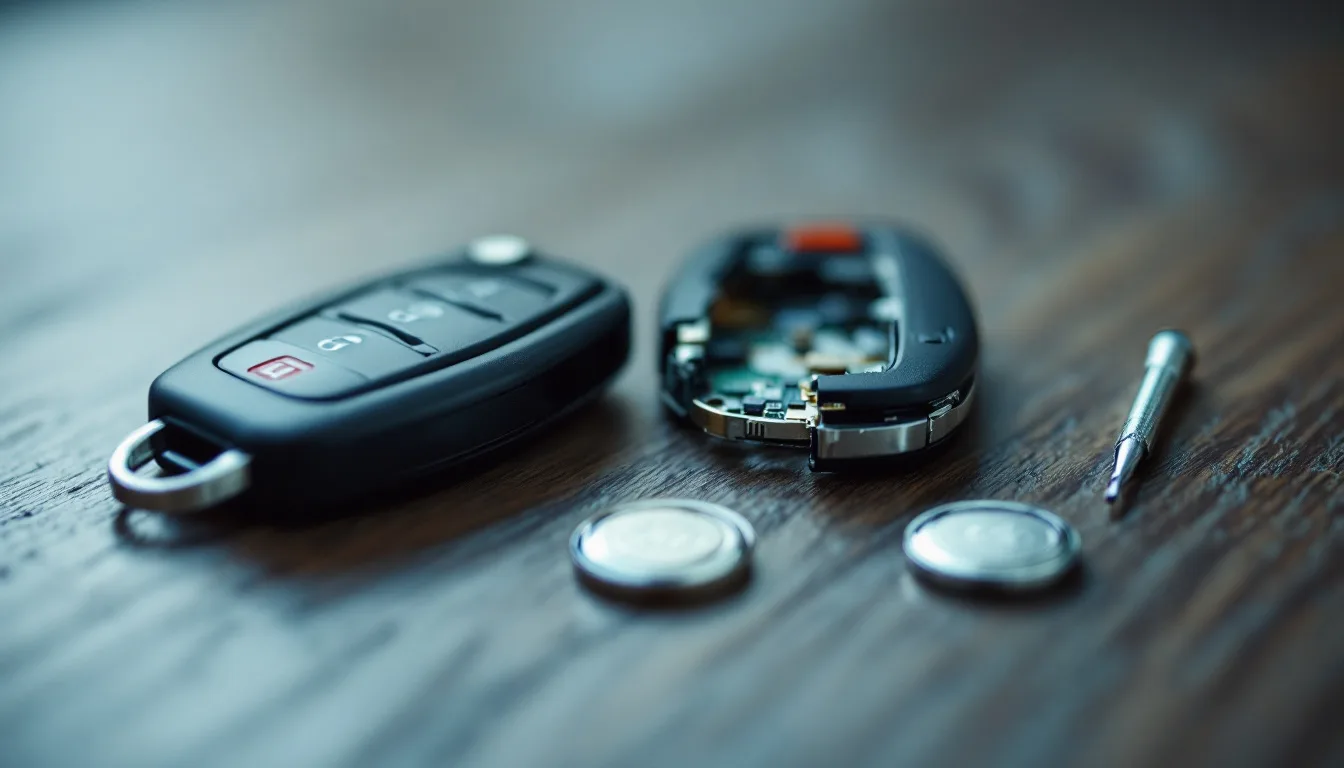
Key Fob Not Working After Battery Replacement Irving TX
2026 key fob not working after a battery swap in Irving TX. Wrong battery, reversed polarity, bent contact, re-sync, or a coincidental transponder fault.
Key Fob Not Working After a Battery Replacement in Irving TX
You did the sensible thing — the fob felt weak, so you popped in a fresh CR2032 — and now it works worse, or not at all. It's a frustrating and surprisingly common outcome, because a fob battery swap is fiddlier than it looks. A tiny error during the change, or a fob that was already on its way out, can leave you standing at the door pressing buttons that do nothing. The reassuring part: most post-battery fob failures trace to a handful of specific, fixable causes.
As of July 2026, Irving Locksmith Pros diagnoses and repairs non-working fobs on-site across Irving, Las Colinas, Coppell, Grapevine, and the surrounding DFW cities. This guide covers exactly what goes wrong during a battery change, the safe fixes you can try yourself, the difference between a re-sync and a full reprogram, and how to spot when the "dead battery" was actually a coincidental transponder failure.
Call or text 817-842-1751 with your vehicle's year, make, and model and what the fob does now — nothing at all, intermittent, or lock/unlock works but start doesn't. Those details narrow the cause fast.
The Common Battery-Change Mistakes
Nine times out of ten, a fob that quit right after a battery swap failed for a mechanical reason introduced during the swap — not because the electronics broke. The usual suspects:
- Wrong battery. CR2032, CR2025, and CR2016 all look nearly identical but differ in thickness. A too-thin battery won't make firm contact; a low-quality or near-expired cell won't hold voltage. The number is printed on the cell — match it exactly.
- Reversed polarity. It's easy to seat the coin cell upside down. The positive (+) face almost always goes toward the marked side of the holder. Backwards, the fob simply won't power up (and rarely, it can stress the electronics).
- Bent or spread contact tabs. Prying the old battery out with a screwdriver can bend the little metal contact springs so they no longer press firmly on the new cell. The fob then works only when squeezed, or not at all.
- Case not fully seated. If the two halves didn't snap completely shut, the battery can sit loose and lose contact — especially as the fob is jostled in a pocket.
- Protective film or residue. A sticker left on the new battery, or finger oils and corrosion on the contacts, block a clean connection.
The tell for all of these is timing: the fob was fine, you changed the battery, and now it's not — pointing squarely at the swap itself, not a random electronics failure.
Safe DIY Fixes to Try First
Before calling anyone, these checks are safe and resolve most cases:
- Re-open and re-seat the battery. Confirm the size matches what was printed on the old cell, the (+) side faces the correct way, and there's no film or sticker on it. Press it in firmly.
- Inspect the contact tabs. If a spring looks flattened or spread, gently bend it back up so it presses on the battery. A wooden toothpick works; avoid metal tools that can short or scratch.
- Clean the contacts. Wipe the battery faces and the fob's contacts with a dry cloth or a pencil eraser to remove oxidation, then reassemble.
- Snap the case fully closed so nothing shifts.
- Test both functions — lock/unlock at the door, and start. Note if one works and the other doesn't; that distinction matters (see below).
If after all this the fob is still dead, it may need to be re-synced to the car, or the fob's electronics may genuinely have failed — which is where diagnosis comes in. This kind of fob work runs through our key fob programming service.
"A customer will swear the new fob is defective, and half the time it's a contact tab I can bend back in ten seconds. But the other half, the old battery had been dead long enough that the real problem was a failing transponder all along — the battery was a red herring. You have to test, not assume." — Licensed automotive locksmith technician, Irving Locksmith Pros
Re-Sync vs. Reprogram: What's the Difference?
If the battery and contacts are perfect and the fob still doesn't respond, the car may simply need to re-recognize it. Two different procedures exist, and they aren't the same amount of work:
- Re-sync (re-pair). Some vehicles require a short owner-performed or tool-assisted sequence to re-establish communication between an existing, already-enrolled fob and the car — for instance after the fob lost power completely. The fob is still "known" to the car; it just needs to reconnect. This is quick.
- Reprogram (re-enroll). If the fob's stored data was lost or the electronics were replaced, the fob must be fully enrolled into the immobilizer again, using the car's programming procedure. This is deeper work and requires the right tooling.
Which one your car needs depends on the make, model, and what actually failed — another reason on-site diagnosis beats guessing. Note that a completely dead battery does not normally erase a fob's programming; fobs store their identity in non-volatile memory. So "I changed the battery and now it needs reprogramming" is usually really a contact/seating problem or a coincidental electronics failure, not lost programming.
The Coincidence Trap: When It Wasn't the Battery
Here's the scenario that fools people. The fob had been getting weak for weeks. You finally changed the battery — but the weakness wasn't only the battery; the transponder or transmitter circuit was also failing. The fresh battery didn't fix it, so it looks like the battery change "broke" the fob when in reality the electronics were already dying and the battery swap just happened to be the moment you noticed.
Clues that point to coincidental electronics failure rather than a swap error:
- The fob had been intermittent or short-range for a while before the change.
- Lock/unlock works but start doesn't (or vice-versa) — suggesting part of the fob's circuitry survived and part didn't.
- A known-good battery, correctly seated, still produces nothing.
- Water exposure, a hard drop, or a cracked case in the fob's recent history.
Water damage deserves its own mention: a fob that went through the wash, a puddle, or a spill can corrode internally, and a battery change won't revive it. In these cases the fix is a replacement fob programmed to the car — the same immobilizer enrollment behind our no-key-detected immobilizer service when the car reports no key.
Fob Repair Cost in Irving (2026 Bands)
What you pay depends on whether it's a seating fix, a re-sync, or a full replacement. The ranges below are realistic mobile figures for Irving as of July 2026, confirmed against your vehicle before work begins.
| Scenario | Typical Price Range | What Drives It |
|---|---|---|
| Correct battery + contact reseat (DIY or quick fix) | Minimal | Often resolves it entirely |
| On-site diagnosis (swap error vs. electronics) | $75–$145 | Isolating the real cause |
| Fob re-sync / re-pair (existing enrolled fob) | Modest | Quick reconnect procedure |
| Basic transponder key replacement | $150–$275 | Chip cut plus enrollment |
| Smart / proximity fob replacement + programming | $300–$500 | Encrypted fob, coding to the car |
| European smart key replacement | $400–$700 | Higher-cost fob, European-tier tooling |
For comparison, a dealer will often charge $500 to $800 for a single replacement smart key plus a tow, and all-keys-lost European fobs can reach $1,200 to $2,500 with multi-day waits. When your fob just needs reseating or a re-sync, mobile service is far cheaper and faster. See our guide to car key replacement cost in Irving TX for the full context.
Why the Right Diagnosis Saves You Money
The reason to diagnose before replacing is simple: the fixes span from free (reseat the battery) to a few hundred dollars (new programmed fob), and they look identical from the driver's seat. Consumer-protection guidance from the U.S. Federal Trade Commission recommends getting a clear estimate before authorizing repair work so you aren't paying for a guess (ftc.gov), and roadside authorities like AAA advise confirming the cause before buying parts on a no-start or no-response condition (aaa.com).
There's a security reason the enrollment step exists at all: smart-key and transponder immobilizers meaningfully reduce vehicle theft, as documented by the National Highway Traffic Safety Administration and the Insurance Institute for Highway Safety (nhtsa.gov, iihs.org). Proper enrollment of any replacement fob follows the professional standards published by bodies such as the Associated Locksmiths of America and the National Automotive Service Task Force (aloa.org, nastf.org).
What We Verify Before Programming a Replacement Fob
Texas regulates locksmiths through the Texas Department of Public Safety Private Security program, and responsible automotive work means confirming you're entitled to the key. A quick battery reseat is one thing; programming or replacing a fob requires:
- Photo ID matching the registration or title.
- Proof of ownership — registration, title, insurance card, or lease showing your name and the VIN.
- The 17-character VIN, used to match the exact fob and pull the right programming procedure.
- The fob's symptom history — when it started, whether one function survives, and any water or impact — which guides the diagnosis.
Having this ready when you call speeds the quote and keeps the visit short.
Frequently Asked Questions
Why did my key fob stop working right after I changed the battery?
Almost always because of a mechanical error introduced during the swap: the wrong battery size, a reversed polarity, a contact tab bent while prying out the old cell, a case that didn't snap fully shut, or a film left on the new battery. Re-open the fob, confirm the size and orientation, straighten any flattened contact springs, clean the contacts, and reseat firmly.
Does changing the fob battery erase the programming?
No. Fobs store their identity in non-volatile memory that survives a completely dead battery, so a battery change does not erase programming. If a fob seems to "need reprogramming" after a swap, the real issue is usually a seating or contact problem, a needed re-sync, or a coincidental electronics failure — not lost programming.
What's the difference between re-syncing and reprogramming a fob?
Re-syncing re-establishes communication between the car and a fob that's still enrolled — a quick reconnect, sometimes after the fob lost all power. Reprogramming fully re-enrolls the fob into the immobilizer, which is needed when the stored data was lost or the electronics were replaced, and it requires proper tooling. Diagnosis determines which your car needs.
How much does it cost to fix a fob that won't work after a battery change in Irving TX?
As of July 2026, a simple reseat or correct-battery fix is minimal or free. On-site diagnosis to isolate the cause runs $75 to $145, and a re-sync is modest. If the electronics failed and a replacement is needed, a basic transponder key is $150 to $275, a smart or proximity fob is $300 to $500, and a European smart key is $400 to $700.
Could my fob failure be a coincidence, not the battery?
Yes, and it's common. If the fob had been weak or intermittent for weeks before you changed the battery, the transponder or transmitter may have been failing all along — the fresh battery didn't fix it, so it only looks like the swap broke it. A known-good battery correctly seated that still produces nothing points to failing electronics rather than a swap error.
My fob got wet — will a new battery fix it?
Usually not. Water intrusion corrodes the internal electronics, and a battery change won't revive a fob that's been through the wash, a puddle, or a spill. In most water-damage cases the fix is a replacement fob programmed to your car. Bring it to us and we'll confirm whether it's salvageable or needs replacing.
Lock and unlock work but the car won't start — is that the fob?
It can be. If part of the fob survived and part didn't, one function may work while another fails. But a "won't start" with working remote buttons can also be an immobilizer, antenna, or interlock issue on the car side. On-site diagnosis separates a partially-failed fob from a vehicle-side fault before any part is replaced.
Get Your Fob Working Again in Irving Today
A fob that quit after a battery change is usually a quick fix — and when it's not, it's a straightforward diagnosis rather than a mystery. Irving Locksmith Pros brings on-site fob diagnosis, re-sync, and replacement programming to your driveway, office, or roadside across Irving, Las Colinas, Coppell, and the surrounding DFW cities, starting with the cheapest likely cause.
Call or text 817-842-1751 or email contact@irvinglocksmithpros.com for a quote. Explore our key fob programming and no-key-detected immobilizer services, and if you're locked out in the meantime, our car lockout service gets you back in.
References
- Federal Trade Commission — hiring a locksmith and avoiding scams: https://www.ftc.gov
- National Highway Traffic Safety Administration — immobilizers and vehicle theft prevention: https://www.nhtsa.gov
- AAA — car key, fob, and roadside consumer guidance: https://www.aaa.com
- Insurance Institute for Highway Safety — vehicle anti-theft technology: https://www.iihs.org
- Associated Locksmiths of America (ALOA) — professional standards and programming: https://www.aloa.org
- National Automotive Service Task Force (NASTF) — secure vehicle data access: https://www.nastf.org
Reviewed by a licensed automotive locksmith technician at Irving Locksmith Pros. Texas DPS Private Security regulated. Mobile service; ownership verification required.