
Keys Locked in the Trunk in Irving TX: The Luggage-Loading Slam
2026 guide to keys locked in a trunk in Irving TX — why modern cars usually prevent it, when they don't, and how a locksmith opens it without damage.
The Slam You Hear One Second Too Late
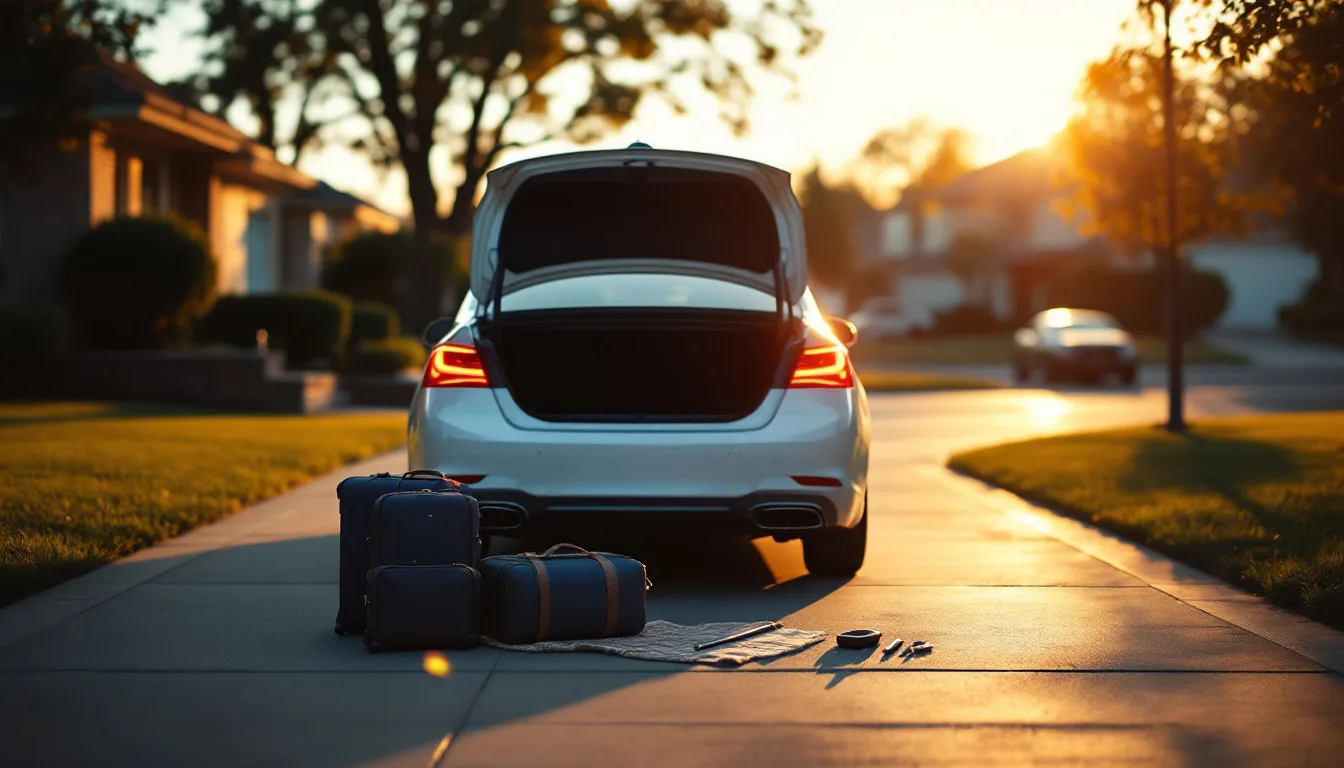
It happens in a single distracted motion. You're loading the car for a DFW departure — suitcases in, cooler wedged, one more bag from the house — and you set the keys down in the trunk to free both hands. The last bag goes in, you swing the lid down out of pure habit, and the sound of it latching arrives at the exact moment your brain catches up: the keys are now sealed inside a locked steel box, the doors are locked, and the airport shuttle situation just got complicated.
The trunk slam is one of the oldest lockout stories in the trade, and it has a fascinating modern twist: most new cars actively try to prevent it — and yet it still happens every week, including all over Irving's driveways and apartment lots on departure mornings. As of July 2026, this guide covers both halves honestly: the fob-detection safeguards that usually save you, the specific conditions under which they fail, and exactly how a professional gets your keys back without drilling, prying, or touching the trunk lock at all. The short version of the price question: this is a standard car lockout, it runs $75–$145 in our service area, and it's almost always resolved through the cabin, non-destructively, in well under an hour once we're at the car. Call or text 817-842-1751 if that's the version of today you're having.
Why Modern Cars Mostly Won't Let You Do This
If you drive a recent push-button-start vehicle, you may have already met its trunk-guardian behavior without realizing it: you drop the fob in the cargo area, close the lid, and the car pops the trunk back open — or refuses to latch-lock, or erupts in beeping. That's not a glitch; it's deliberate anti-entrapment logic.
Proximity-key systems constantly triangulate where the fob is, using low-frequency antennas placed around the vehicle — cabin, exterior door zones, and cargo area. This zone-detection is a core piece of passive-entry engineering (sae.org), and it powers the everyday conveniences: doors that unlock when you grab the handle, a car that won't lock while the fob is inside the cabin. The trunk version is the same trick pointed at the cargo bay: if the car detects the enrolled fob inside the trunk when the lid closes with the doors locked, it refuses to strand it — reopening the lid or warning loudly.
Automakers didn't build this out of pure kindness. Decades of safety work on trunk entrapment — the reason every car sold in the U.S. for years has carried a glow-in-the-dark interior trunk release, a requirement rooted in federal safety standards work (nhtsa.gov) — pushed cargo areas from "dumb box" to "monitored zone," and fob anti-lockout logic rode along with the electronics. The result: on a healthy, recent proximity-key car, the classic trunk slam usually ends with an embarrassed laugh instead of a service call.
So why are we writing this article? Because "usually" has exceptions, and the exceptions are exactly the situations travelers find themselves in.
The Five Ways It Still Happens
1. The fob's battery is dead or nearly dead. Zone detection only works if the fob can answer the car's radio query. A fob with a dying coin cell — the same failure that shrinks your remote range — may simply not respond from inside the trunk, and the car concludes no fob is present and locks up tight. This is the single most common modern trunk-slam mechanism, and it pairs cruelly with travel: the marginal fob that "mostly worked" all month picks the departure morning to go quiet. (Two-dollar prevention: swap the coin cell annually — our fob battery guide shows every common fob style.)
2. Older vehicles simply lack the feature. A large share of the cars on Irving's roads predate cargo-zone fob detection entirely. A bladed-key or early-transponder vehicle will lock its trunk on top of anything you leave in there, no questions asked — the safeguard just doesn't exist. If you drive a 2000s or early-2010s car, assume the trunk is honest steel: it keeps whatever you feed it.
3. Valet mode and locked pass-throughs. Many sedans have a valet or trunk-lock setting that deliberately isolates the trunk from cabin access — the point is to let a valet drive the car without reaching your luggage. With valet mode engaged (sometimes unknowingly, via a switch in the glovebox or a settings menu), the fold-down seat pass-through locks and the trunk button on the dash may be disabled. Now a trunk-slam with keys inside is genuinely partitioned from the cabin.
4. Sedans versus hatchbacks: the separation problem. In a hatchback, SUV, or crossover, the "trunk" is just the back of the cabin — if you can get into the car, you can crawl to the cargo area. A three-box sedan is different: the trunk is a separate compartment, connected to the cabin only through fold-down rear seats (if equipped and unlocked) or a small pass-through. Trunk-slam severity is largely a body-style question, which is why the same mistake is a shrug in a RAV4 and a service call in an older Camry.
5. Detection isn't perfect even when present. Radio is physics: a fob buried under three suitcases at the far corner of a packed trunk, wedged against metal, can sit in a detection dead spot. Rare — but "the car usually catches it" is doing load-bearing work in that sentence, and packed-for-vacation is precisely the worst-case radio environment.
How a Locksmith Actually Opens It: Through the Cabin, Not the Lock
Here's the part that surprises people: on almost every trunk-slam call, we never touch the trunk lock. The professional route runs through the cabin, and it's cleaner, faster, and safer for the car.
The sequence: first, a standard non-destructive entry into the cabin — the same tooling and technique as any door lockout, manipulating the door's own mechanisms without damage to paint, weatherstripping, or electronics. This is exactly why roadside organizations that field millions of lockout calls a year steer people away from coat-hanger improvisation (aaa.com); modern doors conceal airbag curtains, wiring, and connectors that DIY tools find before they find the lock. Once the cabin is open, the trunk falls: the interior trunk-release button, the fold-down rear seats, or the emergency pass-through gets us to the keys. Even valet-locked configurations have professional solutions from the cabin side, and in the stubborn rare cases, generating a working key for the vehicle (that's a car key replacement job, priced in those bands) beats attacking a trunk lock.
What we don't do: drill the trunk cylinder, pry the lid, or bend anything. A trunk lid and its lock are expensive, body-colored, and weather-sealed; destructive entry is a last-resort answer to a problem that cabin-side access solves elegantly. The professional standards culture around automotive lockout work — licensed technicians, documented methods, damage-free tooling — is exactly what trade bodies like ALOA exist to uphold (aloa.org), and in Texas that professionalism is licensed under the DPS Private Security Program (dps.texas.gov). The Federal Trade Commission's advice for consumers applies verbatim to trunk calls: confirm the license, get the price before work starts, and be wary of anyone whose first move is a drill (ftc.gov).
One verification note: a lockout is entry, not key creation, so the job proceeds with identity confirmation and service documentation — but if your situation escalates to making a key (fob dead beyond battery rescue, or the "keys in the trunk" turn out not to be there), ownership verification is required before any key is made. If your registration is in the glovebox, that's fine: cabin opens first, documents come out, verification completes, then key work begins.
Scenario Table: Your Trunk Slam, Located
| Your Situation | What Actually Happens | Typical Outcome & Band |
|---|---|---|
| Recent proximity car, healthy fob, keys in trunk | Car detects fob, reopens lid or refuses to lock | No service needed — the car saved you |
| Recent proximity car, dead/weak fob coin cell | No detection; trunk locks over the fob | Cabin entry + trunk release: $75–$145 |
| Older vehicle, no cargo detection | Trunk locks, period | Cabin entry + seats/pass-through: $75–$145 |
| Sedan with valet mode engaged | Trunk isolated from cabin | Cabin entry + valet-config resolution: $75–$145 typical |
| Hatchback/SUV/crossover | Cargo area is part of the cabin | Standard door lockout: $75–$145 |
| Keys not actually in trunk — truly lost | Search escalates to replacement | Key made after verification: $150–$275 transponder, $300–$500 smart fob, $400–$700 European |
That last row matters: a meaningful fraction of "keys locked in the trunk" calls end with an empty trunk, because under stress people remember putting keys down and misremember where. We look before we conclude — and if it's a true loss, the job becomes lost car keys work at the standard bands rather than a lockout.
"Trunk calls are my favorite kind of rescue because the car has already done half my job — there's almost always a path from the cabin. The one thing I'd tell every sedan owner: go find out tonight whether your rear seats fold and whether they're locked. That single fact decides whether your trunk slam is a five-minute story or a service call." — a Texas DPS-licensed automotive locksmith technician on our team
The Departure-Morning Version
The reason this article sits on an Irving locksmith's site and not a general car blog: geography and clocks. The trunk slam clusters brutally around departure mornings — driveways in Valley Ranch at 5 AM, apartment lots off MacArthur, hotel porte cochères along the 114 corridor, anywhere a DFW flight and a pile of luggage intersect. The mistake needs three ingredients — full hands, divided attention, a deadline — and airport mornings supply all three in abundance.
If it's happening to you right now with a flight clock running:
- Call before you finish panicking. Early-morning response across the Irving core is typically fast, and cabin entry plus trunk release is minutes of on-site work. A 5:15 AM slam can still make an 8 AM flight with room to spare.
- If the math is truly impossible, split the problem: rideshare to the terminal, leave the locked car exactly where it is (it's secure — that's the whole problem), and we'll meet you or your designated person later. A locked trunk holding your keys is stable; it can wait a day. Your flight can't.
- Weekly travelers along the corridor — this is your periodic reminder that the true fix costs nothing: pocket the keys before anything else goes in the trunk, every single load. Keys touch the trunk floor for "just a second" is how every one of these calls begins.
Prevention, distilled: keys live in your pocket or on a belt clip during loading, never in the cargo bay; swap the fob coin cell yearly; know your valet switch; and know your fold-down seats. Sedan drivers with locking pass-throughs should keep the seat locks unlocked in daily life — the valet-lock feature is for valets, not for ambushing yourself in July.
Keys Sealed in the Trunk Right Now?
Wherever the lid slammed — a driveway in Irving, an apartment lot, a hotel garage in Las Colinas, or anywhere across our DFW service radius including Coppell and Dallas — we'll open the cabin without damage and have the trunk released in minutes. $75–$145, mobile, usually within the hour, day or night through our emergency locksmith line.
Call or text 817-842-1751 or email contact@irvinglocksmithpros.com. Tell us the year, make, model, and whether your rear seats fold — we'll tell you exactly how this ends (spoiler: with your keys back).
Frequently Asked Questions
Can a locksmith open my trunk without damaging it?
Yes — and almost always without touching the trunk lock at all. The professional route is non-destructive entry into the cabin, then releasing the trunk from inside via the trunk-release button, fold-down rear seats, or pass-through. No drilling, no prying. The trunk lid, its lock, and its weather seals are never attacked on a standard call.
How much does it cost to get keys out of a locked trunk in Irving?
As of July 2026, a trunk lockout is a standard car-lockout job at $75–$145 in the Irving area — the cabin entry and the trunk release are one visit, one band. It only costs more if the keys turn out not to be in the trunk at all and a replacement key must be made after ownership verification, which runs $150–$275 for basic transponder keys, $300–$500 for smart fobs, or $400–$700 for European smart keys.
Why didn't my car stop me from locking the fob in the trunk?
The three usual reasons: the fob's coin cell was too weak to answer the car's detection query; the vehicle is old enough that cargo-zone fob detection doesn't exist; or the fob sat in a radio dead spot under packed luggage. Newer proximity-key cars with healthy fobs usually pop the lid back open or refuse to lock — the safeguard is real, it just isn't universal or infallible.
My sedan has fold-down seats. Can I get the trunk open myself if I can get in the car?
If the cabin is accessible and the seatbacks aren't locked, yes — fold them and reach the trunk. The catch is that in a trunk slam the cabin is usually locked too, and forcing your own door risks expensive damage to modern door electronics. If the doors are locked, professional cabin entry followed by the seat route is the clean path.
What is valet mode and did it cause this?
Valet or trunk-lock mode deliberately isolates the trunk — locking the pass-through and often disabling the dash trunk button — so a valet can drive the car without accessing your luggage. If it was engaged, deliberately or accidentally, a trunk slam genuinely seals the compartment off from the cabin. It's still solvable from the cabin side with the right approach; mention the possibility when you call.
I'm about to miss a flight at DFW over this. What should I do?
Call immediately — early-morning cabin entry plus trunk release is fast in the Irving core, and many departure-morning slams still make their flights. If the clock truly can't work, take a rideshare to the terminal and leave the car locked where it is: a trunk holding your keys is secure and stable, and the retrieval can happen later today or when you return.
How do I make sure this never happens again?
One habit and two maintenance items. The habit: keys go in your pocket before anything goes in the trunk, every load, no exceptions — never on the trunk floor "for a second." The maintenance: replace the fob coin cell annually so cargo detection can actually hear the fob, and know where your valet/seat-lock switches are so the trunk is never accidentally isolated.
References
- SAE International — passive entry and fob zone-detection engineering: https://www.sae.org
- National Highway Traffic Safety Administration — trunk safety and vehicle standards: https://www.nhtsa.gov
- AAA — lockout and roadside assistance guidance: https://www.aaa.com
- Associated Locksmiths of America (ALOA) — professional standards: https://www.aloa.org
- Federal Trade Commission — hiring a locksmith and avoiding scams: https://www.ftc.gov
- Texas Department of Public Safety — Private Security Program licensing: https://www.dps.texas.gov
Reviewed by a licensed automotive locksmith technician at Irving Locksmith Pros. Texas DPS Private Security regulated. Mobile service; ownership verification required.