Auction Car With No Keys: Cost in Grand Prairie & Irving TX (2026)
2026 cost to key an auction car with no keys in Grand Prairie and Irving TX. Copart and IAA yard realities, all-keys-lost pricing, and the paperwork.
Short answer. As of September 2026, keying an auction car with no keys in the Grand Prairie and Irving area runs about $250 to $400 on an older transponder vehicle, $400 to $600 on a push-button proximity vehicle, and $550 to $850 on European models. Every one of these is an all-keys-lost job, which is the surcharge nobody budgets for. Diagnosis runs $95 to $165 and is credited toward the work.
Why the Auction Lane Is Its Own Pricing Category
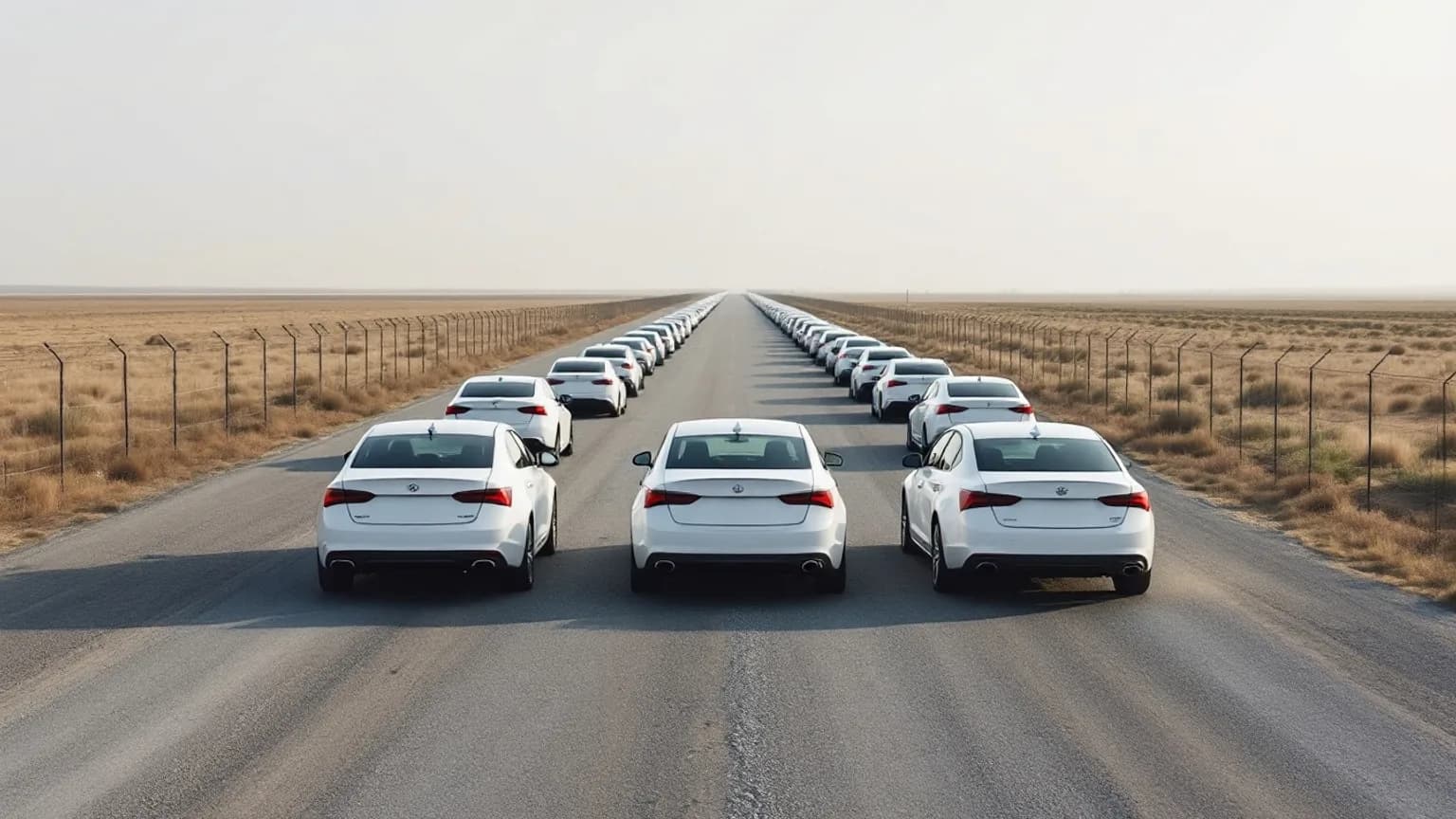
Grand Prairie sits on top of one of the densest concentrations of vehicle auction inventory in North Texas. Copart and IAA yards, dealer-only wholesale lanes, insurance-total resale, and municipal fleet disposals all move cars within a short drive of the Irving line. A meaningful share of those vehicles change hands with the "keys" box checked no — sometimes because the key was lost in the claims process, sometimes because the car arrived on a rollback after a theft recovery, sometimes because nobody ever went looking.
Buyers routinely treat that as a minor line item. It is not. A vehicle with no keys is, by definition, an all-keys-lost job: there is no trusted credential in the car to enroll a new key against, so the security system has to be approached from scratch. That single fact is what separates a $180 spare-key visit from a $600 auction-lot morning.
As of September 2026, Irving Locksmith Pros originates keys for auction and no-key vehicles across Grand Prairie, Irving, Las Colinas, and the surrounding DFW cities. This guide lays out what it costs by security generation, what the yard will and will not let a technician do, and the ownership paperwork that has to exist before any legitimate locksmith touches the car.
Call or text 817-842-1751 with the year, make, model, and VIN before you bid, and you will know the key number before the number that matters is already spent.
What It Costs, by Security Generation
Auction pricing is not really about the make. It is about which security generation the vehicle belongs to, because that determines how the key has to be originated when nothing trusted exists in the car.
| Auction Vehicle Scenario | Typical Price Range | What Drives It |
|---|---|---|
| Pre-immobilizer mechanical key (roughly pre-1998) | $95–$185 | Cut by code or by lock decoding; no electronics |
| Bladed transponder key, all keys lost | $250–$400 | Cut plus onboard origination or PIN retrieval |
| Remote-head or flip key, all keys lost | $280–$420 | Same as above plus remote pairing |
| Proximity / smart fob, domestic and Asian, all keys lost | $400–$600 | Encrypted credential plus security-access procedure |
| Proximity / smart fob, European, all keys lost | $550–$850 | Brand security protocol, longer access windows |
| Vehicle requires bench work on the immobilizer module | Quoted after inspection | Module removal, read, and re-marry |
| Ignition cylinder damaged or punched during theft | $180–$395 on top of key work | Rebuild, rekey, or cylinder replacement |
| Second key programmed on the same visit | Roughly half the first key | The expensive part is already done |
Two honest notes about that table. First, the all-keys-lost premium is real and it is not a markup — it is the cost of a longer, riskier procedure with security-access steps that a spare key simply does not require. Second, the bands assume the vehicle is electrically alive and reasonably intact. A theft-recovery car with a torn column, a cut harness, or a removed module is a diagnosis-first job, not a quote-over-the-phone job.
"The auction buyers who never get surprised are the ones who text me the VIN from the preview lot instead of from the driveway after the transport truck leaves. Same car, same price, but one of those two people planned for it." — a senior technician on our Irving crew
For the general cross-make picture outside the auction context, our car key replacement cost in Irving TX breakdown covers the standard spare and replacement bands.
The Ownership Paperwork Is Not Optional
This is the part of the conversation where a legitimate locksmith and a cheap one visibly diverge.
Originating a key for a vehicle is, functionally, granting someone the ability to start and drive it. The industry treats that as a controlled act. Professional standards bodies — the Associated Locksmiths of America (aloa.org) and the National Automotive Service Task Force (nastf.org), which administers secure access to manufacturer vehicle security data — both structure their frameworks around verified ownership, and access to that data is logged against a registered technician. In Texas, automotive locksmith work sits under the Texas Department of Public Safety Private Security Program — not TDLR, a mix-up that shows up constantly in online advice.
For an auction vehicle that practically means bringing three things:
The bill of sale or gate pass in your name. The auction's own documentation is usually the cleanest proof, because it names the buyer and the VIN in one place.
Title or title application. Auction vehicles very often carry salvage, rebuilt, or non-repairable Texas titles, and the title may still be in transit. A title application or the auction's assignment paperwork generally bridges that gap. What does not bridge it is "it's mine, I bought it, trust me."
Your photo ID matching that paperwork. If you are buying through a dealer license or on behalf of a company, bring the credential that connects you to the buying entity.
A technician who never asks for any of this is not doing you a favor. They are demonstrating exactly how a stolen car gets keyed, and the Federal Trade Commission's guidance on written estimates and consumer protection in repair services (ftc.gov) is a reasonable second lens on any shop that treats documentation as an inconvenience.
Where the Work Actually Happens: Yard Rules
Buyers assume a locksmith can meet them at the lot. Sometimes yes, often no, and the difference is worth knowing before you plan the day.
Salvage yards with gate control. Large auction facilities control access tightly. A technician usually needs to be on your gate pass or escorted, working hours are fixed, and some yards restrict non-employee work on inventory entirely. Call the yard, not just the locksmith.
Power availability. An auction car that has sat for weeks frequently has a flat or disconnected battery. Every modern key-origination procedure needs stable voltage for the duration — some security-access windows run ten to thirty minutes, and a voltage sag midway can abort the procedure or, worse, leave a module in a confused state. Plan for a jump pack or a support supply. This is the same electrical dependency that causes the immobilizer relearn needed after a battery change on ordinary daily drivers.
Transport-first is often cheaper. If the yard is restrictive, having the car transported to your shop, home, or the Irving area and keyed there frequently costs less in total than the scheduling gymnastics of an on-lot visit. It also gives the technician room to work if the job escalates into module territory.
Theft-recovery vehicles are a separate conversation. If the column was punched or the dash was pulled, key origination is only step one. See our notes on ignition repair versus module replacement for how that branch is priced.
What Changes the Number on Your Specific Car
Five variables move an auction key job inside — or outside — the bands above.
1. Whether the immobilizer data is accessible. Some makes let a technician originate a key through the diagnostic port with a proper security-access credential. Others require retrieving a PIN or security code first, and a few require reading the immobilizer module directly on the bench. Each step up adds time and cost. Our module repair and programming service covers the bench end of that spectrum.
2. Model year, not just model. The same nameplate can cross a security generation mid-run. A 2017 and a 2019 of the identical model may be entirely different jobs. This is why the VIN matters more than the year on the auction sheet.
3. Whether anything is missing. Theft recoveries and parts-donor cars are frequently missing the very module that holds the key data. A vehicle whose immobilizer or body control module has been removed needs a replacement module configured to the VIN before a key can exist at all.
4. Prior tampering. Aftermarket alarms, remote starters, and previous bypass work all interfere with the security handshake. They are common on auction inventory and they are diagnosis territory, not flat-rate territory.
5. Aftermarket versus OEM key stock. Some vehicles accept quality aftermarket fobs at meaningful savings; others — particularly recent European and several 2020s Asian platforms — reliably only behave with OEM-grade credentials. A technician who pretends this distinction does not exist is setting up a callback.
The Pre-Bid Checklist That Saves Real Money
Run this before the hammer drops, not after:
- Pull the VIN from the auction listing and text it with the year, make, and model. A thirty-second lookup gives you the security generation and a firm band.
- Check the "keys" field and the run condition together. "No keys, starts and drives" and "no keys, does not start" are very different jobs.
- Ask the yard about on-site work and about escort or gate-pass rules for a technician.
- Look at the photos of the ignition and column. A punched cylinder or a hanging trim panel is visible in auction photos and tells you the job is bigger than a key.
- Budget for two keys, not one. Programming the second key on the same visit costs roughly half of the first, because all the security-access work is already done. Doing it a year later costs full price again — the same math behind our why program a second key now argument.
- Confirm your paperwork is in your name before you book anything.
Specific Models That Surprise Auction Buyers
A few families come up repeatedly in the Grand Prairie lanes and deserve a warning.
Chrysler, Dodge, Jeep, and Ram minivans and sedans. These use a wireless ignition or RF hub module that is central to the security chain, and all-keys-lost work on them frequently escalates. Our cost notes on Chrysler Pacifica and Voyager all keys lost and Dodge Charger and Challenger all keys lost cover the realistic numbers.
Nissan and Infiniti push-button models. The body control module carries the security relationship, and a no-key Nissan can be straightforward or can turn into a module conversation depending on year. Grand Prairie buyers can compare against our Nissan Rogue and Altima key replacement cost in Grand Prairie page for the non-auction baseline.
Hyundai and Kia from the theft-wave years. Enormous numbers of these moved through insurance auctions after the well-publicized theft surge, and many carry punched ignitions on top of missing keys. The Insurance Institute for Highway Safety has published extensively on how immobilizer availability drove those theft rates (iihs.org), and the National Highway Traffic Safety Administration maintains the federal theft-prevention standards those systems answer to (nhtsa.gov).
Anything European. BMW, Mercedes, Audi, Porsche, Jaguar, and Land Rover all-keys-lost work is its own discipline, handled through our European car specialists service, and the bands start where domestic work ends.
Salvage and Rebuilt Titles: What Does and Does Not Change
A salvage or rebuilt Texas title does not make key origination illegal or unusual. What it changes is the probability that something else is wrong. Flood vehicles carry corroded connectors and water-intruded modules. Collision vehicles carry cut harnesses and deployed-airbag electrical faults. Theft recoveries carry the damage the thief left behind.
None of that is a reason to walk away from a good buy. It is a reason to book a diagnosis-first appointment rather than expecting a flat-rate key visit, and to have the honest conversation about whether the module side of the car is healthy before spending on keys. Vehicle electrical subsystem behavior in damaged cars is genuinely unpredictable, and the engineering standards the industry works to (sae.org) assume an intact system.
Frequently Asked Questions
Can a locksmith make a key for a car with no keys at all?
Yes. That is an all-keys-lost job, and it is standard work for an automotive locksmith with the right equipment and security-access credentials. The key is cut from the vehicle's own lock or code data and then originated into the immobilizer. As of September 2026 in the Grand Prairie and Irving area, expect roughly $250 to $400 on an older transponder vehicle, $400 to $600 on a push-button model, and $550 to $850 on European makes.
Why does an auction car cost more to key than my daily driver?
Because there is no existing key to enroll against. A spare key job borrows trust from a credential the car already accepts, which is fast. With no keys, the security system has to be accessed through a protected procedure — sometimes a PIN retrieval, sometimes a timed security window, sometimes bench work on the immobilizer module. That procedure, not the key blank, is what you are paying for.
What paperwork do I need to have keys made for an auction vehicle?
Bring the auction bill of sale or gate pass showing the VIN and your name, the title or title application (salvage and rebuilt titles are fine), and photo ID that matches. If you bought under a dealer license or company name, bring the credential linking you to it. Any locksmith who skips ownership verification entirely is a problem, not a bargain.
Can the locksmith come to the Copart or IAA yard in Grand Prairie?
Sometimes. Large auction yards control gate access, restrict working hours, and in some cases do not permit outside work on inventory at all. Call the yard first and ask about escort or gate-pass rules. If the yard is restrictive, having the vehicle transported and keyed at your location is frequently cheaper overall than working around the lot's schedule.
The auction car has a dead battery. Does that matter?
Very much. Key origination procedures need stable voltage for their full duration, and some security-access windows run ten to thirty minutes. A sag partway through can abort the procedure or leave a module in an unclear state. Plan for a jump pack or support supply, and mention it when you book so the technician arrives ready.
Is it cheaper to get two keys made at once?
Yes, substantially. The expensive part of an all-keys-lost job is gaining security access, and that work is done once. Adding a second key on the same visit typically costs around half of the first. Coming back a year later means paying for the access work again from zero.
What if the ignition was punched or the column is damaged?
Then keys are step one of two. A punched cylinder needs rebuilding, rekeying, or replacement before a new key will turn anything, and that generally adds $180 to $395 on top of the key work. Vehicles from the high-theft Hyundai and Kia years show up at auction with this damage constantly. We diagnose both sides in one visit and quote them separately so you can see what you are paying for.
Know the Key Cost Before You Bid
An auction car with no keys is a completely solvable problem and a predictable one — as long as the number is in your budget before the bidding, not after the transport invoice. Irving Locksmith Pros originates keys for auction, salvage, and no-key vehicles across Grand Prairie, Irving, Las Colinas, and the surrounding DFW cities, with the paperwork handled properly and the price quoted before we roll.
Text the VIN to 817-842-1751 or email contact@irvinglocksmithpros.com — tell us the year, make, model, and whether the listing says it runs, and we will tell you what the keys cost while you can still do something about it.
References
- National Highway Traffic Safety Administration — federal vehicle theft prevention standards: https://www.nhtsa.gov
- Insurance Institute for Highway Safety — immobilizer availability and vehicle theft research: https://www.iihs.org
- Associated Locksmiths of America (ALOA) — professional automotive locksmith standards: https://www.aloa.org
- National Automotive Service Task Force (NASTF) — secure vehicle security-data access and technician registration: https://www.nastf.org
- Federal Trade Commission — written estimates and consumer protection in repair services: https://www.ftc.gov
- SAE International — vehicle electrical subsystem engineering standards: https://www.sae.org
- AAA — vehicle transport and roadside decision guidance: https://www.aaa.com
Reviewed by a licensed automotive locksmith technician at Irving Locksmith Pros. Texas DPS Private Security regulated. Mobile service; ownership verification required.