
Car Keys Lost in Checked Luggage at DFW: An Irving TX Decision Guide
2026 decision guide when your car keys are in delayed or lost checked luggage at DFW — wait vs. replace math, security steps, and Irving TX costs.
Your Keys Are in a Bag, and the Bag Isn't Here
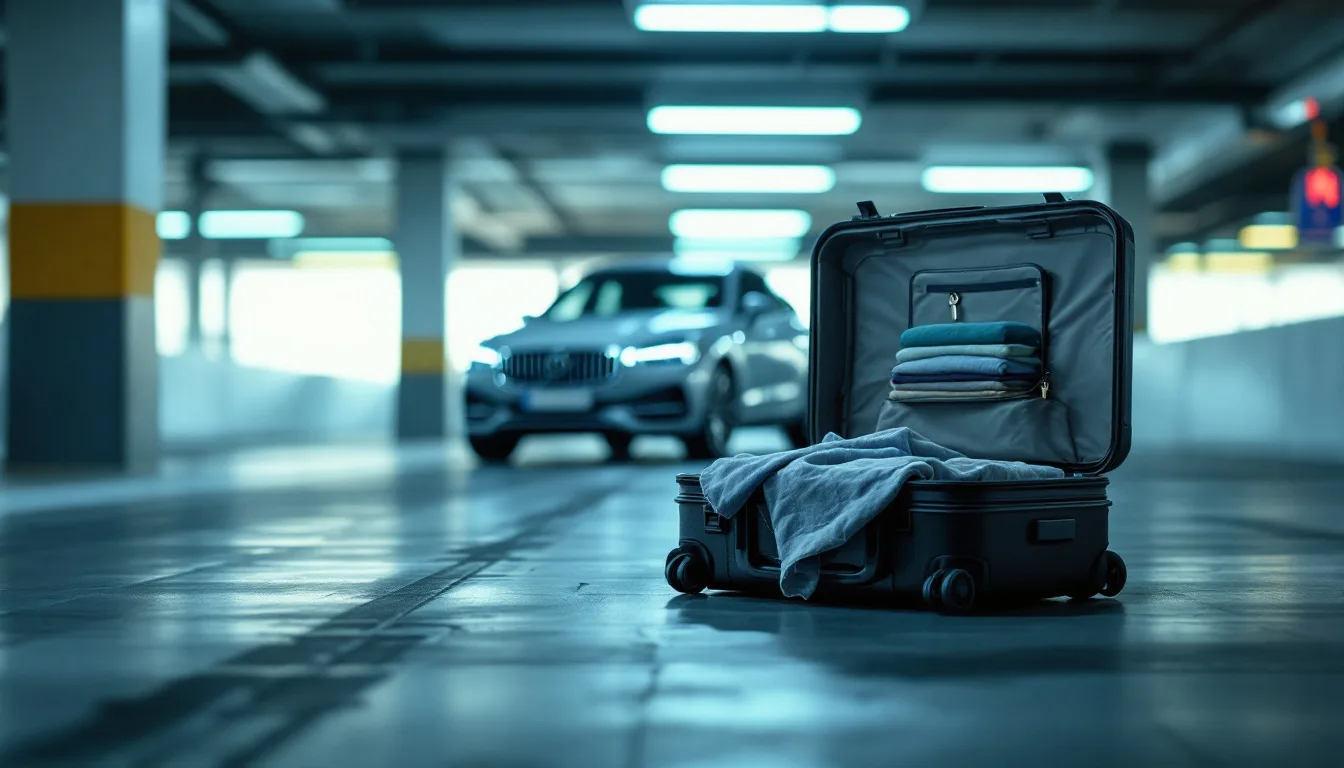
Baggage claim at DFW has a particular species of dread: the carousel stops, your bag never appears, and somewhere in the mental inventory of what was inside it you hit the item that changes everything — your car keys. The car is sitting in long-term parking, the bag is in another city (or nowhere the airline can currently say), and you are standing in Terminal D holding a claim ticket instead of a fob.
This happens far more often than people admit, because packing keys in checked luggage feels harmless right up until the system misplaces the bag. As of July 2026, this guide works through the whole problem the way we walk callers through it: the immediate steps at the airport, the honest decision math between waiting for the bag and making a replacement key now, the security question almost everyone skips when the bag does eventually turn up — and the all-keys-lost reality if it never does. Plus the practical logistics of getting mobile key service to a car parked in an airport garage near Irving. (Need it solved now rather than read about? Call or text 817-842-1751.)
First, the rule you'll follow forever after tonight, straight from the people who screen the bags: keep keys in your carry-on. TSA's guidance on packing is explicit that valuables and essential items — and there is nothing more essential to your trip home than the car key — belong in the cabin with you, not in checked baggage (tsa.gov). Checked bags are handled by machines and moved through systems built for throughput, not custody of irreplaceable items.
At the Airport: The First Hour
Before any key decision, do these in order:
- File the delayed-baggage report before leaving the baggage office. Every airline requires a report filed promptly — generally at the airport, at the carrier's baggage service desk — to open a trace. Get the file reference number; every later conversation hangs off it.
- Ask the two questions that drive your key decision: Where does the system currently show my bag? and What is the realistic delivery window? Airlines locate the large majority of delayed bags within days, and most delayed bags are reunited with passengers — but "most" and "days" are doing real work in that sentence, and the answer for your bag is what matters.
- Confirm the delivery address. Airlines typically courier recovered bags to you. Make sure the address on file is where you'll actually be — home in Irving, not the hotel you left three cities ago.
- Establish where your car is and what it's costing you. Terminal parking, express, or remote — note the section and space (photograph the nearest pillar sign), and check the daily rate. The parking meter is now part of your decision math.
- Check for a spare at home. If a second key exists in a drawer in Irving and someone can bring it or you can rideshare to it, the entire decision below collapses into a $40 rideshare. This is the moment the two-key rule pays for itself.
The Department of Transportation requires airlines to compensate passengers for reasonable expenses caused by baggage delay, subject to liability limits, and consumer-protection agencies advise keeping receipts for everything the delay forces you to spend (ftc.gov). A replacement car key necessitated by a delayed bag is exactly the kind of expense to document — no guarantees on any specific claim, but paper it fully: report number, receipts, dates.
The Decision Math: Wait for the Bag or Make a Key Now
This is the heart of it. You're weighing a known cost now against an uncertain wait, and the right answer depends on four variables: the bag's traced status, your need for the car, the parking meter, and your vehicle's key type.
Here's the framework, with July 2026 numbers:
| Your Situation | Sensible Move | Cost Logic |
|---|---|---|
| Bag located, delivery promised within ~24h, spare key exists at home | Rideshare home, use spare, receive bag | Rideshare fare only |
| Bag located, ~24–48h delivery, no spare, car not urgently needed | Rideshare home, wait, retrieve car after bag arrives | Fares + 1–2 extra days of parking |
| Bag untraced or vague ETA, no spare, you need the car | Replace the key now, mobile, at the garage | $150–$275 basic transponder; $300–$500 smart fob; $400–$700 European |
| Bag officially declared lost | All-keys-lost replacement + deprogram the lost keys | Key band above + all-keys-lost labor; still far below dealer path |
| Any scenario, tempted by the dealer route | Compare honestly first | Dealer $500–$800/key, $1,200–$2,500 European all-keys-lost, plus $150–$300 tow |
A few notes on reading that table honestly.
The parking meter is real but rarely decisive. A couple of extra days of airport parking is an annoyance, not a catastrophe. Don't let a daily parking rate stampede you into a decision the bag-trace status doesn't support. But a week of it starts approaching the low end of a basic key replacement all by itself — factor it, don't ignore it.
"Untraced" changes everything. A bag with a confirmed location and a delivery window is a logistics problem. A bag the system can't currently place is a probability problem, and probability problems with your only car key inside deserve action, not hope. Our rule of thumb for callers: located bag, short window, no urgent need — wait. Anything else — replace.
Your key type sets the stakes. A basic transponder key at $150–$275 is a modest hedge even if the bag turns up tomorrow (congratulations, you now own the spare you should have had). A $400–$700 European smart key is a bigger swallow, which argues for one more phone call to the airline before pulling the trigger — but also makes the dealer alternative ($1,200–$2,500 for European all-keys-lost, per the comparison in our locksmith vs. dealer guide) look even worse if the bag is truly gone.
How Mobile Key Replacement Works in an Airport Garage
People assume a car stranded in long-term parking needs a tow to a shop. It doesn't — the entire point of mobile automotive locksmithing is that the shop drives to the car. We work airport-area garages and remote lots around the DFW footprint routinely from our Irving base; the vehicle doesn't care whether it's in your driveway or space 4C-118 of a parking structure. See how we cover the airport side of town on our Irving service area page.
What the visit looks like:
- You meet us at the car. You need to be present — both practically and because ownership verification is always required before a key is made: photo ID plus registration, title, or insurance documentation matching you and the VIN. If your registration is in the glovebox of the locked car, that's fine — entry happens first, then documents come out, then verification completes, and only then is a key cut and programmed. That sequence is the professional standard, and it's the discipline that bodies like ALOA and NASTF build the trade's security-data frameworks around (aloa.org, nastf.org). In Texas, the license behind that discipline is issued under the DPS Private Security Program (dps.texas.gov).
- The key is cut and programmed on-site. Modern replacement means generating a key against the VIN and enrolling its transponder with the vehicle's immobilizer — the anti-theft architecture that federal safety regulators have long credited with suppressing vehicle theft (nhtsa.gov). For most domestic and Asian vehicles this is an under-two-hours visit; some European platforms need parts ordered against the VIN first.
- Garage logistics are on us to solve with you. Level, section, nearest elevator core, and the garage's height clearance if you happen to know it. Airport parking structures are built for exactly this kind of service traffic; they are not an obstacle.
If you're reading this stranded right now, our car key replacement and emergency locksmith pages cover the immediate versions of everything above.
The Step Everyone Skips: What Happens When the Bag Comes Back
Say you made the key, drove home, and four days later the courier drops your bag on the porch — original keys inside. Most people toss the old keys in a drawer and move on. Think about what those keys did first.
Your keys spent days traveling through baggage systems, warehouses, and courier vans, in a bag tagged with your name and home address — and possibly with your car's make visible on the keychain. The realistic risk is low. It is not zero, and the fix costs little: if anything about the bag's return bothers you — signs of tampering, a suspiciously long gap, contents disturbed — have the vehicle's key list audited and re-secured. A locksmith can read how many keys the immobilizer currently trusts and, where warranted, deprogram everything and re-enroll only the keys in your hand. That converts "I think it's fine" into "the car trusts exactly these two keys and nothing else."
"The bag-came-back call is the one I wish more people made. It's a short visit: we check what the car trusts, wipe the list, enroll the two keys on the kitchen table. Cheap peace of mind. The keys rode four days through three cities with your address on the tag — treat them like a password that got emailed around." — a Texas DPS-licensed automotive locksmith technician on our team
And if the bag is declared lost — airlines do eventually declare unrecovered bags lost and move to compensation — then the deprogramming step stops being optional in our view. Somewhere, a bag containing a working key to your car and paperwork bearing your home address exists in an unknown state. The all-keys-lost procedure handles both halves: new keys created, old keys electronically dead. That's the difference between replacing a key and actually re-securing the car.
Prevention: The Packing Rules That Make This Article Unnecessary
- Keys ride in the carry-on. Always. TSA guidance is clear that keys belong in the cabin (tsa.gov); keys are permitted in carry-on bags, and the cabin is the only place your custody of them never breaks.
- Split keys between travelers. Two people, two keys, two different bags-that-never-leave-your-person. A couple traveling together should never have both car keys in one jacket.
- Leave a spare at home with someone reachable. The cheapest rescue in this entire article was the rideshare-to-the-spare. That option only exists if the spare does.
- Photograph your keys and note your VIN before traveling. A photo of the key and fob speeds identification and replacement conversations; the VIN (visible through the windshield) is what any replacement gets generated against.
- A tracker tag in the bag is cheap. It won't stop a delay, but "the bag says it's in a facility in another hub city" is far better decision-making input than "the airline is still tracing it."
Stranded at DFW Without Your Keys?
If your keys are in a bag the airline can't hand you, we bring key replacement to your car — in an airport-area garage, your Irving driveway, or anywhere in our DFW service radius. $150–$275 for basic transponder keys, $300–$500 for smart fobs, $400–$700 for European smart keys, ownership verification always required, and honest advice first about whether waiting for the bag is the smarter play in your specific case.
Call or text 817-842-1751 or email contact@irvinglocksmithpros.com with your year, make, model, and where the car is parked. We'll help you run the math before you spend anything.
Frequently Asked Questions
My car keys are in a delayed bag at DFW. Should I wait or replace the key?
Run the math on four inputs: the bag's traced status, whether a spare exists at home, how urgently you need the car, and your key type. A located bag with a 24–48 hour delivery window and no urgent car need usually means wait. An untraced bag, no spare, and a real need for the car means replace now — $150–$275 for a basic transponder key, $300–$500 for a smart fob, $400–$700 for European smart keys as of July 2026.
Can a locksmith make a key for my car in airport long-term parking?
Yes — that's precisely what mobile service is for. No tow is needed; the technician comes to the parking space, and the key is cut and programmed on-site against your VIN. You need to be present with photo ID, and ownership verification is completed before any key is made — if your registration is locked in the glovebox, entry happens first and verification follows.
Are car keys allowed in carry-on luggage?
Yes. Keys and key fobs are fine in carry-on bags, and TSA packing guidance recommends keeping valuables and essential items in the cabin with you rather than in checked baggage. After one delayed-bag experience, most travelers adopt the rule permanently: the car key never leaves your person or your carry-on.
Will the airline pay for my replacement car key?
Airlines are required to compensate reasonable expenses caused by baggage delay, subject to liability limits, and claims are evaluated case by case. No specific outcome is guaranteed, so document everything: the baggage report number, the replacement receipt, and the timeline. File the expense claim with the airline and keep copies.
What should I do if the airline declares my bag lost with my keys inside?
Treat it as a security event, not just a replacement. A working key to your car — likely traveling alongside documents showing your home address — now exists in an unknown location. Have new keys made and the lost keys deprogrammed from the vehicle's immobilizer, so the missing fob becomes a dead remote. Replacing without deprogramming leaves the old key live.
My bag came back with the keys inside. Do I need to do anything?
Usually you're fine — but if anything about the return bothers you, a short security visit resolves it: a locksmith audits how many keys the vehicle currently trusts, clears the list, and re-enrolls only the keys in your hand. Given that the keys traveled unattended for days with your name and address on the bag tag, it's inexpensive certainty.
How long does on-site key replacement take at an airport garage?
For most domestic and Asian vehicles, the visit runs under two hours once the technician is at the car — entry if needed, verification, cutting, and immobilizer programming. Some European platforms require key components ordered against the VIN, which can add a day or more; you'll be told which case applies when you call with the year, make, and model.
References
- Transportation Security Administration — packing guidance for carry-on and checked bags: https://www.tsa.gov
- Federal Trade Commission — consumer rights and expense documentation: https://www.ftc.gov
- National Highway Traffic Safety Administration — vehicle immobilizers and theft prevention: https://www.nhtsa.gov
- Associated Locksmiths of America (ALOA) — professional standards: https://www.aloa.org
- National Automotive Service Task Force (NASTF) — secure security-data access: https://www.nastf.org
- Texas Department of Public Safety — Private Security Program licensing: https://www.dps.texas.gov
- AAA — traveler and roadside guidance: https://www.aaa.com
Reviewed by a licensed automotive locksmith technician at Irving Locksmith Pros. Texas DPS Private Security regulated. Mobile service; ownership verification required.