OBD Programming vs EEPROM Bench Work Irving TX: Key Jobs
2026 guide to OBD key programming vs EEPROM bench work in Irving TX. What each method is, which vehicles force bench work, and why it changes price and time.
Two Ways to Program a Car Key — and Why the Difference Costs Hundreds
Call three locksmiths about the same lost-key job and you may hear three very different quotes — thirty minutes and a modest fee from one, several hours and triple the price from another. The customer-facing explanation is usually a shrug about "difficult cars." The real explanation is a fork in method that this article makes plain: some key jobs complete entirely through the car's OBD diagnostic port, and some require EEPROM work — reading memory chips from a physically removed module on a workbench. Which side of that fork your vehicle lands on is the single biggest cost variable in modern key programming.
As of July 2026, Irving Locksmith Pros performs both methods across Irving, Las Colinas, Coppell, and the surrounding DFW cities — OBD sessions in your driveway and bench-level work through our module repair and programming service. This guide is the educational piece we wish every customer could read before comparing quotes: what each method actually is, which vehicles and situations force the bench, why the price and timeline move the way they do, and the questions that instantly reveal whether a quoted price matches the real job.
Questions about your specific car? Call or text 817-842-1751 with the VIN — the method, and therefore the quote, comes off the VIN.
What OBD Programming Actually Is
Every car sold in the U.S. since 1996 carries a standardized OBD-II diagnostic connector, born of emissions regulation (epa.gov) and specified by industry standards (sae.org). The port exists so tools can talk to the car's modules — and key programming rides that same channel. In an OBD key session, the locksmith's programmer connects to the port, authenticates to the immobilizer using vehicle-specific security data obtained through legitimate channels (nastf.org), and instructs the module to enroll a new key. The chip in your new key gets written into the vehicle's trusted list, the tool verifies the handshake, and the engine starts.
The defining characteristics of an OBD job:
- Nothing comes apart. The dash stays intact, the modules stay bolted in, and the whole transaction happens through a connector under the steering column.
- It's fast. A spare-key enrollment commonly takes 15–45 minutes on-site; even many all-keys-lost jobs finish within an hour or two where the platform supports OBD security access.
- It's the majority case. Most mainstream vehicles — domestic, Japanese, Korean — across most model years support OBD key enrollment, including many all-keys-lost situations. This is the method behind the routine pricing on our everyday work.
When you see a moderate, confident quote for a key job, this is the method it assumes. Engine immobilizers themselves are the anti-theft layer that makes all this ceremony necessary in the first place — and worth it, given their documented effect on theft (nhtsa.gov, iihs.org).
What EEPROM Bench Work Actually Is
Some vehicles won't hand out key authorization through the port — the manufacturer gated it, the module generation predates OBD key access, the security data isn't available through any authorized channel, or the module itself is damaged. For those, the established professional method goes a level deeper: EEPROM work.
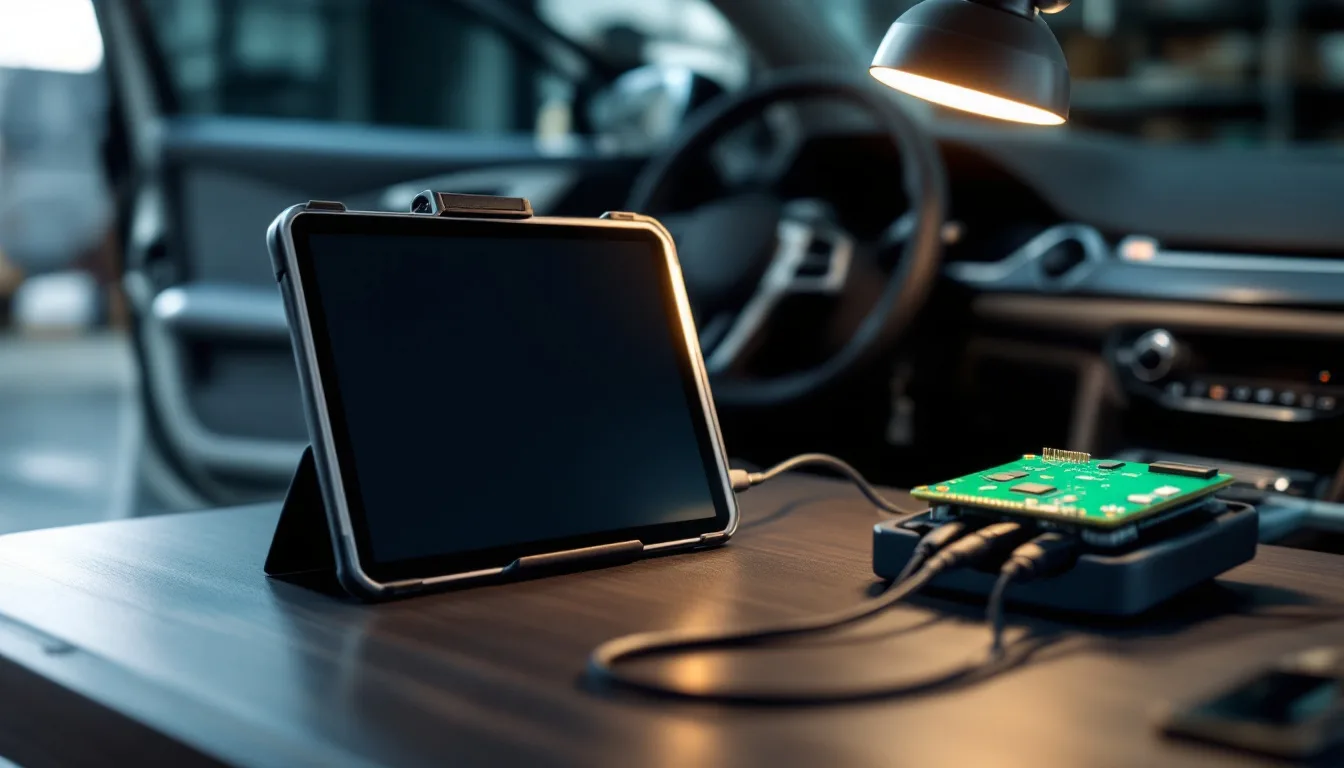
EEPROM — electrically erasable programmable read-only memory — is the small non-volatile chip inside an immobilizer, body, or engine module where the vehicle stores its key data, security codes, and configuration. Bench work means:
- The module comes out of the car. That may be a body module behind the glovebox, an immobilizer box under the dash, or on some European cars a front-electronics or access module requiring real disassembly.
- The module is opened on the bench, and the memory chip is read — sometimes in-circuit with fine probes, sometimes by carefully desoldering the chip, reading it in a programmer, and resoldering it.
- The key data is extracted or modified from the memory dump — existing key codes read out so a new key can be generated, or a fresh key file written in.
- Everything is reassembled, reinstalled, and verified through multiple start cycles.
This is micro-soldering-adjacent electronics work performed on the one module your car cannot start without. Done professionally it's safe and routine; done badly it bricks the module and turns a key job into a module-replacement job. It is precisely the tier of work that professional locksmith standards and vetting exist for (aloa.org) — and the reason the price is what it is: you're buying an electronics technician's bench hours, not a plug-in.
What Forces a Job to the Bench
The honest triggers, from most to least common in our Irving work:
European all-keys-lost. BMW and MINI FEM-era modules, various Mercedes and VW-family generations, older Volvos where the CEM must be read directly — European brands gate key security hardest, and their all-keys-lost procedures are the classic bench cases. (Spare keys on the same cars often stay OBD-serviceable — the fork is situation-dependent, not just brand-dependent.) Our standing guide to all-keys-lost EEPROM costs in Irving goes deeper on this slice.
Older platforms that predate OBD key access. Plenty of late-90s and 2000s vehicles have immobilizers but no supported port procedure — the data lives in a chip, and the chip is where you go get it.
Missing or unavailable security data. When a vehicle's PIN or security code can't be obtained through authorized channels — undocumented imports, orphaned brands, some salvage histories — reading it from the module directly is the legitimate fallback.
Damaged or failed modules. Water intrusion, theft-attempt damage, a botched previous repair, or plain electronic failure. Here EEPROM work overlaps with module repair: sometimes we're transferring the key data out of a dying module into a replacement, which is as bench as bench gets.
Cloning-resistant chip generations in specific situations. A handful of transponder families can't be duplicated or enrolled without touching stored data.
Notice what's not on the list: ordinary spare keys on mainstream cars, routine fob replacements, standard lockouts. If you drive a 2016 Camry and someone quotes you bench-work money for a spare key, get a second opinion — the FTC's general advice about demanding clear written estimates exists for exactly that moment (ftc.gov).
Price and Time: Why the Fork Moves Both
The two methods consume completely different resources, and honest pricing reflects it:
| Factor | OBD Programming | EEPROM Bench Work |
|---|---|---|
| Typical time | 15 min – 2 hrs on-site | 2–6+ hrs; sometimes a return visit |
| Disassembly | None | Module removal, opening, chip-level access |
| Skill tier | Trained tool operation + security data | Electronics bench skills, soldering, data work |
| Risk profile | Low | Managed but real; module at stake |
| Typical cost impact | Standard key-job bands ($150–$500 by key type) | Adds hundreds; commonly $500–$700+ for European all-keys-lost; exact quote after VIN/module inspection |
| Where it happens | Your driveway or office | On-site van bench or shop bench, then reinstall |
Two pricing honesty rules follow. First, no one can quote bench work precisely without knowing the module generation — which is why our bench quotes are ranges until the VIN (and sometimes the module itself) is inspected, and why a suspiciously exact phone quote for a FEM-era BMW all-keys-lost should worry you. Second, the fork explains quote spreads between shops: a locksmith without bench capability can only quote the jobs they can do, so hard cars get declined or subcontracted — worth asking about directly.
For context, the dealer alternative on bench-class jobs is usually module replacement rather than data work: a new module ordered, days of wait, and programming — commonly $1,200–$2,500 all-in on European all-keys-lost scenarios, plus the tow (aaa.com has long advised comparing total costs including towing before choosing a path).
How to Tell Which Job Yours Is
You can't always know from the driver's seat, but these questions get you close before anyone rolls a van:
- Do you still have a working key? A working key keeps most vehicles — even European ones — in OBD territory for a spare. Zero keys is the biggest single predictor of bench work on gated brands. If you're at zero, start with our lost car keys service.
- What's the make and year? Mainstream Asian and domestic brands stay OBD-serviceable across most years, including all-keys-lost. German brands and gated marques fork by generation.
- Any module damage or theft history? Water, theft attempts, or previous "repairs" push toward the bench regardless of brand.
- Is the car very new? Brand-new model years sometimes lack independent access entirely — dealer-only until data reaches the aftermarket, and an honest shop says so.
Give us the VIN and the answers to those four, and the method — and therefore a firm quote — falls out in one phone call.
"The question I wish customers would ask every shop is simple: 'Is my job OBD or bench, and have you done my exact module before?' The answer sorts the field instantly. Anyone quoting a gated European all-keys-lost at spare-key money either hasn't understood the job or plans to renegotiate in your driveway. The method is the price — everything else is detail." — A licensed automotive locksmith on our Irving team
What We Verify and How We Work
Texas regulates locksmith services through the Texas DPS Private Security Program, and bench-class security work gets maximum process discipline:
- Ownership verification — photo ID plus registration, title, insurance, or lease matching the VIN, before any security data is touched.
- Method determination up front — VIN research decides OBD versus bench before we quote, so the number you approve is the job we do.
- Module protection — bench reads are performed with backups of the original data taken first wherever the chip allows, so the starting state is recoverable.
- Verification before departure — multiple start cycles, all keys tested, warning lights cleared.
Both methods end the same way: your car starts, every key in your hand is enrolled, and the invoice matches the quote.
Frequently Asked Questions
What is the difference between OBD key programming and EEPROM work?
OBD programming enrolls a key through the car's diagnostic port — no disassembly, minutes to a couple of hours, standard pricing. EEPROM bench work removes a module from the car, reads its memory chip directly on a workbench to extract or modify key data, then reinstalls and verifies. Bench work takes hours of electronics-level labor, which is why it costs substantially more.
Which cars need EEPROM bench work for keys?
Most commonly: European all-keys-lost jobs (BMW/MINI FEM-era, various Mercedes and VW-family generations, older Volvos), older platforms that never supported port-based key access, vehicles whose security data isn't available through authorized channels, and any car with a damaged or failed immobilizer-related module. Mainstream Asian and domestic vehicles rarely need the bench, even for all-keys-lost.
Why is all-keys-lost so much more expensive on some cars?
Because losing every key is what pushes gated vehicles from the OBD column into the bench column. With a working key present, the immobilizer already trusts a credential and many cars will enroll a spare through the port. With zero keys, gated brands require the module's stored data to be read directly — hours of bench work instead of a driveway session.
Is EEPROM work safe for my car's modules?
In professional hands, yes — the procedures are established, and we back up the original chip data before modifying anything wherever the hardware allows. The real risk is unqualified attempts: a botched desolder or a corrupted write can brick the module and convert a key job into a module replacement. It's fair and smart to ask any shop how often they've done your exact module.
How long does each method take in Irving?
OBD spare keys typically run 15 to 45 minutes on-site; OBD all-keys-lost, one to two hours. Bench jobs run two to six hours or more depending on module access and chip type, occasionally spanning a return visit. Both are performed mobile across Irving and the surrounding DFW cities, with bench work done at the van bench or shop bench and the module reinstalled the same visit whenever possible.
Can you quote bench work over the phone?
As a range, yes; as an exact number, honestly no — the module generation and its condition set the labor, so the precise quote comes after VIN research and, in some cases, module inspection. What we can promise up front is the range, the method, and that the number you approve is the number you pay. Be cautious of any shop that quotes gated all-keys-lost work to the dollar sight-unseen.
Do dealerships do EEPROM work instead?
Generally no — dealer process for a locked-out module situation is replacement: order a new module, wait for it, program it with factory tooling. That's a legitimate path, but it commonly totals $1,200 to $2,500 with towing on European all-keys-lost cases and takes days. Independent bench work exists precisely to recover the data in your existing module at a fraction of that.
Get the Right Method — and the Right Quote — in Irving
The most expensive words in key programming are "we'll figure it out when we get there." Irving Locksmith Pros determines OBD-versus-bench from your VIN before quoting, performs both methods to professional standard, and puts the trade-offs in writing across Irving, Las Colinas, Coppell, and the surrounding DFW cities.
Call or text 817-842-1751 or email contact@irvinglocksmithpros.com with your VIN and key situation — you'll get the method, the range, and a straight answer.
References
- U.S. Environmental Protection Agency — OBD-II onboard diagnostics requirements: https://www.epa.gov
- SAE International — OBD connector and vehicle data communication standards: https://www.sae.org
- National Automotive Service Task Force (NASTF) — secure vehicle security-data access: https://www.nastf.org
- National Highway Traffic Safety Administration — vehicle theft prevention and immobilizers: https://www.nhtsa.gov
- Insurance Institute for Highway Safety — anti-theft technology research: https://www.iihs.org
- Associated Locksmiths of America (ALOA) — professional automotive locksmith standards: https://www.aloa.org
- Federal Trade Commission — written estimates and locksmith consumer protection: https://www.ftc.gov
- AAA — key replacement and towing cost comparison guidance: https://www.aaa.com
Reviewed by a licensed automotive locksmith technician at Irving Locksmith Pros. Texas DPS Private Security regulated. Mobile service; ownership verification required.