
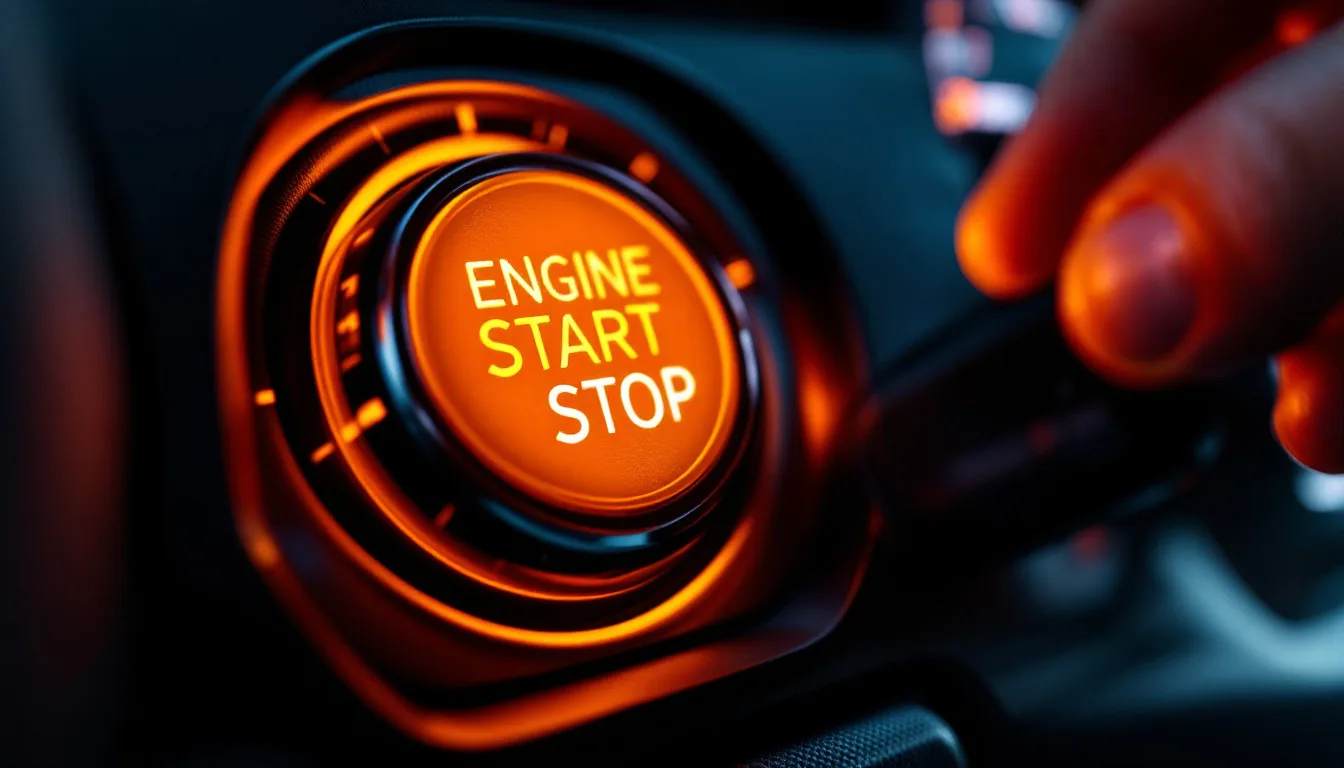
Push-to-Start Not Working Irving TX: No Fob Detected Fix
2026 push-to-start not working in Irving TX. Fix a no-fob-detected no-crank: dead fob battery, failed transponder, antenna ring, or brake interlock.
Push-to-Start Not Working in Irving TX: Why the Car Says "No Key Detected"
You press the brake, thumb the start button, and instead of the engine turning over you get a message — "Key Not Detected," "No Key Fob Found," "Smart Key Not in Vehicle" — while the fob is sitting right there in your pocket. It's a common and genuinely confusing failure, because the fob looks fine and the car looks dead. The good news is that most of the time the cause is simple and there's a manufacturer-designed backup way to start the car so you're not stranded.
As of July 2026, Irving Locksmith Pros diagnoses and fixes push-to-start faults on-site across Irving, Las Colinas, Coppell, Grapevine, and the surrounding DFW cities. This guide walks through what "no fob detected" actually means, the quick things to try first, the backup start method almost every push-button vehicle has, and how to tell whether you need a new fob or a module diagnosis.
Call or text 817-842-1751 with your vehicle's year, make, and model and exactly what the dashboard says. Describing the message precisely helps us arrive with the right fob and tooling.
What "No Fob Detected" Actually Means
A push-to-start system doesn't use a cut blade to authorize starting — it uses a short-range radio conversation. When you press the button, antennas inside the car broadcast a low-frequency signal; if a valid smart key is in range, it answers with an encrypted rolling code, and only on a verified match does the immobilizer authorize the engine. "No key detected" means that handshake didn't complete. Either the fob never answered, the car couldn't hear it, or the answer didn't verify.
That single failure has several possible causes, and they range from a thirty-second fix to a genuine repair:
- The fob's coin battery is dead or weak, so it can't transmit.
- The fob's electronics (the transponder or transmitter) have failed.
- A receiving antenna or the start-button reader in the car has failed, so the car can't hear a healthy fob.
- A brake or clutch interlock switch isn't registering, so the car won't allow start even after it recognizes the key.
- Signal interference or a fob damaged by water or impact.
The reason a locksmith diagnoses this on-site rather than guessing is that the fix for a dead fob battery is nothing like the fix for a failed antenna ring — and telling them apart takes testing, not assumptions.
Try These First
Before anything else, a few quick checks resolve a large share of "no fob detected" cases:
- Use the backup start method (below). If the car starts that way, your fob's radio is weak or dead — almost always just the coin battery. If it still won't start with the fob physically against the button, the problem is more likely in the car.
- Try the spare fob. If the spare starts the car normally, the first fob is the fault. If neither works, suspect the vehicle side.
- Confirm you're fully in park (or clutch fully depressed on a manual) and pressing the brake firmly. An interlock that isn't satisfied blocks start even with a recognized key.
- Check for a truly dead 12-volt battery. A car battery too weak to run the electronics can mimic a key fault; if the interior lights and dash are dim or dead, that's a starting-point.
If the backup method starts the car, you likely just need a fob battery — one of the simplest fixes there is. If it doesn't, on-site diagnosis is the efficient next step.
The Backup Start Method Almost Every Car Has
Automakers know smart-key batteries die, so nearly every push-to-start vehicle has a designed-in fallback that works even with a completely dead fob. The mechanism is a passive transponder chip inside the fob that needs no battery — it's energized by the car's antenna at very close range, exactly like a traditional transponder key.
The method varies by manufacturer, but it's usually one of these:
- Touch the fob to the start button. Many vehicles read the passive chip when you hold the fob directly against the button as you press it. The dash often shows a "hold key to button" prompt when it can't detect the fob wirelessly.
- Place the fob in a specific spot — a marked pocket in the center console, cupholder, or steering-column tray — that sits over the backup antenna, then press start.
- Insert the fob into a slot, on the models that provide one.
Your owner's manual shows the exact location and gesture for your vehicle. If this backup gets you running, drive to where the car can be serviced and replace the fob battery — but note the fob still needs a fresh battery to work normally at range afterward. This passive-chip fallback is the same immobilizer principle behind our key fob programming service.
"The number of 'my car won't start' calls that end with a two-dollar coin battery is remarkable. But you can't assume it — I've also seen dead antenna rings that looked identical from the driver's seat. The backup start test is what separates the two in about a minute." — Licensed automotive locksmith technician, Irving Locksmith Pros
Fob Problem vs. Module Problem: How We Tell
Once the quick checks are done, diagnosis comes down to isolating whether the fault is in the fob or in the vehicle:
- If the backup start works but wireless doesn't, the fob's transmitter or battery is the issue — a battery swap or, if the electronics failed, a replacement fob programmed to the car.
- If a known-good spare fob also fails, attention shifts to the vehicle: the receiving antenna, the start-button module, or the immobilizer.
- If the passive backup start also fails, the car may not be reading the chip at all — pointing at an antenna, a wiring fault, or an immobilizer/module problem rather than the fob.
- If start is blocked despite recognition, an interlock switch (brake or clutch) or a related sensor is the suspect.
This is why we diagnose before quoting a part. Selling you a new fob when the antenna ring failed would leave you exactly as stuck, so the immobilizer and no-start side of the job runs through our no-key-detected immobilizer service. If it turns out the fob simply failed, a replacement is straightforward car key replacement work — cut (for the emergency blade) and programmed on-site.
Push-to-Start Repair Cost in Irving (2026 Bands)
What you pay depends entirely on what's actually wrong — which is why on-site diagnosis is worth it before parts are ordered. The ranges below are realistic mobile figures for Irving as of July 2026, confirmed against your vehicle before work begins.
| Scenario | Typical Price Range | What Drives It |
|---|---|---|
| Fob coin-battery replacement | Minimal | Often resolves it entirely |
| On-site diagnosis (fob vs. module) | $75–$145 | Isolating the fault before parts |
| Smart / proximity fob replacement + programming | $300–$500 | Encrypted fob, coding to the car |
| European smart key replacement | $400–$700 | Higher-cost fob, European-tier tooling |
| Antenna / start-button / immobilizer repair | Quoted after inspection | Depends on the failed component |
For comparison, dealers often charge $500 to $800 for a single smart-key replacement plus a tow, and all-keys-lost European proximity jobs can reach $1,200 to $2,500 with multi-day waits. Mobile diagnosis frequently ends in the cheapest possible outcome — a coin battery — and when a fob really is needed, it's programmed on-site the same visit. See our guide to car key replacement cost in Irving TX for the full breakdown.
Why On-Site Diagnosis Beats Parts-Cannon Guessing
The temptation with an intermittent "no key detected" is to just buy a fob and hope. That's a gamble, because the symptom is shared by a dead battery, a failed transmitter, a bad antenna, and an interlock switch — problems with wildly different fixes. Consumer-protection guidance from the U.S. Federal Trade Commission recommends getting a clear estimate before authorizing repair work, precisely so you're not paying for a guess (ftc.gov). Roadside and consumer bodies such as AAA likewise advise diagnosing before replacing on no-start conditions (aaa.com).
There's a security dimension too. Smart-key systems exist because immobilizers meaningfully reduce vehicle theft, which the National Highway Traffic Safety Administration and the Insurance Institute for Highway Safety have both documented (nhtsa.gov, iihs.org). That same security is why a replacement fob must be properly enrolled — a benefit, not a hurdle. Professional standards for that enrollment come from bodies like the Associated Locksmiths of America and the National Automotive Service Task Force (aloa.org, nastf.org).
What We Verify Before Programming a Fob
Texas regulates locksmiths through the Texas Department of Public Safety Private Security program, and responsible automotive work means confirming you're entitled to the key. Before we program or replace a smart fob we confirm:
- Photo ID matching the registration or title.
- Proof of ownership — registration, title, insurance card, or lease showing your name and the VIN.
- The 17-character VIN, which we use to match the exact fob and pull the correct programming procedure.
- The dashboard message and symptom history, which shape the diagnosis.
Having this ready when you call speeds the quote and keeps the on-site visit short.
Frequently Asked Questions
Why does my car say "key not detected" when the fob is right there?
Because push-to-start relies on a radio handshake between the car and the fob, and that handshake didn't complete. The most common reason is a dead or weak coin battery in the fob, so it can't transmit. Other causes include a failed fob transmitter, a bad antenna or start-button reader in the car, or a brake or clutch interlock that isn't registering.
How do I start my car if the key fob battery is dead?
Almost every push-to-start vehicle has a battery-free backup: a passive chip in the fob that the car reads at very close range. Usually you hold the fob directly against the start button as you press it, or place it in a marked spot in the console or cupholder, then press start. Your owner's manual shows the exact location — and if it works, you likely just need a new fob battery.
How do I know if it's the fob or the car that's broken?
Test with the backup start method and a spare fob. If the backup start works but wireless doesn't, the fob's battery or transmitter is at fault. If a known-good spare also fails, the problem is on the vehicle side — an antenna, the start-button module, or the immobilizer. On-site diagnosis confirms which before any part is bought.
How much does it cost to fix push-to-start in Irving TX?
As of July 2026, if it's just the coin battery the cost is minimal. On-site diagnosis to isolate the fault runs $75 to $145. A replacement smart or proximity fob with programming is $300 to $500, and European smart keys run $400 to $700. Antenna, start-button, or immobilizer repairs are quoted after inspection since they depend on the failed component.
Can a dead 12-volt car battery cause a "no key" message?
Yes. A car battery too weak to power the electronics reliably can prevent the key handshake and produce misleading messages. If your interior lights and dashboard are dim or completely dead, address the vehicle battery first — it can mimic a key or immobilizer fault when the real problem is simply insufficient power.
Can you program a new smart key on-site if mine failed?
Yes. If diagnosis shows the fob's electronics have failed, we cut the emergency blade and program a replacement smart key to your vehicle on-site, with no tow and usually the same day. We verify ownership first, then enroll the new fob into your car's immobilizer so it starts normally.
Why won't the car start even though it recognizes my key?
If the car sees the key but still won't crank, the block is usually elsewhere — most often a brake or clutch interlock switch that isn't registering that you've pressed the pedal fully. Make sure you're firmly on the brake and fully in park (or the clutch fully down on a manual). If it persists, the interlock switch or a related sensor may need attention.
Get Your Push-to-Start Fixed in Irving Today
A car that won't recognize its key doesn't have to mean a tow or a dealer wait. Irving Locksmith Pros brings on-site diagnosis, fob replacement, and immobilizer repair to your driveway, office, or roadside across Irving, Las Colinas, Coppell, and the surrounding DFW cities — and we start with the cheapest likely cause instead of selling you a part you may not need.
Call or text 817-842-1751 or email contact@irvinglocksmithpros.com for a VIN-based quote. Explore our no-key-detected immobilizer and key fob programming services.
References
- National Highway Traffic Safety Administration — immobilizers and vehicle theft prevention: https://www.nhtsa.gov
- Federal Trade Commission — hiring a locksmith and avoiding scams: https://www.ftc.gov
- AAA — car key, fob, and roadside consumer guidance: https://www.aaa.com
- Insurance Institute for Highway Safety — vehicle anti-theft technology: https://www.iihs.org
- Associated Locksmiths of America (ALOA) — professional standards and programming: https://www.aloa.org
- National Automotive Service Task Force (NASTF) — secure vehicle data access: https://www.nastf.org
Reviewed by a licensed automotive locksmith technician at Irving Locksmith Pros. Texas DPS Private Security regulated. Mobile service; ownership verification required.