Subaru Ascent & Crosstrek Immobilizer Module Programming in Irving TX
2026 guide to Subaru Ascent and Crosstrek immobilizer and body integrated unit module programming in Irving TX, with honest ranges and diagnostics.
When a Subaru Problem Is a Module Problem, Not a Key Problem
There is a specific kind of Subaru call that starts with the owner apologizing for not knowing what to ask. The car cranks and dies. The security light on the cluster is doing something it never used to do. Somebody replaced a part recently, or the vehicle came from an auction, or a shop got partway into a repair and then said the words "it needs to be programmed."
That is a different conversation from a lost key, and pricing it like a lost key would be dishonest. As of August 2026, Irving Locksmith Pros handles Subaru Ascent and Crosstrek immobilizer work on-site across Irving, Las Colinas, Coppell, Grand Prairie and the surrounding cities, and the first thing we do on this class of job is separate the two possibilities: does the vehicle need a credential added, or does it need a module and a vehicle re-introduced to each other.
The one firm number on this page is the diagnostic and visit band: $75 to $145. That covers coming to the vehicle, reading the network, confirming which modules are present, which are communicating, and what the security system is actually complaining about. Everything downstream of that — module registration, immobilizer re-marriage, key credentials — is quoted after we have the VIN and the module identification off the part. We will not invent a precise number for module work over the phone, and you should be wary of anyone who does.
Call or text 817-842-1751 with your year, trim, and a description of what changed just before the symptom started.
What the Body Integrated Unit Actually Does
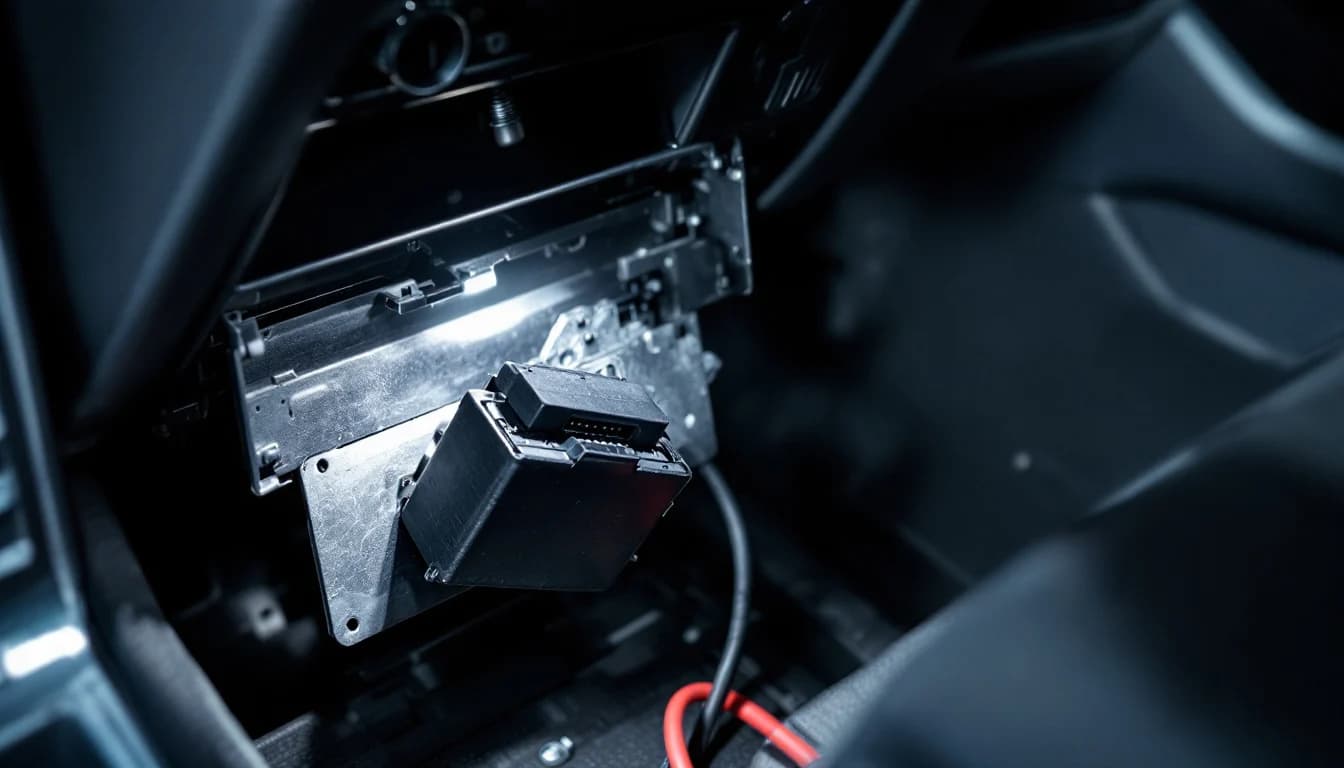
Subaru centralizes a great deal of body electronics in a module commonly called the body integrated unit. On the platforms we are discussing, it is the hub for a long list of ordinary functions — interior lighting, wipers, keyless entry, warning chimes, various door and lamp logic — and, critically, it participates in the immobilizer function.
That last role is what makes the module interesting to a locksmith. In broad strokes, the immobilizer holds a set of registered key identities. When you attempt to start the vehicle, the system reads the credential presented by the key, checks it against the registered set, and then has to agree with the engine control module that this is a vehicle allowed to run. If any link in that chain disagrees, the engine either refuses to start or starts and immediately dies, and the security telltale on the cluster typically starts flashing a pattern.
Two practical consequences fall out of that architecture.
First, the key and the module are a pair, not two independent things. A key is not valid in the abstract. It is valid because a specific module in a specific vehicle has it on a list. Move the key to another Subaru and it is a piece of plastic.
Second, replacing the module does not carry the list with it. A module out of a donor vehicle, or a new module out of a box, does not know your keys and in many cases does not yet know your vehicle. That is the whole reason module work exists as a job category.
The National Highway Traffic Safety Administration has documented for years how much anti-theft technology of this type reduces vehicle theft, and the Insurance Institute for Highway Safety has repeatedly shown immobilizer coverage to be one of the sharpest dividers in theft loss data between models (nhtsa.gov, iihs.org). The architecture is intentionally unfriendly to anyone who cannot prove they belong there. That is the point.
Blade Key Generations Versus Push-Button Start
Which physical interface your Subaru uses changes both the hardware involved and the shape of the job.
Bladed transponder generation. You insert a cut metal key into a lock cylinder and turn it. A coil antenna around the ignition energizes a transponder chip in the head of the key, the chip answers, and the immobilizer validates it. On the Crosstrek, entry and mid trims have commonly used this arrangement across much of its history. The fault modes here are mechanical as well as electronic — a worn cylinder, a damaged antenna ring, a broken chip — which is why a Subaru no-start is not automatically a module fault.
Keyless access with push-button start. The vehicle authenticates a proximity fob over radio using low-frequency antennas placed around the body, and the start button only works once that handshake succeeds. Better-equipped Crosstrek trims have commonly used this, and the Ascent, which arrived for the 2019 model year as Subaru's three-row crossover, has commonly shipped with push-button start across its range. There is still an emergency blade concealed inside the fob for the driver's door, and it will not start the vehicle.
The distinction matters when diagnosing. On a bladed vehicle a persistent no-start can be a cylinder, a coil, a key or a module. On a push-button vehicle the same symptom adds antenna placement, receiver health and low-voltage supply to the suspect list. Our companion write-ups on Subaru key replacement and immobilizer programming and Subaru Outback and Forester ignition repair walk the key-side and the mechanical-ignition-side of that list respectively.
"The call I dread is the one where somebody already swapped a used module off a parts car and now wants me to just make a key. I cannot make a key valid on a module that has not been introduced to this vehicle yet. That is the job now, and it is bigger than a key. Tell me about the swap on the phone and I bring the right approach." — a senior technician on our Irving crew
Replacing a Module Is Registration, Not Plug-and-Play
This is the single most important thing for a Subaru owner to understand before authorizing anyone to change a module.
Modern vehicle control modules are not like a starter or an alternator. Bolting the new one in place and connecting the harness is the beginning of the work, not the end. Depending on which module was changed and how it was sourced, the vehicle typically needs some combination of the following before it will run and behave normally:
- Configuration or coding to this specific vehicle, so the module knows which options and equipment it is responsible for.
- Immobilizer registration, so the module and the rest of the security chain agree on a shared identity.
- Key re-registration, because the newly installed module often does not hold your existing keys and every key you intend to keep must be enrolled.
- Security access to perform any of the above, which on this class of work is a controlled process rather than something any scan tool will simply do on request.
That last point is worth expanding, because it explains both cost and honesty. Access to immobilizer-level functions on modern vehicles is deliberately gated. In the United States, the National Automotive Service Task Force administers the framework under which qualified, registered locksmiths and independent shops can obtain vehicle security information and perform this work legitimately, with identity verification and record keeping attached (nastf.org). The Associated Locksmiths of America holds its members to the same expectation of documented ownership verification on security-related work (aloa.org). A shop that can get into these functions is a shop that has gone through that process. A shop that offers to do it for $40 cash in a parking lot has not.
Because the specific procedure depends on which module, which supplier, which model year and whether the part was new or used, the honest answer on price is a range confirmed after we have the VIN and read the identification off the module itself. What we can commit to before that is the diagnostic band of $75 to $145 and a straight answer about whether this is work we can complete or work that belongs at the dealer.
Programming Job or Diagnostic Job? How We Tell
Owners want to know which side of the line they are on, ideally before spending money. Here is roughly how we sort it.
It leans toward a programming job when:
- A module was recently replaced and the symptom started immediately afterward.
- The vehicle ran fine until a repair was performed, and the repair involved the engine control module, the body integrated unit or the ignition system.
- Keys need to be added or re-registered because the vehicle changed hands, or the previous owner kept a key you want invalidated.
- The security system is complaining in a way that is consistent and repeatable, not intermittent.
It leans toward a diagnostic job when:
- The symptom is intermittent. Intermittent faults on this class of system are frequently wiring, connectors or low voltage rather than programming.
- The vehicle has a rebuilt title or auction history and nobody can tell you what has been replaced.
- Multiple unrelated systems are misbehaving at once, which often points at a power or ground problem upstream rather than at the immobilizer.
- Nothing on the network responds, which usually means a supply or communication fault has to be found before anything can be programmed.
It is neither when the low-voltage battery is weak. This deserves its own mention because it wastes so much money. Marginal battery voltage produces exactly the symptoms owners interpret as a failing immobilizer: intermittent no-start, warning lights that appear together, a fob that seems to work sometimes. Programming procedures also require stable voltage to run safely, so no responsible technician starts one on a questionable battery. Confirming that first is cheap. Skipping it is not.
What This Costs in Irving
The table below sets expectations for the Ascent and Crosstrek. The one firm number is the diagnostic band. Key work follows the ordinary key bands for this class of vehicle. Module work itself is a range confirmed after the VIN and the module identification, because the procedure genuinely varies.
| Ascent / Crosstrek Scenario | What to Expect | Why |
|---|---|---|
| On-site diagnostic and visit | $75–$145 | Firm. Network read, module inventory, confirming the actual fault |
| Bladed transponder key added with a working key present | $150–$275 | Blade cut plus credential enrollment |
| Bladed transponder key, all keys lost | $250–$400 | No trusted credential; longer security procedure |
| Push-button proximity fob added with a working key present | $300–$500 | Higher fob cost plus proximity enrollment and blade cut |
| Push-button proximity fob, all keys lost | $400–$600 | No trusted credential, longer procedure, higher risk |
| Immobilizer registration after a module replacement | Range quoted after VIN and module ID | Procedure varies by module, source and model year |
| Used or donor module installed by someone else | Diagnosis first, then quoted | Mismatched security data has to be characterized before anything else |
| Very new model year with restricted security software | May be dealer-only | Said on the phone, not discovered in your driveway |
Two caveats sit beside that table permanently. Some model years require security software the aftermarket has not been granted, and in those cases the dealer is the only honest path. And a vehicle carrying a donor module installed elsewhere is a diagnostic job by definition, because nobody can tell you what state the security data is in until it has been read.
Everything on this page lives under our module repair and programming service and the related no key detected and immobilizer service.
Ownership Verification Is Not Optional on This Work
Immobilizer-level work sits behind ownership verification for good reason, and it applies just as firmly to module registration as it does to cutting a key.
Bring photo identification and proof of ownership tied to that specific VIN — registration, title, insurance card or a lease naming you. Texas regulates locksmiths through the Department of Public Safety Private Security program, and confirming entitlement before touching a vehicle's security system is a required part of the job rather than a formality we could waive if you were in a hurry.
If you are shopping quotes for this work, two consumer notes are worth carrying with you. The Federal Trade Commission's locksmith guidance warns specifically about quotes that are low on the phone and climb steeply on arrival, which is a recurring pattern on security-related automotive work (ftc.gov). AAA's consumer material on keys and roadside service makes the complementary point about confirming the scope of work in writing before it begins rather than under pressure (aaa.com). On module work in particular, insist that the estimate distinguishes diagnosis from the repair, because they are genuinely different steps and a shop that blurs them is hiding something.
Frequently Asked Questions
What does Subaru immobilizer module programming cost in Irving TX?
The firm number we quote is the on-site diagnostic and visit band of $75 to $145, which covers coming to the vehicle, reading the network and identifying the actual fault. The module registration or immobilizer re-marriage itself is quoted as a range after we have your VIN and the identification off the module, because the procedure varies meaningfully by module type, source and model year. Key work follows the ordinary bands: $150 to $275 for a transponder key with a working key present, $300 to $500 for a proximity fob.
What is the body integrated unit on a Subaru?
It is the module that centralizes a wide range of body electronics on these platforms, including keyless entry, lighting logic, chimes and, importantly, participation in the immobilizer function. Because it takes part in the security chain, replacing it is not a bolt-in operation. The replacement typically has to be configured to your vehicle and introduced to the security system, and your keys often have to be re-registered afterward.
If I buy a used module from a parts car, can you just make a key work with it?
Usually not directly, and this is the most common misunderstanding we deal with. A used module arrives holding a different vehicle's security data and does not recognize your car or your keys. Before any key can be valid, the module and the vehicle have to be reconciled, and that is a separate and larger job than making a key. Tell us about the swap when you call so we bring the right approach rather than discovering it in your driveway.
Does the Subaru Ascent use a push-button start or a regular key?
The Ascent, which arrived for the 2019 model year as Subaru's three-row crossover, has commonly shipped with keyless access and push-button start across its range. The Crosstrek is more mixed: entry and mid trims have commonly used a bladed transponder key with a conventional ignition, while better-equipped trims use a proximity fob and a start button. The VIN confirms which configuration your specific vehicle left the factory with.
My Crosstrek cranks but will not stay running and the security light is flashing. Is that the module?
It might be, but it is not a safe assumption. That symptom pattern is consistent with an immobilizer refusing to authorize the engine, and the cause can be a failed key transponder, a damaged antenna ring around the ignition, a wiring or connector fault, marginal battery voltage, or a module problem. Diagnosis has to come before parts. Replacing a module on a guess is how a moderate repair becomes an expensive one.
Can weak battery voltage cause immobilizer symptoms?
Yes, and it is far more common than owners expect. Marginal voltage produces intermittent no-starts, multiple warning lights appearing together and fobs that seem to work only sometimes — all of which read as security faults. Programming procedures also require stable voltage to run safely, so we confirm battery and charging health before starting any registration work. Checking it first is inexpensive and regularly saves the entire repair.
Is this something a mobile locksmith can do, or does it have to go to the dealer?
A great deal of it is genuinely mobile work, which matters because a vehicle with an immobilizer fault frequently cannot be driven and would otherwise need a tow costing $150 to $300 before anyone looked at it. That said, some model years require security software the aftermarket has not been granted access to, and in those cases the dealer is the correct answer. We tell you that on the phone rather than collecting a trip fee to find out.
Get a Straight Answer on Your Subaru in Irving
Immobilizer and module faults on an Ascent or Crosstrek are the kind of problem where the wrong first move gets expensive quickly. The right first move is a diagnostic on the vehicle, in your driveway, with someone who will tell you plainly whether this is a key, a module, a wiring fault or a battery.
Call or text 817-842-1751 or email contact@irvinglocksmithpros.com with your year, trim, VIN and a description of what changed just before the symptom appeared. With 15+ years of automotive locksmith work behind the van, we would rather send you to the dealer honestly than sell you a procedure your vehicle does not need.
References
- National Highway Traffic Safety Administration — vehicle theft prevention and anti-theft technology: https://www.nhtsa.gov
- Insurance Institute for Highway Safety — immobilizer coverage and vehicle theft loss data: https://www.iihs.org
- National Automotive Service Task Force (NASTF) — secure vehicle security information and registered locksmith access: https://www.nastf.org
- Associated Locksmiths of America (ALOA) — professional automotive locksmith standards and ownership verification: https://www.aloa.org
- SAE International — ground vehicle electrical and communication architecture standards: https://www.sae.org
- Federal Trade Commission — hiring a locksmith and avoiding estimate scams: https://www.ftc.gov
- AAA — consumer guidance on car keys, no-start diagnosis and roadside service: https://www.aaa.com
Reviewed by a licensed automotive locksmith technician at Irving Locksmith Pros. Texas DPS Private Security regulated. Mobile service; ownership verification required.