
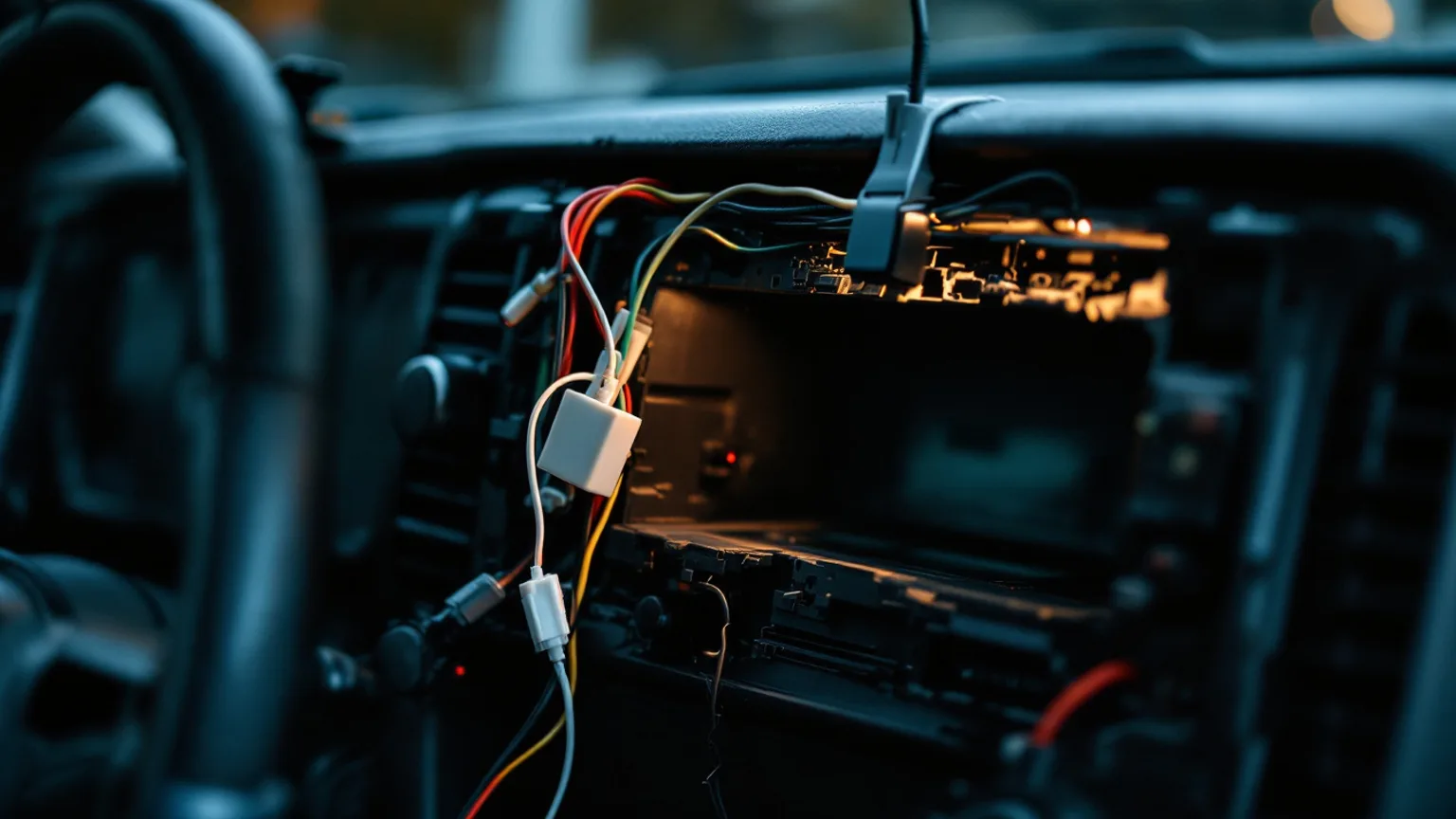
Car Won't Start After an Aftermarket Radio Install? CAN Bus and Immobilizer Causes (Irving TX)
2026 guide for Irving TX drivers: why a car cranks but won't start, shows key warnings, or drains the battery after a new stereo, and what the fix costs.
Short answer. When a car cranks but will not start, throws a key or security warning, or wakes up with a dead battery right after an aftermarket stereo went in, the radio installation is the prime suspect, and in most cases the car's own modules are fine. The usual causes, in order, are a miswired or shorted data wire at the radio harness, a blown fuse the radio shares with the ignition or body computer, a disturbed connector near the steering column, and an interface module configured for the wrong vehicle. As of October 2026 in Irving, on-site diagnosis runs $75 to $145, a key that needs reprogramming after the fault is cleared runs $150 to $275 for a transponder key or $300 to $500 for a smart key, and any module work gets an exact quote after we have the VIN and the module identified. Call or text 817-842-1751.
Why a Radio Can Keep a Car From Starting
On a car built before the mid-2000s, the radio was an island. It had power, ground, speakers, and an antenna lead, and nothing it did could reach the engine. That stopped being true as automakers moved the radio onto the vehicle's data network so it could show door-open warnings, follow the key for anti-theft, dim with the dash, and talk to steering-wheel buttons and the backup camera.
On a modern car the factory radio sits on one of the controller area network buses, the same wiring that carries messages between the body control module, the instrument cluster, the engine controller, and, on many vehicles, the immobilizer. The Society of Automotive Engineers publishes the standards those networks follow (sae.org), and the key fact for this article is that a CAN bus is a shared pair of wires. Every module on it hears every message. A fault on the pair, a short to ground, a short to power, or the two wires crossed, can silence the whole bus or flood it with garbage. When that happens the immobilizer may not get the message that an authorized key is present, the engine controller may not get permission to run, and the dash may light up with warnings that have nothing to do with the radio.
The radio connector is where an installer's hands were last. That is why the radio is the first place to look.
Symptoms That Point at the Install
Not every post-install problem is the same problem. Match what the car is doing to the pattern below before you call anyone.
| Symptom | What it usually means | Where to look first |
|---|---|---|
| Cranks normally but will not fire; security or key light on | Immobilizer is not seeing an authorized key, or the engine controller is not getting the start-authorization message | Data wires at the radio harness; ignition and column connectors |
| "Key not detected" or "No key detected" on a push-button car | The fob receiver cannot talk to the body computer, or the body computer is off the network | Radio harness data wires; receiver module connector behind the dash |
| Dash warnings flood on: ABS, airbag, traction, check engine | Network fault; modules cannot hear each other | Shorted or crossed CAN wires at the radio |
| Car starts fine but the battery is dead every morning | A module is being held awake, often by a radio that never sleeps or an always-on wire tapped at the wrong place | Radio power and accessory wires; interface module settings |
| Steering-wheel buttons, backup camera, or chimes stopped working | Interface module not configured for the vehicle, or the wrong harness | Interface module programming |
| Car will not shut off, or the key will not come out | Ignition-sense wire tapped incorrectly, or a column connector disturbed | Accessory and ignition wires; column harness |
| Everything worked for a week, then failed | A connector that was left loose has worked free, or a chafed wire finally touched metal | Behind the radio, along the kick panel route |
Two of those rows deserve special attention from a locksmith's point of view. The first two, the no-start with a security light and the key-not-detected message, are exactly the symptoms a failed key or immobilizer produces. People understandably call for a new key. If the radio went in last week, the key is almost never the problem, and we will say so on the phone before anyone pays for a fob.
The Five Most Common Causes, In Order
1. Data wires miswired, crossed, or shorted at the radio harness
The most common cause by a wide margin. On many vehicles the factory radio connector carries the CAN high and CAN low wires, and aftermarket harness adapters are supposed to carry them through so the car's network stays intact. Installers get this wrong in three ways: they land the two data wires backwards, they tape one of them off and leave the bus open, or a stray strand of a data wire touches a ground or power wire behind the unit. Any of those can take down the bus the immobilizer lives on.
Chrysler, Dodge, Jeep, and Ram vehicles are the group we see most often, because their interior data bus runs straight through the radio connector and the immobilizer depends on it. Our Ram 1500 RF hub guide and our Dodge, Ram, Jeep, and Chrysler key fob guide describe the modules on that bus. General Motors vehicles with the older theft-deterrent system are next; our GM security light no-start guide covers what that light means when the bus is healthy, which is a different diagnosis from the one in this article.
2. A shared fuse
Many cars put the radio on a fuse it shares with something that matters, such as the body computer's accessory feed or the ignition-sense circuit. An installer who tapped the wrong wire, or who shorted the radio's power lead while testing, can blow that fuse. The radio then gets wired to a different source and works fine, while the shared circuit stays dead and the car will not start. A five-minute fuse check with the diagram for your vehicle finds this. It is the cheapest cause on the list.
3. A disturbed connector near the steering column
To route wires or reach the ignition-sense lead, installers often work in the column area. The antenna ring for the transponder key sits around the ignition on keyed cars, and the connector for it can be bumped loose or left partly seated. On push-button cars the start-button connector and the column control module are in the same space. A loose antenna connector produces a car that cranks and will not start with the security light on, which is the classic failed-key symptom. It is not the key.
4. The interface module configured for the wrong vehicle
Most aftermarket installs on cars from the last fifteen years use an integration module that translates between the car's data bus and the new head unit so steering-wheel controls, chimes, and the factory amplifier keep working. The module has to be programmed for the exact year, make, model, and trim. Program it for the wrong one and it can send messages the car does not expect. On most vehicles that just breaks the steering-wheel buttons. On a few it causes warnings or keeps modules awake. The fix is reprogramming the module with the installer's software, which is the installer's job, not ours.
5. A battery disconnected without a memory saver
Some installers disconnect the battery before starting. On many cars that is harmless. On some, losing power clears learned values the body computer or engine controller depended on, and the car behaves oddly until a relearn is done. On a handful of vehicles a hard power loss can leave the immobilizer in a state where it no longer recognizes the key until it is re-synchronized. Our guide to a car that will not start after a battery change covers the relearn side of this in detail; the symptoms overlap with this article because the cause, a power interruption, is the same.
How We Diagnose It in the Driveway
Here is the order we work in. It is written so you can do the first two steps yourself before calling.
Step 1: Confirm the timeline. When did the radio go in, and when did the problem start? A problem within hours is almost always the install. A problem three weeks later can still be the install, usually a connector that worked loose, but a coincidence becomes possible and we keep an open mind.
Step 2: Try the spare key. If a spare starts the car, the first key may have been damaged or de-registered by a power event and needs reprogramming. If no key starts it and the radio is new, keep going.
Step 3: Unplug the new head unit. With the ignition off, pull the radio and disconnect the aftermarket harness and the interface module. Try to start the car. If it starts, the cause is in what you just unplugged. This single test settles a large share of these calls, and you can do it yourself if the trim comes off easily. If it does not, stop; broken trim clips are not worth the saving.
Step 4: Read the network codes. A scan tool connected to the diagnostic port shows which modules are responding and which are missing. Codes in the U-series, such as U0100 for lost communication with the engine controller or U0140 for the body computer, tell us the bus is down. Codes that name the immobilizer or key tell us the bus is up but the key handshake is failing. The distinction decides whether we are looking for a wiring fault or a key fault.
Step 5: Inspect the harness. Pins backed out of the connector, a data wire landed on the wrong terminal, a tape joint on a bare strand, a fuse tap stacked on the wrong leg. This is the part that takes a light, a diagram, and patience.
Step 6: Fix the wiring, then test the keys. Once the network is healthy, most cars start on their existing keys with no further work. A minority need a key re-registered, and we do that on the spot.
"The call usually starts with 'I need a new key, the car stopped seeing it.' I ask what changed. 'Nothing, well, my nephew put a stereo in on Saturday.' I have never once sold that customer a key. I have pulled a lot of radios." — a senior technician on our Irving crew
What It Costs in Irving
On-site diagnosis runs $75 to $145 and includes the scan, the harness inspection, and the unplug test. Many of these jobs end there, with a corrected wire or a replaced fuse and a car that starts.
If a key needs re-registering after the fault is cleared, a transponder key runs $150 to $275 and a smart key $300 to $500, in line with our standard bands. If the fault damaged a module, which is uncommon but happens when a data wire was shorted to battery voltage for a while, we give an exact quote after we have the VIN and the module identified. Our overview of car computer and module programming explains what that work involves and why we do not guess at it on the phone.
What we do not do is reprogram the interface module or rewire the stereo. Those belong to the installer, and a reputable shop will stand behind its work. The Federal Trade Commission's guidance on repair services is worth knowing here: an installer who caused a fault is responsible for correcting it, and you are entitled to an itemized account of what was done (ftc.gov). Bring our diagnosis back to the shop that did the install.
When It Is Not the Radio
Sometimes the timing is a coincidence. A key fob battery dies on the same weekend the stereo goes in. An immobilizer antenna fails on its own. A twelve-year-old car's body computer picks that week to quit. We keep those possibilities in view, and the scan-tool step is what separates them from an install fault.
If the scan shows the network healthy and the key handshake failing with the radio unplugged, the problem is in the key system, and we move to the key-side diagnosis in our immobilizer dash message guide. If the car has a push-button start and the issue is intermittent fob detection, our guide to push-to-start not working with no fob detected picks up from there.
Protecting Yourself Before the Next Install
- Use a vehicle-specific harness and interface module, not a universal one. The harness carries the data wires through correctly only if it was built for your exact vehicle.
- Ask the installer whether the radio is on the data bus for your car and how they handle the CAN wires. If the answer is a shrug, go elsewhere.
- Ask for the battery to stay connected unless the installer has a specific reason, or for a memory saver to be used.
- Test the car before you leave the shop. Start it, lock it, unlock it, confirm every dash warning is off, and check that the key-related buttons on the fob still work.
- Keep the paperwork. If a fault shows up later, the installer's invoice is what makes the repair their problem.
Aftermarket radios are regulated as radio equipment by the Federal Communications Commission (fcc.gov), and the National Highway Traffic Safety Administration's consumer guidance on aftermarket equipment is clear that modifications must not interfere with required safety systems, which include the warnings that run over the same data bus (nhtsa.gov). The American Automobile Association's advice on choosing a repair shop applies to stereo installers as much as mechanics (aaa.com), and the Associated Locksmiths of America's professional standards are why we verify ownership before touching a key on any of these calls (aloa.org).
Frequently Asked Questions
Why won't my car start after I installed a new radio?
Most often a data wire at the radio harness was miswired, crossed, or shorted, which silences the network the immobilizer uses to confirm a key is present. Other common causes are a blown fuse the radio shares with the ignition or body computer, a connector near the steering column that was disturbed during the install, and an interface module programmed for the wrong vehicle. The key itself is rarely the problem.
Can a stereo install damage the immobilizer?
It can disrupt it, and in uncommon cases damage a module. A data wire shorted to battery voltage for a period can harm a module that sits on that bus. More often the immobilizer is fine and simply cannot hear the key because the network is down. Once the wiring is corrected, most cars start on their existing keys with no further work.
Should I unplug the new radio to test?
Yes, if the trim comes off easily. With the ignition off, disconnect the aftermarket harness and the interface module and try to start the car. If it starts, the cause is in what you unplugged. If removing the trim is a struggle, stop and let someone with the right tools do it rather than breaking clips.
Do I need a new key after a radio install problem?
Usually not. The security light and the key-not-detected message look like a key fault, but when they appear right after an install the cause is almost always wiring. We test the keys only after the network is healthy, and re-register one only if the scan shows it is genuinely no longer recognized.
How much does it cost to diagnose a no-start after a stereo install in Irving?
As of October 2026, on-site diagnosis runs $75 to $145 and includes the scan, the harness inspection, and the unplug test. If a key must be re-registered afterward, a transponder key runs $150 to $275 and a smart key $300 to $500. Module repair, if any, is quoted after we have the VIN and the module identified.
Will the installer fix it, or do I need a locksmith?
Both have a role. Wiring and interface-module programming are the installer's work, and a reputable shop will correct a fault it caused. A locksmith's part is confirming whether the key system was affected and re-registering a key if it was. Our diagnosis gives you a clear account to take back to the installer.
Which cars are most affected by this?
Vehicles whose factory radio sits on the same data bus as the immobilizer and body computer. Chrysler, Dodge, Jeep, and Ram are the group we see most, followed by General Motors and Ford models from the last fifteen years. Older cars with an isolated radio circuit are rarely affected.
Stuck in the Driveway?
Text or call 817-842-1751, tell us the year, make, model, and when the radio went in, and we will tell you on the phone whether this sounds like wiring or a key before anyone pays for a visit. We cover Irving, Las Colinas, Grand Prairie, Euless, Farmers Branch, and the surrounding cities. Our immobilizer and no-key-detected service page covers the key-side work, and our module repair and programming service page covers what happens in the rare case a module was harmed.
References
- SAE International, controller area network and in-vehicle communication standards (sae.org)
- U.S. National Highway Traffic Safety Administration, consumer guidance on aftermarket equipment and vehicle safety systems (nhtsa.gov)
- Federal Communications Commission, equipment authorization for radio-frequency devices (fcc.gov)
- Federal Trade Commission, consumer guidance on auto repair and service disputes (ftc.gov)
- American Automobile Association, guidance on choosing a repair facility (aaa.com)
- Associated Locksmiths of America, professional standards for automotive locksmiths (aloa.org)
- National Automotive Service Task Force, vehicle security and secure data release program (nastf.org)
- Texas Department of Public Safety, Private Security Program licensing for locksmiths