TCM Programming in Irving TX: Transmission Control Module Guide (2026)
2026 Irving TX guide to transmission control module (TCM) programming. Shift-problem symptoms, adaptation, replacement, reflash, VIN sync, and mobile service.
When the Transmission Is Fine but the Computer Isn't
Not every rough shift, stuck gear, or limp-mode warning means your transmission is worn out. On modern vehicles the transmission control module (TCM) — the computer that decides when and how the transmission shifts — is a common and far cheaper point of failure than the gearbox itself. And when a TCM is replaced, reset, or paired with a new transmission, it does not just work out of the box: it has to be VIN-synced, flashed with the correct calibration, and adapted to your specific vehicle before shifting returns to normal.
At Irving Locksmith Pros we handle mobile module programming across Irving, Las Colinas, Grand Prairie, and the wider DFW metro. This 2026 guide covers what a TCM does, the shift-related symptoms that point to it, how adaptation and reflashing work, when a mobile programmer can do the job versus when the dealer is required, and what it honestly costs. Call or text 817-842-1751 for a VIN-based quote.
As of July 2026, adaptive-learning transmissions are the norm, which makes the "adaptation" step just as important as the flash — a point many drivers only discover when a swapped module shifts harshly until it relearns.
What the TCM Actually Controls
The transmission control module is a dedicated computer (sometimes standalone, sometimes integrated into the PCM as a combined powertrain unit) that manages:
- Shift timing and firmness — deciding which gear to select and how aggressively to apply the clutches based on throttle, speed, and load.
- Torque converter lockup — engaging and releasing the converter clutch for efficiency.
- Line pressure and solenoid control — commanding the hydraulic valve body through electronic solenoids.
- Adaptive learning — continuously adjusting shift points and pressures to compensate for normal wear, so the transmission keeps shifting smoothly over time.
That last function is why TCM work is not just "install and go." When the module is replaced or reset, its learned adaptation values are wiped. A fresh module starts with baseline shift maps and must relearn your transmission's actual behavior. Until it does, you may feel harsh or delayed shifts that gradually smooth out — or that require a guided adaptation procedure to reset properly.
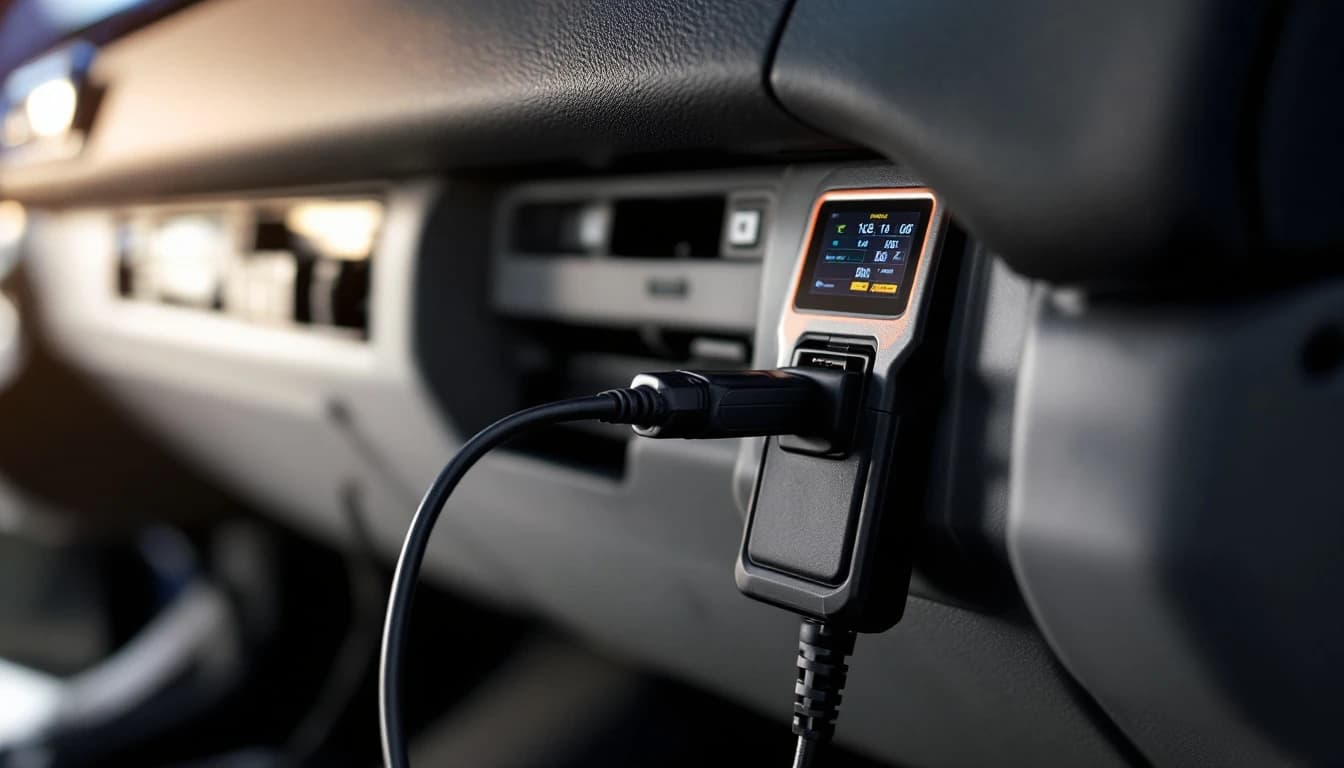
On any 1996-and-newer U.S. vehicle, the TCM is reached through the same standardized OBD-II port the EPA mandates for emissions-related diagnostics, and reprogramming follows the SAE International J2534 pass-through standard that lets an approved interface flash modules across many brands.
Symptoms That Point to the TCM — Not the Transmission
TCM faults and mechanical transmission faults can feel similar from the driver's seat, which is why a proper diagnosis matters before anyone spends money. Symptoms that commonly trace back to the control module or its programming include:
- Erratic or harsh shifting that appears suddenly rather than developing gradually.
- Stuck in one gear / limp mode — the vehicle defaults to a safe gear (often 2nd or 3rd) to protect itself.
- Failure to shift into or out of a specific gear.
- Transmission warning light or specific solenoid/TCM fault codes stored in memory.
- Delayed engagement when shifting from park to drive or reverse.
- No communication with the transmission module during a scan — a strong sign of a dead or unpowered TCM.
Here is the honest caveat: every one of these can also be caused by low or degraded fluid, a failing solenoid pack, wiring and ground faults, or genuine internal wear. A responsible programmer confirms the module is truly at fault — often by checking for communication, reviewing stored codes, and ruling out fluid and wiring — before recommending replacement. Replacing a healthy TCM fixes nothing. It is also worth checking whether your specific model has an open service action through NHTSA recalls, because some shift complaints trace to a manufacturer software update rather than a failed part.
Adaptation, Reflash, Replacement: The Three Kinds of TCM Work
TCM service falls into three overlapping jobs, and knowing which one you need controls the cost:
1. Reflash / recalibration (module stays). Your existing TCM is healthy but running outdated software, or a known shift-quality issue is fixed by a manufacturer calibration update. The fix is writing a new calibration file to the existing module over the OBD-II port — no new parts. This is the least expensive path.
2. Adaptation / relearn (after service). After a transmission service, valve-body replacement, or module reset, the adaptive values are cleared and the TCM must relearn. Some vehicles relearn automatically over miles of driving; others need a guided relearn procedure run with a scan tool to reset shift adapts cleanly. Skipping this is the usual reason a "repaired" transmission still shifts harshly.
3. Replacement + programming (new or used module). The module itself has failed and must be replaced. A new or remanufactured TCM then needs VIN coding, the correct calibration flashed, and adaptation performed. If you pair it with a replacement transmission, both may need to be initialized together.
New vs. Used TCM: The Same Coin-Flip Warning as Engine Computers
Just like an engine computer, a used transmission control module can be VIN-locked to the vehicle it was pulled from. On some platforms a used TCM can be reset to a virgin state and reprogrammed to your VIN; on others the security data is married to the donor and the module is unusable on your car. A new OEM-blank or a rebuilder-programmed remanufactured unit avoids that gamble but costs more up front.
As one credentialed programmer on our team describes it: "With transmission modules the surprise is rarely the flash — it's the adaptation. People assume a new TCM means a perfect shift the first mile. On an adaptive box it can shift firm for a while until the relearn settles, and on a few platforms you have to run the relearn manually or it never fully smooths out."
Because the right approach depends entirely on your make, model, year, and module part number, we quote from your VIN — never from a vague description over the phone.
Mobile Programmer vs. Dealer for TCM Work
A qualified mobile locksmith-programmer with J2534 tooling and OEM software access can handle a large share of TCM work on-site. Where the line falls, as of July 2026:
A mobile programmer is usually the right call when:
- The job is a calibration reflash or a guided adaptation on a common domestic or Asian platform.
- A remanufactured or OEM-blank TCM needs VIN coding and a relearn.
- You want on-site service because the car is in limp mode and you would rather not risk a long drive — see our Irving service area and Grand Prairie coverage.
The dealer or a transmission specialist is the better path when:
- The calibration is only available through a live, credentialed OEM server session.
- The vehicle is a current-model-year or secure-gateway platform whose files independent tools do not yet support.
- The transmission itself needs mechanical work — a control-module programmer flashes computers; internal rebuilds belong to a transmission shop.
We are upfront about that boundary. If your problem is mechanical rather than electronic, we will tell you, and we will not sell you programming you do not need. For the broader picture of how we scope and price module jobs, see our module repair and programming service.
Honest Cost Ranges for TCM Programming in Irving
These are planning ranges for the Irving / DFW area as of July 2026. They are not a quote. Your exact price depends on which of the three jobs you need, the module source, the platform's security, and whether key/immobilizer or other module work is bundled in. We give a firm number only after confirming your VIN and, if a part is involved, the module part number.
| Job | Part Range | Programming / Labor | Notes |
|---|---|---|---|
| Calibration reflash (existing TCM) | None | $100–$300 | Software update over OBD-II; no new parts |
| Adaptation / shift relearn after service | None | $80–$200 | Guided relearn to reset shift adapts |
| VIN-code & flash customer-supplied module | You supply | $120–$350 | Write VIN, load calibration, adapt |
| Reman TCM (pre-flashed) install + adapt | $150–$600 | $100–$300 | Confirm rebuilder VIN coding, relearn |
| Used TCM — clearable, reflash to your VIN | $80–$350 | $150–$400 | Reset donor lock, VIN-code, adapt |
| New OEM part sourced + programmed | $250–$1,200+ | $150–$400 | Source correct part, flash, adapt |
| Secure-gateway / current-model-year platform | Varies | Dealer/specialist | May require OEM server session |
Why programming is often the cheaper half: on many vehicles the TCM part itself is less expensive than a full transmission, which is exactly why confirming the module — not the gearbox — is the failure can save you thousands. Anyone quoting a flat TCM price without your VIN is guessing at the part cost.
What We Need Before We Program a TCM
- Your VIN (17 characters) so we can confirm the correct calibration and part number.
- Proof of ownership and photo ID. Even though a TCM is not the primary anti-theft module, responsible programmers verify ownership before performing secured module work — consistent with the National Automotive Service Task Force Secure Data Release Model and the professional standards of the Associated Locksmiths of America.
- The module part number if you already bought a TCM, so we can confirm the match before arriving.
- A healthy battery. Flashing draws steady voltage; low voltage mid-flash can corrupt a module. We use a maintainer, but a good battery matters.
Your Rights and Licensing in Texas
In Texas, locksmith and vehicle security services are regulated through the Texas Department of Public Safety Private Security Program — not a separate trade board. You can verify a company's licensing through the Texas DPS Regulatory Services Division. On the consumer side, the Federal Trade Commission's auto repair guidance spells out your right to a clear estimate and no bait-and-switch. We honor both: a VIN-based quote before we start, and no surprise add-ons after.
Frequently Asked Questions
What are the signs my TCM is bad and not the transmission?
Symptoms that lean toward the control module include sudden erratic or harsh shifting, being stuck in one gear or limp mode, TCM or solenoid fault codes, delayed engagement, and no communication with the transmission during a scan. The catch is that low fluid, a failing solenoid, or wiring faults can mimic these. A proper diagnosis confirms whether the module or the transmission itself is at fault before any part is replaced.
Does a new transmission control module need to be programmed?
Yes. A replacement TCM must be VIN-coded, flashed with the correct calibration for your exact vehicle, and adapted so it relearns your transmission's shift behavior. Installing a bare or unadapted module typically results in harsh shifting, fault codes, or a no-shift condition until programming and adaptation are completed.
What is transmission adaptation and why does it matter?
Adaptation is the TCM's continuous learning of your transmission's real behavior so it can keep shifts smooth as components wear. When a module is replaced or reset, those learned values are wiped and must be relearned. Some vehicles relearn automatically over miles of driving; others need a guided relearn run with a scan tool, or the transmission keeps shifting firmly.
Can a mobile locksmith program my TCM in Irving, or do I need the dealer?
A qualified mobile programmer with J2534 tooling can handle most TCM reflashes, adaptations, and VIN-coded replacements on common domestic and Asian platforms, on-site. The dealer is needed when the calibration requires a live OEM server session, the platform is a restricted secure-gateway or current-model-year design, or the transmission needs mechanical repair rather than programming.
Can I use a used TCM from a junkyard?
Sometimes. A used TCM may be VIN-locked to its donor vehicle. On some platforms the lock can be cleared and the module reprogrammed to your VIN; on others the security data is permanently married and the module cannot be used. It depends on your make, model, year, and the module part number, which is why we quote from the VIN.
How much does TCM programming cost in Irving?
As of July 2026, a calibration reflash or adaptation commonly runs about $80 to $350 in labor with no new parts. A full replacement adds the module cost — roughly $80 for a used unit to over $1,200 for a new OEM part on a late-model vehicle. We give a firm quote only after confirming your VIN and module part number.
Can you do TCM programming at my location if the car is in limp mode?
Yes. Our service is mobile, so we bring the programming equipment and a battery maintainer to your home, workplace, or roadside spot across Irving and DFW. On-site service is a good fit for a limp-mode vehicle you would rather not drive far. Call or text 817-842-1751 with your VIN and location.
References
- U.S. Environmental Protection Agency — Vehicle and Engine Certification (OBD): https://www.epa.gov/state-and-local-transportation/vehicle-and-engine-certification
- SAE International — J2534 Pass-Through Reprogramming Standard: https://www.sae.org/standards/content/j2534/1_202305/
- National Automotive Service Task Force (NASTF) — Secure Data Release Model: https://www.nastf.org/
- Associated Locksmiths of America (ALOA): https://www.aloa.org/
- Texas Department of Public Safety — Private Security Program: https://www.dps.texas.gov/section/private-security
- Federal Trade Commission — Auto Repair Basics: https://consumer.ftc.gov/articles/auto-repair-basics
- National Highway Traffic Safety Administration — Recalls: https://www.nhtsa.gov/recalls
Written by the Irving Locksmith Pros team and reviewed by a credentialed vehicle security programmer. Serving Irving, Las Colinas, Grand Prairie, and the greater DFW metro. Mobile TCM programming, reflashing, and adaptation. Call or text 817-842-1751 or email contact@irvinglocksmithpros.com. Related: module repair & programming, ignition repair, and our Grand Prairie service area.