Chevrolet Tahoe & Suburban Ignition Repair in Irving TX
2026 Chevrolet Tahoe and Suburban ignition repair in Irving TX. Worn cylinder wafers, steering lock binds, switch faults and Passlock security no-start.
The Key Goes In and Stops
It almost never announces itself. You get in the same Tahoe you have driven for nine years, put the key in the way you always do, rotate it, and it refuses somewhere in the first quarter turn. No snap. No noise. The key comes back out fine. It just will not go forward.
That single symptom sends a lot of Tahoe and Suburban owners straight to "I need a new ignition," and a meaningful share of them do not. Some of these trucks have a steering column doing exactly what it was engineered to do. Some have a cylinder that genuinely wore out at two hundred thousand miles. Some have an electrical fault behind the cylinder that a new cylinder would not touch, and some have a security system refusing to release the engine for reasons that have nothing to do with the mechanical lock at all.
Four different problems. Four different bills.
As of August 2026, Irving Locksmith Pros performs mobile Chevrolet ignition work throughout Irving, Las Colinas, Coppell, Grand Prairie, Farmers Branch, Euless, and the surrounding DFW cities. This guide is deliberately diagnosis-first, because on these trucks that order is what keeps the bill honest.
Call or text 817-842-1751 and describe exactly what the truck does — not what you think is broken. The description is most of the diagnosis.
Four Free Checks Before You Call Anyone
None of these cost anything, and together they resolve a surprising share of "my Chevy ignition is broken" calls.
Unload the steering wheel. This is the big one on a full-size SUV. Park a truck this heavy with the front wheels turned, or on any kind of slope, and the steering lock pin can end up loaded hard against the column. That load holds the mechanism, and forcing the key will not free it — it will break the key. Apply steady rotational pressure to the steering wheel in one direction, hold it, and turn the key gently at the same time. If nothing, try the other direction. Do not yank either one.
Confirm the shifter is truly in Park. Not almost. All the way into the detent. Vehicles interlock the ignition with transmission position specifically to prevent rollaway, and the National Highway Traffic Safety Administration maintains the federal standards and public documentation behind those requirements (nhtsa.gov). A shifter a few millimeters short produces exactly this symptom, and on a column shifter that is easy to do.
Compare your key to a spare. Hold them side by side. If your daily key's cuts look rounder, shallower, and softer than the spare's, you do not have a broken ignition — you have a worn key that no longer lifts the wafers to the right heights. This is the single most misdiagnosed cause on high-mileage GM trucks, and the fix is a fresh key cut to the factory code.
Take the weight off the keyring. A heavy ring hanging off a cylinder for a decade applies constant downward load and accelerates wear on both key and lock. Try the key by itself.
If all four fail, the problem is real.
What Is Actually Behind the Dash
"Ignition" covers four separate assemblies on these trucks, and knowing which one failed is the difference between a moderate repair and an expensive guess.
The lock cylinder is the mechanical piece your key enters. Spring-loaded wafers inside ride against the cuts on your blade. When every wafer sits at the correct height, the cylinder rotates freely. When wafers or springs wear, alignment fails and the cylinder binds.
The ignition switch is the electrical half, mounted behind or below the cylinder and often driven by a rod or actuator. It is what tells the truck to power accessories, run, and crank. A cylinder can turn perfectly while the switch fails to deliver — which produces a completely different symptom: the key rotates normally and nothing happens electrically.
The steering lock immobilizes the column. On bladed-key Tahoes and Suburbans it is a mechanical pin loaded by the column. On the 2021-and-later push-button trucks it is an electronically controlled assembly, and when it faults the vehicle can refuse to release the column or refuse to start with no mechanical problem present at all.
The theft-deterrent system — Passlock, and its later immobilizer and transponder descendants — is the security layer. If it does not authenticate a valid key, the engine controller will not permit the truck to run. The mechanical lock can be perfect and you still get a no-start with a security indicator lit.
Four assemblies, four distinct failure signatures. A shop that replaces the cylinder for every complaint will be wrong roughly half the time.
GMT900, K2XX, and the 2021+ T1XX Are Not the Same Job
This distinction matters more on these trucks than on almost anything else we work on, because the platforms overlapped in the market with different starting architectures.
GMT900, roughly 2007 through 2014. The classic bladed-key era for the Tahoe and Suburban. Physical key, ignition cylinder, mechanical steering lock, transponder-based theft deterrent. These are the trucks where worn cylinder wafers are genuinely common, because the platform is now old enough that high-mileage examples are the norm rather than the exception. Most of them are repairable on-site.
K2XX, roughly 2015 through 2020. Still overwhelmingly a bladed key in a turn cylinder on these body styles, with updated electronics and security behind it. Cylinder wear is still the leading mechanical failure. The security side is more integrated, which means a no-start with a security light needs a different diagnostic path than it did on the older trucks.
T1XX, 2021 and later. Push-button start. There is no ignition cylinder to wear out. When one of these will not start, the answer lives in the smart-key system, the electronic column lock, the body electronics, or the power supply — and "replace the ignition" is usually the wrong sentence entirely. On these trucks, diagnosis comes before any part is ordered, full stop. Ordering a column lock assembly on a hunch is an expensive way to discover the fault was elsewhere.
Our Chevrolet brand page covers the lineup, and the ignition repair service page describes our general approach. The Cadillac Escalade and XT5 ignition repair guide is the closest sibling article — the Escalade shares these platforms almost part for part, and the diagnostic logic transfers directly.
Symptom to Repair Path
Irving-area mobile pricing as of August 2026. Ranges assume normal access; anything requiring column disassembly beyond routine service is quoted on-site after inspection.
| What the Truck Does | Most Likely Cause | Repair Path | Typical Range |
|---|---|---|---|
| Key will not turn, wheels were turned when parked | Steering lock loaded against the column | Free the column; verify nothing is damaged | Diagnostic visit only |
| Key turns hard and inconsistently, high mileage | Worn cylinder wafers and springs | Cylinder service and rekey to your existing key | Quoted on-site after inspection |
| Key looks rounded next to the spare | Worn key, cylinder likely fine | New key cut to factory code plus enrollment | $150–$275 |
| Key snapped off in the cylinder | Fatigued blade | Non-destructive extraction and cylinder inspection | $75–$145 |
| Key turns fully, nothing electrical happens | Ignition switch, not the cylinder | Switch replacement, part varies by year | Quoted after diagnosis |
| Cranks but will not run, security light on | Passlock or theft-deterrent authentication | Verify sensor and key data, relearn or replace key | Quoted after diagnosis |
| Security light on with a known-good key | Theft-deterrent module or wiring | Diagnose before any part is ordered | Quoted after diagnosis |
| Push-button truck will not start, column locked | Electronic column lock or smart-key fault | Diagnose before any part is ordered | Quoted after diagnosis |
| Smart key needs replacing after diagnosis | Proximity fob | Origination and registration | $300–$500 |
| Cylinder replaced and keyed to your existing key | Cylinder beyond service | New cylinder rekeyed so one key still runs everything | Quoted on-site after inspection |
The rows people skip are the two security rows. On GM trucks specifically, a no-start with a lit security indicator is frequently not a mechanical problem at all, and replacing a cylinder to chase it is money spent on the wrong assembly.
The Passlock and Theft-Deterrent No-Start
This deserves its own section because it is the most misunderstood failure on GM trucks.
The symptom is distinctive: the engine cranks normally — the starter turns, the truck sounds healthy — and it either does not catch or it fires briefly and dies within a second or two. Meanwhile a security indicator is lit or flashing on the cluster.
That pattern is the theft-deterrent system doing its job. It has decided it cannot confirm a valid key, so it is withholding fuel or spark. The mechanical lock turned. The starter engaged. The security layer said no.
There are several reasons it might say no. The key's transponder data may not be readable. The sensor or antenna that reads it may have failed. The wiring between them may be degraded. On older Passlock implementations, the sensor in the lock housing is a known wear item. And on any of these, a relearn procedure may be required after certain repairs before the truck will run again.
None of that is fixed by a new cylinder. We wrote a dedicated walkthrough — GM security light no-start in Irving TX: Passlock and theft deterrent — because this failure generates more wasted parts spending than any other on the platform. Read it before you authorize anything if your security light is on.
Related: on the newer trucks, GM smart key programming is its own discipline. Our guide to Buick key fob programming in Irving TX and smart key replacement covers GM smart key programming across the corporate platforms, which applies directly to a 2021+ Tahoe or Suburban whose fault turns out to be the fob rather than the column.
"On a GMT900 with two hundred thousand miles, half the ignitions I open are honestly fine. The key wore out, not the lock. And the other half of my no-start calls never needed the ignition touched at all — the security light was on the whole time." — a senior automotive locksmith on the Irving Locksmith Pros team
Repair, or Replace? And Why the Rekey Matters
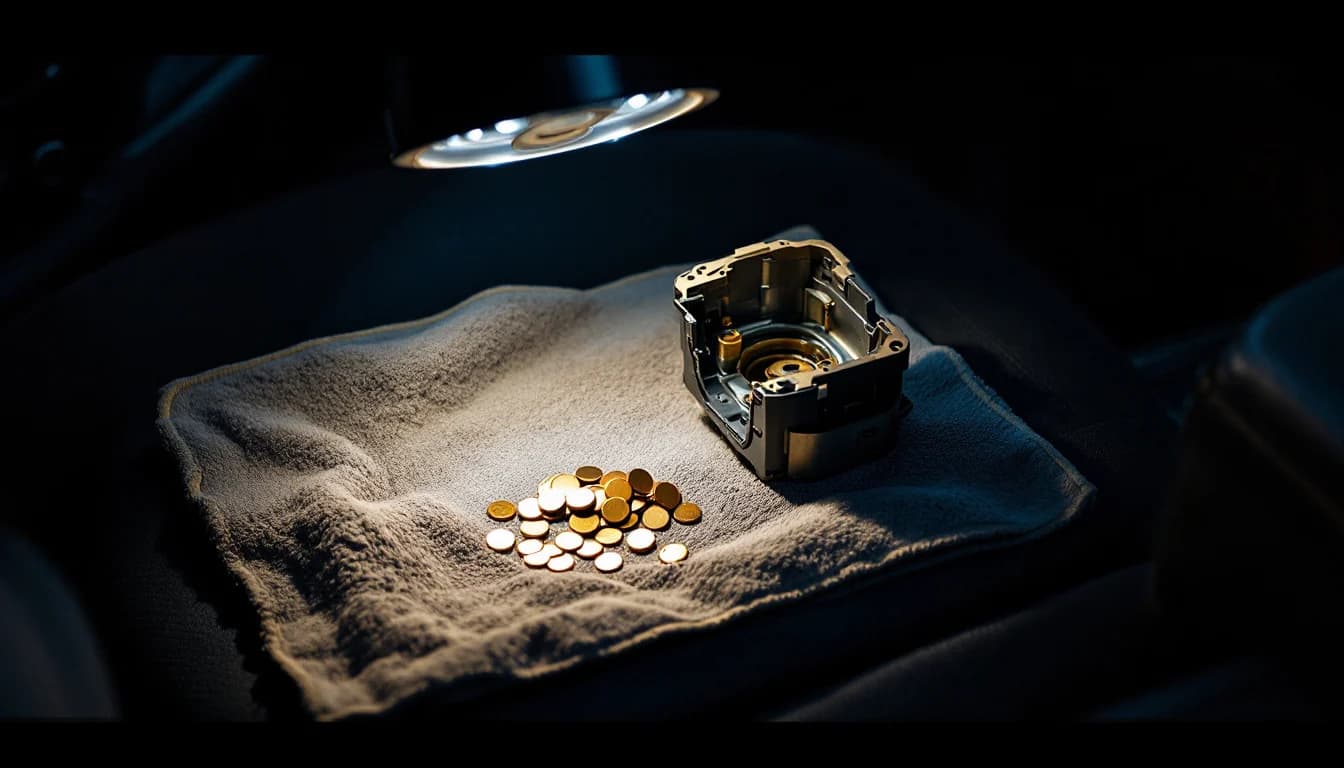
A binding cylinder is not automatically scrap. On these bladed-key platforms a technician can frequently disassemble the cylinder, replace the worn wafers and springs, service the housing, and reinstall it with your existing key still working. That is a genuine repair, not a patch.
But here is the part that matters most to you as an owner, and it is the reason to care who does the work.
If a shop installs a brand-new lock cylinder and simply keys it to whatever blank came in the box, you now carry two keys: one that starts the truck and one that opens the doors and glovebox. Owners hate this within a week, and on a family vehicle with multiple drivers it is a genuine daily annoyance.
We rekey the replacement cylinder to your existing key. Same key, whole truck, exactly the way it left the factory. That is standard on our ignition work, not an upsell, and it is worth asking any shop about before they order a part.
There is a point where outright replacement is correct: a cracked housing, a face damaged in a forced-entry attempt, or wear beyond what fresh wafers will correct. A technician who has the cylinder open can tell you which situation you are in, and you should expect that conversation before parts are ordered. The Associated Locksmiths of America publishes the professional standards governing this kind of mechanical lock service (aloa.org), and the Federal Trade Commission's automotive repair consumer guidance is a fair standard to hold any shop to (ftc.gov).
Why These Trucks Wear Ignitions
Two ordinary forces, both boring, both cumulative.
Keyring load. A full-size SUV lives a life of job sites, trailer hitches, kids' schedules, and long commutes on 183 and 114, and its owner's keyring grows accordingly. Every ounce hangs off the cylinder every time the truck runs, for years. Wafers wear unevenly, tolerances open, and one morning the alignment is no longer good enough.
Steering-lock stress against real mass. Park a vehicle this heavy with the wheels turned on the crown of a residential street and the pin takes serious load. Do that daily for a decade and the mechanism sees far more stress than the same part in a compact sedan.
Neither is a defect, and neither is avoidable entirely. Both are why mileage predicts ignition wear far better than model year does. The Society of Automotive Engineers maintains the standards literature covering how these mechanical and electrical assemblies are specified and validated (sae.org).
If your truck's problem turns out to be the key rather than the lock, our ignition will not turn guide covers the repair-versus-module decision in more depth, and a spare key programmed before your daily key wears out is the cheapest preventive maintenance available on these trucks.
What a Mobile Ignition Visit Looks Like
We come to the truck. That matters more for ignition work than for key work, because a vehicle with a failed ignition frequently cannot be driven anywhere at all. The alternative is a tow, and the American Automobile Association's roadside guidance is a fair reference for what that adds in both cost and delay (aaa.com).
The technician runs the free checks first, in front of you, because skipping them and going straight to parts would be dishonest. If the column is simply bound, the visit is short and the bill reflects that. If the key is worn, we cut a fresh one to the factory code and enroll it, and you drive away.
If the cylinder is genuinely at fault, the work happens at the column: trim removal, cylinder extraction, inspection, then service or replacement depending on what the inside looks like. Expect to be shown the worn parts. If the fault is electrical, security-side, or module-side, expect to be told that rather than sold a cylinder that would not have helped.
Ownership verification applies to ignition work as much as to key work — arguably more, since anyone who can service an ignition can create the ability to start the vehicle. Photo identification matching the vehicle paperwork, plus registration, title, current insurance, or a lease showing the VIN. Every job, no exceptions. The Insurance Institute for Highway Safety's research on vehicle theft and security systems explains why that credential is worth protecting (iihs.org).
Frequently Asked Questions
My Chevy Tahoe key will not turn. Is the ignition broken?
Frequently not. The most common cause on a full-size SUV is the steering lock loaded against the column, which happens when the truck is parked with the wheels turned or on a slope. Apply steady pressure to the steering wheel in one direction while turning the key gently, then try the other direction, and confirm the shifter is fully in Park. If both fail, the cylinder or the key is genuinely worn.
How do I tell a worn key from a worn ignition cylinder?
Compare your daily key with a spare. If the daily key's cuts look rounder and shallower, the key is the problem and a fresh key cut to the factory code usually resolves it. If both keys behave identically badly, the cylinder is the more likely cause. A technician confirms it by testing both keys before opening anything.
My Suburban cranks but will not start and the security light is on. What is that?
That is the theft-deterrent system, not the ignition cylinder. Passlock and its later descendants withhold fuel or spark when they cannot confirm a valid key, which produces a healthy crank with no sustained run. Causes include unreadable key data, a failed sensor or antenna, degraded wiring, or a required relearn. Replacing the lock cylinder does not address any of them.
Does a 2021 or newer Tahoe even have an ignition cylinder?
No. The 2021-and-later trucks use push-button start, so there is no cylinder to wear out. A no-start on these points at the smart-key system, the electronic column lock, the body electronics, or the power supply, and it must be diagnosed before any part is ordered — those assemblies are expensive to guess at.
Can a worn ignition cylinder be repaired instead of replaced?
Often, yes. On these bladed-key GM platforms the cylinder can frequently be disassembled, fitted with new wafers and springs, serviced, and reinstalled with your existing key still working. Replacement is the correct call when the housing is cracked, the face is damaged from a forced-entry attempt, or wear exceeds what new wafers will correct.
If you replace the cylinder, will I end up with two different keys?
Not with us. We rekey the replacement cylinder to your existing key so one key still runs the whole truck — ignition, doors, and glovebox. Installing a new cylinder on its own blank is what leaves owners carrying one key for the ignition and another for everything else, and it is worth asking any shop about before they order the part.
Can you do Tahoe and Suburban ignition work at my house in Irving?
Yes. This is mobile service across Irving, Las Colinas, Coppell, Grand Prairie, Farmers Branch, Euless, and the surrounding cities, which matters because a truck with a failed ignition usually cannot be driven to a shop. We bring the tooling and parts to the vehicle and verify ownership on site.
References
- NHTSA — federal vehicle safety standards and rollaway prevention resources: https://www.nhtsa.gov
- ALOA — professional locksmith standards and mechanical lock service ethics: https://www.aloa.org
- NASTF — credentialed vehicle security data access for independent professionals: https://www.nastf.org
- SAE — automotive mechanical and electrical systems standards: https://www.sae.org
- IIHS — vehicle theft prevention and security system research: https://www.iihs.org
- AAA — roadside assistance and towing consumer guidance: https://www.aaa.com
- FTC — automotive repair consumer protection guidance: https://www.ftc.gov
Tahoe or Suburban ignition acting up in Irving, Las Colinas, Coppell, or anywhere in the surrounding DFW area? Call or text 817-842-1751 and describe exactly what the key and the truck do. We diagnose before we sell parts, we come to the vehicle, and we rekey replacement cylinders to your existing key so you keep carrying one key.
Reviewed by a licensed automotive locksmith technician at Irving Locksmith Pros. Texas DPS Private Security regulated. Mobile service; ownership verification required.