Ford F-150 & Explorer Ignition Lock Cylinder Repair in Irving TX: Symptoms, Causes, Cost
2026 guide for Irving TX: Ford F-150 and Explorer ignition won't turn, key sticks, or turns without starting. Cylinder vs switch vs PATS, and repair cost.
Short answer. On a keyed-ignition Ford F-150 or Explorer, a key that will not turn, turns only after a wiggle, or turns all the way without the truck responding comes down to one of three things: a worn lock cylinder, a failed electrical ignition switch behind it, or a PATS immobilizer fault that only looks like an ignition problem. As of October 2026 in Irving, a new transponder key cut to factory code runs $150 to $275, ignition lock cylinder repair or replacement runs $150 to $550 depending on the year, and on-site diagnosis that tells you which one you have runs $75 to $145. Before you call anyone, try the steering-lock release described below; it solves more F-150 calls than any part we sell. Call or text 817-842-1751.
Which Fords This Covers
This guide is for the keyed-ignition versions of two of the most common vehicles on Irving roads. On the F-150 that means every truck through 2014 and the XL and XLT trims on many later years, which kept a metal key long after the Lariat and above moved to push-button start. On the Explorer it means the 2011 to 2019 trucks with a key slot, which is most of the base and XLT trims of those years. The same mechanism and the same advice apply to the Expedition, Ranger, Edge, Escape, and the Lincoln equivalents of the same era, because Ford used closely related column hardware across them.
If your Ford has a start button, the lock cylinder in this article does not exist on your truck. A no-start on a push-button Ford is a key or module question, and our guide to push-to-start not working with no fob detected is the one you want.
What Lives in a Ford Ignition
Three separate parts share the space behind your key, and each fails differently.
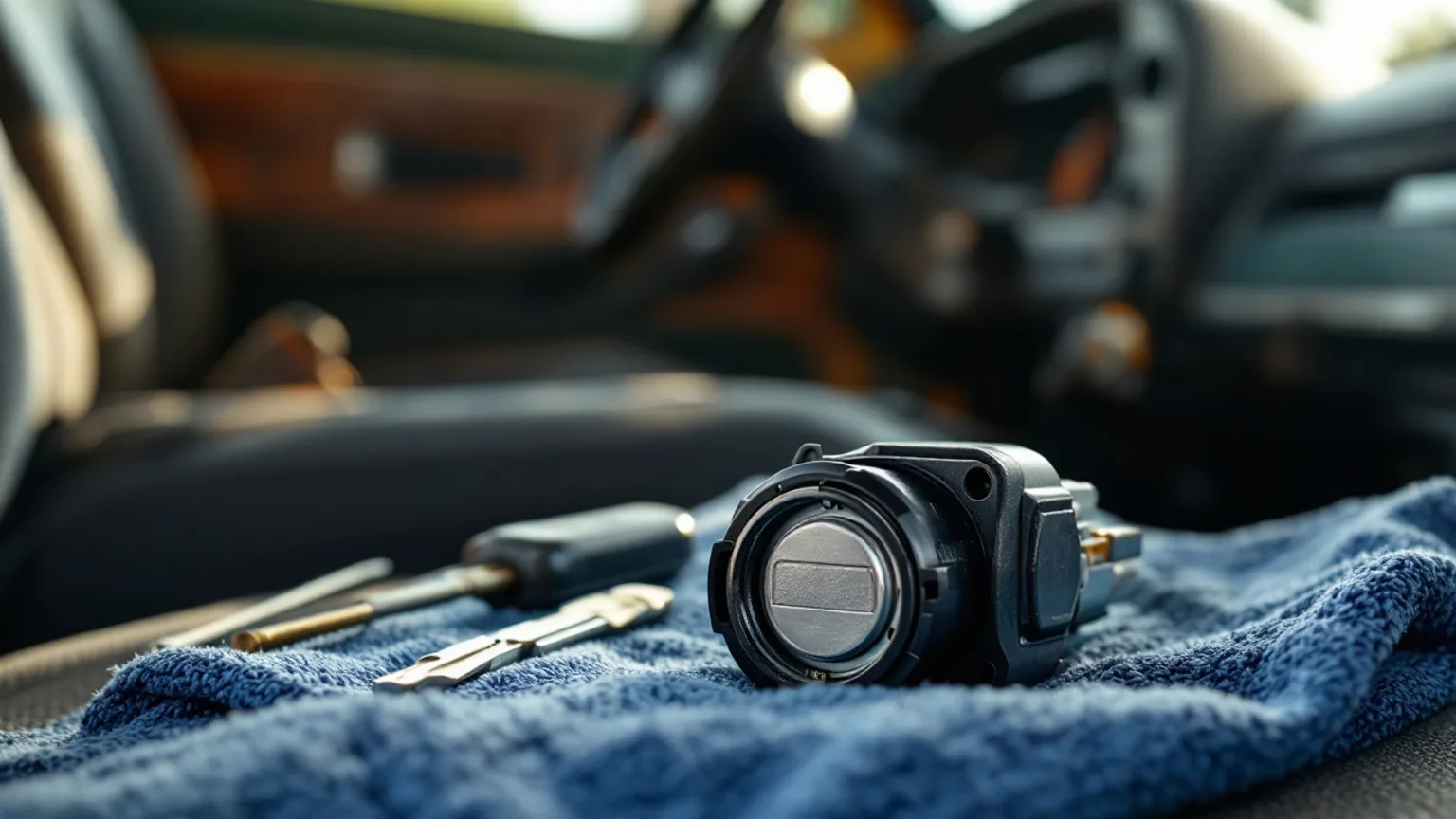
The lock cylinder is the mechanical part the key goes into. Inside it, a row of small spring-loaded wafers is lifted to exactly the right height by the cuts on the key. When every wafer is at the right height, the cylinder turns. Wear on the key, wear on the wafers, dirt, and old lubricant all change those heights, and the cylinder resists.
The ignition switch is the electrical part the cylinder turns. On these Fords it sits on the column behind the cylinder and sends power to the accessory, run, and start circuits as the key rotates. It does not care what key you use; it only cares that something turns it.
The PATS antenna ring sits around the cylinder's face. When the key is in, the ring reads the transponder chip in the key head and the truck's immobilizer decides whether to allow the engine to run. Ford's Passive Anti-Theft System has been standard on these trucks since the late 1990s, and the Insurance Institute for Highway Safety's loss data shows why automakers kept it (iihs.org). Our Ford key replacement and PATS guide explains the system in full; the point here is that PATS can produce a no-start that feels like an ignition problem but is not one.
Knowing which of the three has failed is the whole diagnosis, and it decides whether you pay for a key, a cylinder, a switch, or nothing at all.
Symptoms and What They Mean
| What the truck does | Most likely part | What usually fixes it | Typical Irving cost |
|---|---|---|---|
| Key goes in but will not turn at all; steering wheel feels locked | Steering lock under load, not a failure | Turn the wheel firmly while turning the key | No charge |
| Key turns only after a wiggle, or only on some tries | Worn key and wafers | New key cut to factory code first; cylinder if the spare sticks too | $150–$275 key; $150–$550 cylinder |
| Key turns smoothly, dash lights up, no crank, PATS light flashing | Immobilizer not recognizing the key | Key reprogramming or antenna ring diagnosis | $75–$145 diagnosis; $150–$275 key |
| Key turns smoothly, dash stays dark or flickers, no crank | Electrical ignition switch | Switch replacement | Quoted after inspection |
| Key turns freely with no resistance and nothing happens | Cylinder has broken loose from the switch linkage | Cylinder replacement | $150–$550 |
| Key will not come out, or comes out in the wrong position | Advanced cylinder wear | Cylinder repair or replacement, soon | $150–$550 |
| Key snapped off in the cylinder | Fatigued blade | Non-destructive extraction, cylinder inspection | $75–$145 |
Prices are for mobile service during business hours. After-hours calls may carry a premium, which we disclose before dispatch, and the Federal Trade Commission's consumer guidance on repair services is clear that every fee belongs in the estimate before work starts (ftc.gov).
Try This First: Release the Steering Lock
A large share of "my F-150 key won't turn" calls are a steering lock doing its job. When the wheel was turned after the key came out, or the truck was parked on a slope with the wheels loaded against the curb, the column lock pin sits under tension and will not let the cylinder rotate.
Grip the wheel, turn it firmly left and then right while applying steady turning pressure on the key. You will feel the wheel give a few degrees and the key will turn. On an older F-150 with a worn column this can take real force; it is not damaging anything. If that frees it, nothing is broken. If it happens often, parking with the wheels straight prevents it.
The same applies if the shifter is not fully in park on an automatic. Push the lever forward firmly and try again.
Worn Key Versus Worn Cylinder
This is the diagnosis we make most often on Ford columns, and you can start it yourself with a spare key.
A key wears. The brass alloy of the blade is softer than the wafers it lifts, and after years of daily use the peaks of the cuts round off. A rounded key no longer lifts the wafers to the right height, so the cylinder resists. At the same time the wafers themselves wear, especially the first two or three the key passes on the way in.
If a lightly used spare turns smoothly and the daily key sticks, the key is the problem. A new key cut to the manufacturer's code, rather than duplicated from the worn one, restores the original dimensions and usually fixes it outright. That is the $150 to $275 line, and it is the cheapest repair on this page. Our guide to a key that is hard to turn or sticking walks through the stages of wear in more detail.
If the spare sticks too, the wear is in the cylinder. On these Fords the cylinder is a serviceable part. We can often repair it by replacing worn wafers and springs, or replace it and key the new cylinder to your existing key so the doors and ignition still match. That is the $150 to $550 band; a simple older column sits at the low end, and a column where the cylinder is integrated with security hardware sits at the high end.
Do not reach for a penetrating oil spray. Oil attracts dust and thickens into a paste that slows the wafers further. A puff of dry graphite is the traditional lubricant; it will not fix worn metal but it will not make things worse.
When It Is the Electrical Switch
If the key turns smoothly through every position and the truck does nothing, or the dash flickers and dies, the mechanical side is fine and the electrical switch behind it is the suspect. Ford ignition switches of this era can develop worn contacts that drop the run or start circuit intermittently, which shows up as a truck that starts on the third try, stalls while driving when the switch is bumped, or loses accessories at random.
The switch is a different part from the cylinder, sits deeper in the column, and is replaced rather than repaired. We quote it after inspection because the labor varies by year and whether the column has to come apart. If your truck has stalled while driving, read our guide to a car that shuts off while driving before the next trip; that symptom should not wait.
When It Is PATS and Not the Ignition at All
The trap in this diagnosis is a key that turns perfectly, a dash that lights up normally, and an engine that cranks and will not fire, or does not crank, with the small theft-indicator light flashing. Nothing in the column has failed. The immobilizer has refused the key.
That happens when the key's transponder chip has been damaged, when the key was never programmed to this truck, when a second key's chip is sitting too close and confusing the antenna, or when the antenna ring or its connector has been disturbed. The fix is on the electronic side: reprogramming the key, programming a fresh one, or repairing the antenna circuit. Our guide to a key fob that stopped working after a battery replacement covers the chip-side causes, and our anti-theft wait timer guide explains the timed lockout older Ford PATS trucks enforce after too many failed attempts.
Replacing a lock cylinder does not fix a PATS fault. We have met more than one owner who paid for a cylinder from someone else and still could not start the truck. The scan-tool step below is how we avoid that.
"On an F-150 I ask one question before anything else: does the key turn? If it turns and the truck is dead, I am not touching the cylinder. If it will not turn, I ask them to wrench on the wheel while I listen. Half the time I hear the click and we are done over the phone." — a senior technician on our Irving crew
How We Diagnose It at Your Truck
- Steering-lock and shifter check. Thirty seconds. Resolves a surprising number of calls.
- Spare-key test. Separates a worn key from a worn cylinder.
- Scan-tool read. We connect at the diagnostic port and read the PATS status and any stored codes. A code naming the key or the immobilizer points away from the column; a clean PATS status with a no-crank points to the switch or the starter circuit.
- Column inspection. With the shroud off, we check the antenna ring connector, the cylinder-to-switch linkage, and the switch itself.
- Repair. New key, cylinder repair or replacement keyed to your existing key, switch replacement, or key programming, whichever the evidence supports. We quote the specific number before starting.
We verify ownership on every ignition job with a title or registration in your name and a matching photo ID, a baseline standard the Associated Locksmiths of America sets for the trade (aloa.org). Ignition work on a vehicle with an immobilizer also needs the right security credentials, which independent locksmiths obtain through the National Automotive Service Task Force's vetted registry (nastf.org). Texas licenses locksmiths through the Department of Public Safety's Private Security Program, and we operate under it.
Repair Versus Replace, and Keeping One Key
Owners often assume a new ignition means a second key on the ring. On these Fords it does not have to. When we replace a cylinder we key it to match your existing door key, so one key still works everything. When we repair a cylinder, the original key stays as it was, though if the key itself is worn we will cut a fresh one to code at the same visit.
A dealer path exists for all of this, and if your truck is under warranty for an ignition or column fault the dealer is the right first stop, because the repair may be covered. The National Highway Traffic Safety Administration's recall lookup by VIN tells you whether an open campaign applies to your vehicle (nhtsa.gov). For an out-of-warranty truck, the dealer path typically means a tow, since a truck whose key will not turn cannot be driven in, and the American Automobile Association's roadside figures put a Dallas-Fort Worth flatbed well into three figures before any repair (aaa.com). Mobile service does the work where the truck sits.
Three Ford Quotes, Worked Through
A 2008 F-150 XLT in Irving, key wiggles to start. The spare turns smoothly; the daily key is rounded. A new transponder key cut to factory code and programmed to PATS, $150 to $275. Cylinder left alone. Done in the driveway.
A 2013 Explorer XLT in Las Colinas, key will not turn, spare sticks too. Steering lock released, still stiff. Cylinder worn. Repaired on-site with new wafers and keyed to the existing key, in the $150 to $550 band toward the lower middle for this column. The owner keeps one key.
A 2011 F-150 in Grand Prairie, key turns, cranks, will not fire, theft light flashing. Scan shows PATS refusing the key. The transponder chip has failed. A new key programmed to the truck, $150 to $275. Nothing in the column was touched, and nothing in the column needed to be.
Frequently Asked Questions
Why won't my key turn in my F-150 or Explorer?
The most common reason is the steering lock under tension; turning the wheel firmly while turning the key releases it. If the key turns only after a wiggle, the key or the lock cylinder wafers are worn. If the key turns smoothly and the truck does nothing, the problem is the electrical ignition switch or the PATS immobilizer, not the cylinder.
Is it the lock cylinder or the ignition switch?
If the key is hard to turn, it is the cylinder or the key. If the key turns easily and the dash goes dark, flickers, or the truck starts only on some tries, it is the electrical switch behind the cylinder. If the key turns easily, the dash is normal, and the theft light flashes, it is PATS, and no column part will fix it.
How much does Ford ignition cylinder repair cost in Irving?
As of October 2026, ignition lock cylinder repair or replacement on a keyed-ignition F-150 or Explorer runs $150 to $550 depending on the year and column, a new transponder key cut to code runs $150 to $275, and on-site diagnosis runs $75 to $145. We quote the specific number once we know the year and have seen the column.
Will I need a new key if the ignition cylinder is replaced?
No. We key the replacement cylinder to match your existing door key, so one key still works the doors and the ignition. If your key is worn, we recommend cutting a fresh one to code at the same visit so the new cylinder does not inherit the old key's wear.
Can a worn ignition cause the theft light to flash?
Not directly. The theft light reports the immobilizer's decision about the key's chip, which is separate from the mechanical cylinder. A flashing theft light with a no-start points to the key, the antenna ring, or the PATS system, and replacing the cylinder will not change it.
Can I spray WD-40 or oil into my Ford ignition?
We advise against oil-based sprays; they attract dust and thicken into a paste that makes the wafers slower. A small amount of dry graphite is the traditional choice. It will not repair worn metal, but it will not make the problem worse while you arrange the repair.
Does my F-150 have a lock cylinder or push-button start?
If you turn a metal key, it has a lock cylinder, which is every F-150 through 2014 and the XL and XLT trims on many later years. If it has a start button, it has no cylinder, and a no-start is a key or module question rather than an ignition repair.
Stuck With a Key That Won't Turn?
Text or call 817-842-1751 with your year, trim, and what the key does. We will walk you through the steering-lock release on the phone before anything else, and if it needs a visit we quote the full price first. We cover Irving, Las Colinas, Grand Prairie, Euless, Farmers Branch, and the surrounding Dallas-Fort Worth cities. Our ignition repair service page covers what we bring, and our Ford brand page covers the rest of the lineup.
References
- U.S. National Highway Traffic Safety Administration, recall lookup by VIN and theft prevention standard (nhtsa.gov)
- Insurance Institute for Highway Safety, Highway Loss Data Institute theft loss data (iihs.org)
- National Automotive Service Task Force, Vehicle Security Professional registry (nastf.org)
- Associated Locksmiths of America, professional standards for automotive locksmiths (aloa.org)
- Federal Trade Commission, consumer guidance on auto repair estimates (ftc.gov)
- American Automobile Association, roadside assistance and towing cost data (aaa.com)
- SAE International, standards for vehicle anti-theft and immobilizer systems (sae.org)
- Texas Department of Public Safety, Private Security Program licensing for locksmiths