Ford F-150 All Keys Lost in Irving TX: 2026 Cost & PATS Recovery
2026 Ford F-150 all keys lost cost in Irving TX. PATS recovery, spare vs AKL price split, dealer vs mobile totals, and what a fair quote looks like.
Ford F-150 All Keys Lost in Irving TX: The Real Cost Picture
Losing every key to an F-150 is a different problem from losing one of two. The truck can't be driven to anyone. It sits where it sits until somebody either tows it or brings the tooling to it. That single fact is what separates a $250 afternoon from a $900 week, and it is the reason so many Irving drivers get two quotes that look like they're for different vehicles.
As of July 2026, Irving Locksmith Pros handles Ford F-150 all-keys-lost recovery on-site across Irving, Las Colinas, Grand Prairie, Coppell, and the surrounding DFW cities. This guide is built around numbers: what a spare costs versus what an all-keys-lost job costs, where the extra money actually goes, what the dealer route totals once you add the tow and the wait, and how to recognize a quote that is going to change when the technician arrives.
Call or text 817-842-1751 with the model year and whether you have any key at all — even a broken one, even a valet blade. That answer moves the price more than the trim level, the mileage, or anything else about the truck.
Quick Answer
For a 2015-2026 F-150, expect roughly $400 to $600 for an all-keys-lost proximity smart key and $250 to $400 if your truck uses a bladed transponder or remote-head key. A spare added while one key still works runs $300 to $500 for proximity and $150 to $275 for a basic transponder. The dealer path is typically $500 to $800 for the key itself, plus $150 to $300 in towing and three to ten business days. All figures are as of July 2026 and confirmed against your VIN before work starts.
F-150 Key Pricing in Irving (As of July 2026)
| F-150 Scenario | Typical Price Range | What Drives the Number |
|---|---|---|
| Bladed transponder or remote-head key - spare, one key working | $150–$275 | Cut plus enrollment through the diagnostic port |
| Proximity smart key (push-button start) - spare, one key working | $300–$500 | Encrypted fob, higher parts cost, dual enrollment |
| All keys lost - bladed transponder / remote-head | $250–$400 | Security access, timed relearn, extra on-site labor |
| All keys lost - proximity smart key (2015+ push-start trims) | $400–$600 | No trusted key present; longer security procedure |
| Loaded Platinum / King Ranch / Limited fobs, hybrid trims | $400–$700 | Premium fob part cost, feature sync, tighter availability |
| Emergency lockout only, no key made | $75–$145 | Non-destructive door entry |
| Dealer comparison - key alone | $500–$800 | Plus $150–$300 towing and 3–10 business days |
Two honest qualifiers on that table. First, the ranges assume verified ownership and a standard-access truck. A rebuilt title, a prior module swap, or a donor cluster can push a routine job into diagnostic territory, and we say so before we start rather than after. Second, the very newest model-year Fords occasionally require software the aftermarket has not received yet — in those cases the dealer is genuinely the only path and we will tell you that on the phone instead of driving out to discover it.
If you want these numbers in the context of every other make we service, our breakdown of car key replacement cost in Irving TX sets the F-150 bands against sedans, imports, and European platforms.
Why All Keys Lost Costs More Than a Spare
The parts are close to identical. The labor is not. When you still have one working key, the truck's immobilizer already trusts something, and adding a second key is a short authenticated conversation between a diagnostic tool and a module that is willing to talk. When nothing is trusted, the truck defaults to a defensive posture, and every step of getting a new key accepted is slower on purpose.
Three things drive the difference:
Security access has to be earned, not assumed. Ford's PATS system — SecuriLock in the marketing literature — does not hand out enrollment rights to whatever plugs into the port. Depending on the platform and year, the technician either needs manufacturer-side security credentials or has to satisfy a built-in delay that exists specifically to make a stolen-vehicle key add impractical. The National Automotive Service Task Force maintains the framework under which legitimate independent technicians obtain that kind of secure vehicle security data, and it exists precisely because the alternative is a system thieves can defeat in a parking lot (nastf.org). Federal safety research and insurance-industry loss data both credit electronic immobilizers with meaningful reductions in vehicle theft, which is exactly why automakers made this step deliberately inconvenient (nhtsa.gov, iihs.org).
The timed relearn burns real minutes. Several Ford platforms enforce a waiting period, often repeated in cycles, before the module will write a new key into memory. Nobody can shorten it. It is a designed cost of the security model, and on an all-keys-lost F-150 it is frequently the largest single block of time on the invoice.
The technician arrives blind. With a working key, we know the immobilizer is healthy. With no key, "the truck won't start" could be a lost key, a failed key, a dead battery, a bad ignition, or a module problem — and the first part of the visit is proving which one it is before anything gets cut.
That last point is worth sitting with. A dead 12-volt battery in an F-150 that has been parked at DFW long-term for two weeks produces symptoms that look exactly like an immobilizer fault. Diagnosis first, parts second, is not a stalling tactic. It is how you avoid paying for a key that was never the problem.
How PATS Generations Change the F-150 Job
2015-2020 P552 trucks
The aluminum-body generation split cleanly by trim. Base and mid work trucks commonly shipped with a bladed key carrying a transponder, sometimes in a remote-head format with lock, unlock, and panic on the same body. Higher trims moved to a proximity fob with push-button start. Two different key types on the same nameplate, in the same model year, at very different price points — which is exactly why "how much for an F-150 key" cannot be answered honestly without a VIN.
For the bladed trucks, all-keys-lost recovery is usually a port-based procedure plus a security wait. For the proximity trucks, the enrollment is longer and the fob itself costs meaningfully more.
2021-2026 P702 trucks, including hybrid
The current generation standardized push-button start across most of the range and layered in more networked modules — the powertrain hybrid variants especially, where the start authorization conversation involves more participants than it did a decade ago. Practically, this means an all-keys-lost job on a late-model F-150 is a smart-key procedure with a longer security sequence, and it sits at the upper half of the $400 to $600 band.
It also means the honest boundary moves. On the newest builds, the correct answer is sometimes "a technician confirms your exact setup against the VIN before we commit." We would rather say that on the phone than take a deposit on a job we can't finish.
Where incode and outcode fit
You will hear the terms incode and outcode from Ford-experienced technicians. Simplified: the vehicle produces a challenge value, the technician submits it through an authorized channel, and a matching response value comes back that unlocks the ability to write keys. It is a challenge-and-response handshake, not a universal password, and it is per-vehicle. That is a feature, not friction. Vehicle security standards work of this type is developed in the open through bodies like SAE International, and the industry consensus is that immobilizer strength depends on exactly this kind of non-reusable authentication (sae.org).
The consumer takeaway: anyone who claims they can "override" PATS instantly, on any F-150, for a flat low price, is describing something that either does not work or should not be sold.
Common F-150 Situations We See in Irving
"I lost the only fob and the truck is at the office"
Very common in the Las Colinas corridor and around the airport freight lots. The truck is fine; the key is gone. This is a clean all-keys-lost proximity job and the price lands in the band above. Because we work mobile, the truck does not move and there is no tow line on the invoice.
"I have a key but it snapped in the ignition"
This is not all-keys-lost. If the transponder head survived, you often still have a trusted key electronically, which drops you back into spare-key pricing after the broken piece is extracted. Do not let anyone quote you an all-keys-lost price on a truck with a recoverable key. Our broken car key extraction guide walks through what is salvageable and what is not.
"I bought it at auction with no keys"
Ownership verification matters more here, not less. We need documentation tying you to the VIN before anything gets programmed, and that requirement is not negotiable regardless of how the vehicle was acquired. The Federal Trade Commission advises consumers to expect identification checks and clear written estimates from any locksmith, and the check runs both directions (ftc.gov).
"The fob is in my hand and nothing happens"
Try the backup. Ford proximity systems include a physical hide-away blade and a documented backup start position for a dead-battery fob. If the backup works, you have a fob problem, not an immobilizer problem, and that is a much cheaper day.
Mobile Versus Dealer: The Total-Cost Math
The dealer key price is the number people compare, and it is the wrong number. On an all-keys-lost truck, the real comparison is total cost of getting back on the road.
Dealer route: tow the truck ($150 to $300 in the DFW metro), wait for a service appointment, pay $500 to $800 for the key and programming, and absorb three to ten business days without the vehicle. If the F-150 is a work truck, add whatever a week of downtime is worth to you — for a contractor running jobs out of Grand Prairie or Irving, that is usually the largest number on the page and it never appears on any invoice.
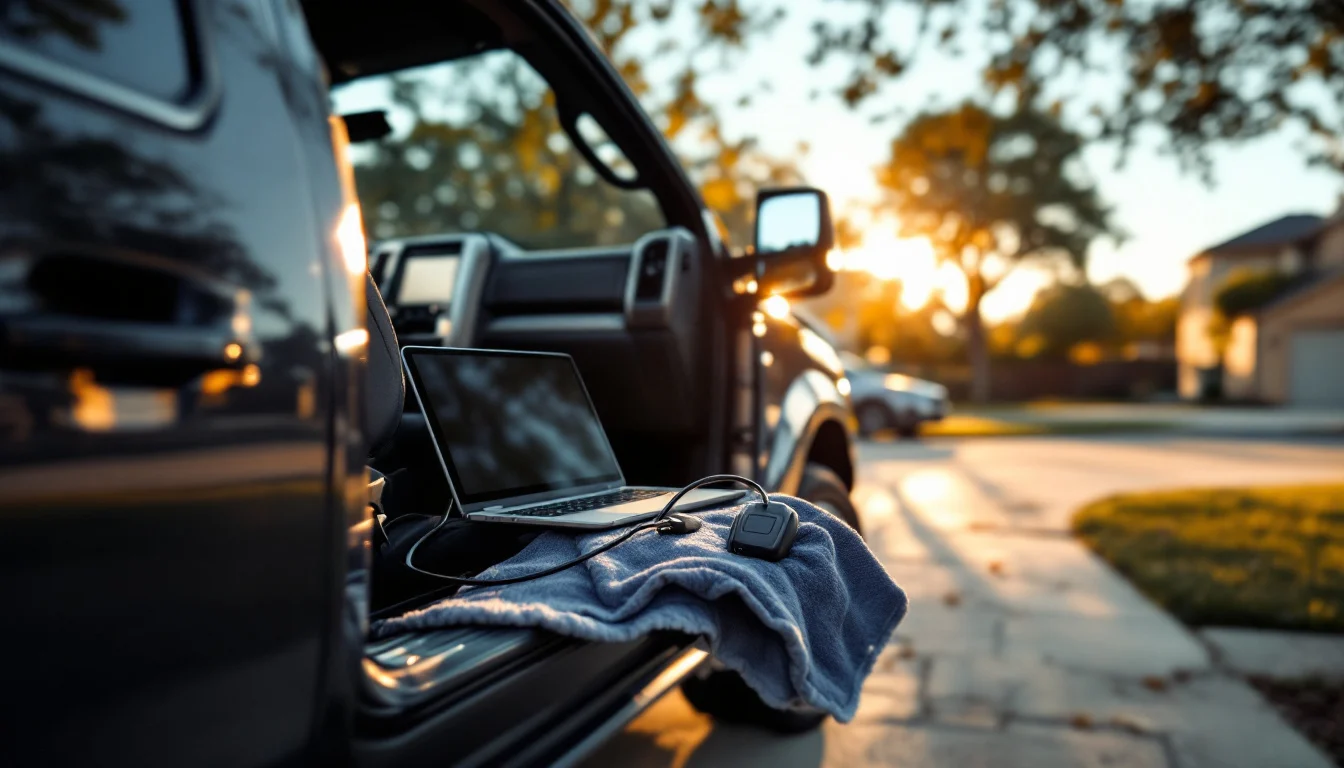
Mobile route: the technician drives to the truck. There is no tow. The work happens in the parking lot, the driveway, or the job site. Typical response in core Irving, Las Colinas, and Grand Prairie runs 20 to 45 minutes, and the programming itself is usually finished the same visit.
When does the dealer genuinely win? Two cases. If the truck is under warranty with covered key replacement, use the coverage. And if it is a brand-new build needing software not yet released to independents, the dealer is temporarily the only door. Everything else favors the mobile route on both cost and time. For a fuller side-by-side, see our Ford key replacement and PATS programming cost guide.
"The customers who get hurt on F-150s are the ones who accept a phone quote with no VIN. A base XL and a Platinum are the same truck to a call center and two completely different jobs to a technician. Give the year and the VIN, get a number that holds." — senior automotive locksmith technician, Irving Locksmith Pros
When the Job Leaves the Diagnostic Port
Most F-150 recoveries finish through the OBD-II port. Some do not. If a module has failed, if the truck carries a donor cluster with mismatched security data, or if the platform simply does not expose the needed function through the port, the work moves to direct module access — reading and writing the memory device itself on the bench. That is a legitimate technique with real cost and real risk, and it should be quoted as such rather than hidden inside a "key" line item. Our comparison of OBD programming versus EEPROM bench work explains where the boundary falls and why the price changes when you cross it.
What a Fair F-150 Quote Contains
A quote you can trust names four things separately: the key or fob part, the cut, the programming labor, and the service call. It is tied to your VIN. It states whether it assumes one working key or none. And it says what happens if the truck turns out to need module-level work — not "we'll see," but an actual second number.
A quote you should not trust is a single low figure given without a VIN, without asking whether you have a key, and without any mention of what changes on arrival. The bait-and-switch pattern in this trade is well documented, and the tell is always the same: a price too specific to be real and too low to be possible. Consumer-protection guidance from both the FTC and AAA points at the same defenses — verify the company, get the estimate in writing, and confirm identification before work begins (ftc.gov, aaa.com).
Ownership Verification and Local Coverage
Texas regulates locksmith work through the Texas DPS Private Security Program, and legitimate automotive key work requires proof you are entitled to the key. Before we cut or program an F-150 key we confirm photo ID matching the registration or title, proof of ownership showing your name against the VIN, the 17-character VIN itself, and your key status. Professional standards in the trade set the same documentation expectation before any automotive key work begins (aloa.org). Having those ready when you call shortens the visit considerably.
We cover Irving and the ring around it — Las Colinas, Grand Prairie, Coppell, Farmers Branch, Carrollton, Grapevine, Euless, and out toward Arlington and Dallas — seven days a week, 7:00 AM to 9:00 PM, with after-hours emergency dispatch for true emergencies. Service is mobile only; we come to the truck, which is the entire point when the truck cannot be driven.
If your F-150 is stranded right now with no key, start at lost car keys, see the full Ford brand page for platform-specific notes, or check coverage details for Irving.
Frequently Asked Questions
How much does a Ford F-150 all-keys-lost key cost in Irving TX?
As of July 2026, an all-keys-lost proximity smart key for a 2015-2026 F-150 generally runs $400 to $600, and a bladed transponder or remote-head key runs $250 to $400. Loaded Platinum, King Ranch, and Limited fobs can reach $700 because the part itself costs more. The final number is confirmed against your VIN before any work starts.
Why is all keys lost more expensive than getting a spare?
Because the truck does not trust anything yet. With a working key present, enrollment is a short authenticated procedure. With no key, the system requires security access or a built-in timed relearn before it will write a new key into memory, and the technician has to diagnose the no-start condition from scratch. That extra security time and labor is the entire price difference.
Can you make an F-150 key on-site, or does the truck need towing?
On-site in almost every case. That is the main reason mobile service exists for all-keys-lost work — the truck cannot be driven anywhere, so the tooling comes to the truck. A tow is only involved if the vehicle needs module-level bench work that cannot be completed at the location.
How long does an all-keys-lost F-150 job take?
Usually 45 minutes to a couple of hours on site. Bladed transponder trucks are often quicker; proximity smart-key trucks take longer because the security sequence is longer. A portion of that time is a mandatory waiting period built into the vehicle that nobody can shorten.
Is a dealer cheaper for an F-150 key?
Rarely, once you count everything. Dealers typically charge $500 to $800 for the key and programming, and an all-keys-lost truck also needs a $150 to $300 tow plus three to ten business days of downtime. Mobile service removes the tow and usually finishes the same day. The dealer is the better choice only under warranty coverage or for the newest builds needing software not yet available to independents.
What if my F-150 fob is in my hand but the truck will not start?
That is often a fob battery or a fob failure, not a lost-key situation. Ford proximity systems include a hide-away emergency blade and a documented backup start method for a dead fob battery. If the backup works, you need a fob or a battery, not an all-keys-lost recovery, and the cost drops substantially.
What do I need to prove ownership before you program a key?
Photo identification matching the registration or title, a document showing your name against the vehicle identification number - registration, title, insurance card, or lease - and the 17-character VIN itself. This applies to auction purchases and inherited vehicles as well. Texas DPS Private Security regulation and basic liability both make this non-negotiable.
References
- National Highway Traffic Safety Administration - vehicle theft prevention and immobilizer technology: https://www.nhtsa.gov
- National Automotive Service Task Force - secure vehicle security data access for independent technicians: https://www.nastf.org
- Associated Locksmiths of America - professional standards for automotive locksmith work: https://www.aloa.org
- Federal Trade Commission - hiring a locksmith and avoiding estimate scams: https://www.ftc.gov
- AAA - consumer guidance on car keys, lockouts, and roadside service: https://www.aaa.com
- SAE International - automotive electronic security and vehicle systems standards: https://www.sae.org
- Insurance Institute for Highway Safety - anti-theft technology and vehicle security: https://www.iihs.org
Get Your F-150 Back on the Road
An F-150 with no keys is a stationary object until someone brings the right tooling to it. Irving Locksmith Pros does exactly that — PATS-capable programming delivered to your driveway, job site, office lot, or roadside across Irving, Las Colinas, Grand Prairie, Coppell, and the surrounding DFW cities, seven days a week from 7:00 AM to 9:00 PM.
Call or text 817-842-1751 with your model year and VIN for a quote that holds, or email contact@irvinglocksmithpros.com. If the truck is stranded right now, tell us where it sits and we will give you a realistic arrival window before you agree to anything.
Reviewed by a licensed automotive locksmith technician at Irving Locksmith Pros. Texas DPS Private Security regulated. Mobile service; ownership verification required.