Honda Odyssey & Pilot Ignition Repair Irving TX
2026 Honda Odyssey and Pilot ignition repair in Irving TX. Worn wafers vs failed switch vs steering lock, rekey costs, and immobilizer relearn.
When a Honda Odyssey or Pilot Ignition Stops Cooperating
There is a moment familiar to a lot of Honda owners in Irving. You slide the key into the Odyssey, it goes in fine, and then it will not turn. Or it turns partway and sticks. Or it spins to the start position and the engine does nothing at all. The van is loaded with groceries in a Las Colinas parking garage and now it is a very heavy piece of furniture.
As of August 2026, Irving Locksmith Pros diagnoses and repairs Honda ignition problems on-site across Irving, Las Colinas, Coppell, Grand Prairie, and the surrounding DFW area. This guide covers the three distinct failures that all present as "the ignition is bad" on an Odyssey or Pilot, how a technician tells them apart, why a worn key is more often the culprit than the cylinder, when rekeying the lock to your existing key is the inexpensive fix, and when the immobilizer has to be re-learned after cylinder work.
Call or text 817-842-1751 and describe exactly what the key does. Whether it refuses to turn, turns but does not crank, or sticks in accessory tells us most of what we need before we roll.
Three Different Failures, One Symptom
Customers describe all of these as an ignition problem. Mechanically they are not the same part, and they do not cost the same to fix. Getting the diagnosis right before anyone orders a part is the whole job.
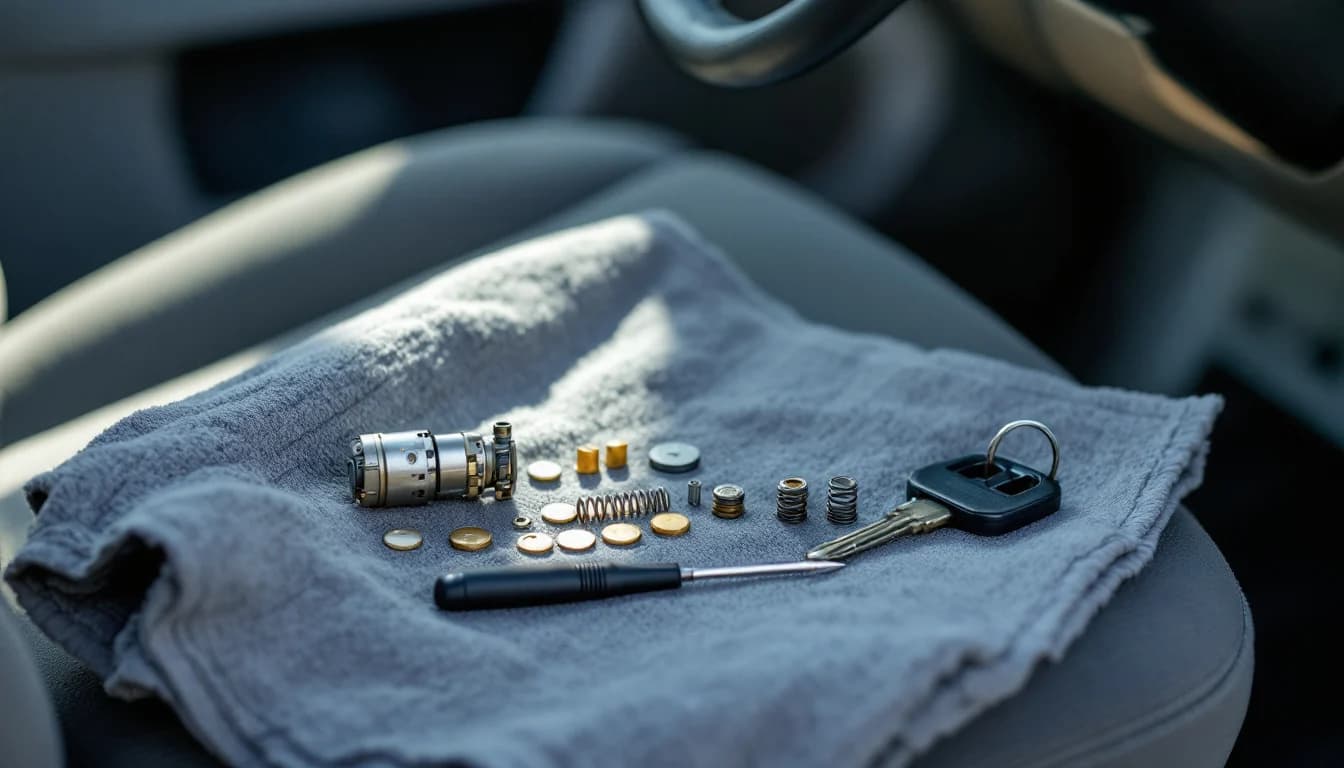
The lock cylinder is worn. Inside the cylinder is a stack of spring-loaded wafers. The cuts on your key push each wafer to a precise height, and when every wafer lines up on the shear line the plug is free to rotate. Wafers wear. Springs weaken. Metal shavings and the fine grit that gets into everything in North Texas accumulate. Eventually the wafers do not settle cleanly and the plug binds. Classic tells: the key needs jiggling, it works better with the wheel wiggled, or it works from one angle and not another.
The ignition switch has failed. The switch is the electrical half, mounted behind the cylinder. Turning the cylinder rotates a shaft that operates the switch, and the switch feeds power to accessories, the run circuit, and the starter. A failed switch usually produces the opposite symptom set: the key turns smoothly through every detent and nothing happens electrically. Dash lights do not come up, or they come up in ACC and die when you rotate to start.
The steering lock is binding. Honda, like nearly every manufacturer, ties a steering column lock to the ignition. If the front wheels are loaded against a curb or the wheel is turned hard against its stop, the locking pin is under pressure and will not retract, which physically prevents the cylinder from rotating. This is not a broken part at all. It is the anti-theft design working as intended, and it is the single most common "my ignition is broken" call that turns out to be nothing.
The Diagnostic Order That Saves Money
There is a sequence that keeps customers from buying parts they do not need, and it starts with the cheapest possibility.
First, rock the steering wheel. With the key inserted, apply light steady turning pressure to the key while rocking the wheel gently left and right. If the cylinder frees up, the steering lock was binding and nothing is broken. Park with the wheels straight and this stops happening.
Second, look at the key itself. Pull it out and hold it next to a spare if you have one. On an Odyssey or Pilot that has covered serious mileage, the working key has usually been in and out of that cylinder tens of thousands of times. The peaks of the cuts round off. A rounded key cannot push wafers to their correct heights, so it binds in a cylinder that is actually still serviceable. When a freshly cut key from the vehicle's code operates the cylinder smoothly, the diagnosis is finished and it was never the ignition.
Third, test electrical behavior. If the cylinder turns cleanly through all positions and the vehicle stays dead, or accessories cut out at a specific detent, attention moves to the switch rather than the lock.
Fourth, watch the security indicator. The immobilizer light tells its own story. If the engine cranks but will not run and the security indicator stays lit or flashes, the mechanical side did its job and the electronic side rejected the key. That is a different problem entirely, and it lives on our no key detected and immobilizer service rather than in the ignition.
"Nine times out of ten when someone tells me a Honda ignition is shot, I ask to see the key first. If the cuts are worn round and shiny, I cut a fresh one from the code and it turns like new. Selling a cylinder for a worn key is the easiest way in this trade to charge somebody for nothing." — a senior technician on our Irving crew
Why the Worn Key Is So Often the Real Culprit
It is worth spending a minute on this, because it is the difference between a modest bill and an expensive one.
A key and a cylinder wear together as a matched pair. Every insertion drags the cut edges of the blade across the wafers. Over ten or fifteen years of daily use, both surfaces round off, and because they wear together the key keeps working. Then a second key enters the picture, or a wafer spring finally sags, and the tolerance that was barely holding disappears.
Cutting a new key to the vehicle's original factory code, rather than duplicating the worn one, restores the correct geometry. A copy of a worn key copies the wear, which is why the parts-store duplicate frequently works worse than the original. This is why we cut to code and not by tracing whenever the code is available.
Odyssey and Pilot are both high-mileage family vehicles that tend to stay in service a long time in the DFW area, so this pattern is common in our Irving work. Broader consumer maintenance guidance from AAA makes the same general point about ignition and key wear: components that degrade gradually usually give warning signs long before they strand you (aaa.com).
When Rekeying the Cylinder to Your Existing Key Makes Sense
If the cylinder genuinely needs to come apart, there are two ways to finish the job.
Replace the cylinder with a new one keyed differently. This leaves you carrying one key for the ignition and a different key for the doors, which nobody wants, or it forces the door locks to be addressed as well.
Rekey the cylinder to your existing key. The technician disassembles the lock, replaces the worn wafers and springs with a fresh set matched to your current key's cut, and reassembles. Your original key now operates a mechanically healthy cylinder, and the doors keep working with that same key because nothing about the key changed.
The second path is usually the sensible one on an Odyssey or Pilot. It preserves the one-key-fits-everything convenience, it avoids buying a full cylinder assembly, and it does not disturb the immobilizer relationship at all if the transponder stays in the same key head. It is the closest thing to a genuinely inexpensive outcome in this category of repair, and it is the reason a good diagnosis is worth more than a fast part swap. Our ignition repair service covers this work directly.
Where rekeying does not apply: if the plug is physically damaged, if the housing or the retention hardware is broken, or if a key snapped off and did collateral damage inside. Extraction is its own procedure, and we cover it in detail in the guide to broken car key extraction in Irving TX.
Where the Immobilizer Enters the Picture
Honda's immobilizer sits alongside the mechanical lock, not inside it, but cylinder work can still touch it. Here is the honest breakdown.
If only the wafers change and the same key head is used, the transponder is untouched. Nothing needs to be re-learned. The chip that the vehicle already trusts is still the chip going into the ignition.
If the key itself changes, the new key's transponder has to be enrolled. If you still hold a working key, this is the fast case. If the old key is unusable and no other working key exists, the job moves into all-keys-lost territory with the corresponding jump in labor and cost.
If the antenna ring around the cylinder is disturbed, the coil that energizes the transponder has to be correctly reinstalled. A ring that is loose, cracked, or reassembled out of position produces an intermittent "key not recognized" condition that looks exactly like a bad key.
If a control module is replaced during the repair, the immobilizer relationship has to be re-established between the module and the key set. This is the scenario where a straightforward mechanical repair turns into a programming session, and it is why we ask about prior module work before quoting.
Electronic immobilizers are the reason this complexity exists. The National Highway Traffic Safety Administration and the Insurance Institute for Highway Safety have both documented how standardized immobilizer adoption changed vehicle theft patterns, and the trade-off for that security is that ignition work on a modern Honda is part mechanical and part electronic (nhtsa.gov, iihs.org). The Society of Automotive Engineers maintains the standards ecosystem that governs how these vehicle electrical and diagnostic interfaces are defined in the first place (sae.org).
Honda Odyssey and Pilot Ignition Repair Cost in Irving
These are realistic mobile-service ranges for Irving as of August 2026. The wide spread reflects genuinely different jobs, not vague pricing. Final numbers are confirmed against your VIN and the on-site diagnosis before any work begins.
| Honda Ignition Scenario | Typical Price Range | What You Are Paying For |
|---|---|---|
| Steering lock bind, no parts needed | Diagnostic visit only | Technician frees the column, confirms nothing is broken |
| Fresh key cut to code for a worn key | $150–$275 | New transponder key cut to factory code plus enrollment |
| Lock cylinder rekeyed to your existing key | Mid-range repair, quoted on-site | New wafers and springs, cylinder service, reassembly |
| Broken key extraction from the cylinder | $75–$145 | Non-destructive removal, cylinder inspection |
| Ignition switch replacement (electrical half) | Quoted after diagnosis | Part cost varies by model year and trim |
| Cylinder work plus new key and enrollment | $150–$275 typical key portion | Mechanical repair plus transponder programming |
| All keys lost during an ignition repair | $250–$400 | Origination with no trusted key, added labor |
Two honest notes on this table. First, we do not publish a fixed number for module-level work or switch assemblies, because the correct price depends on the specific part and the vehicle's history. An exact quote is confirmed after we have the VIN and, where relevant, the module identification. Anyone quoting module work sight-unseen over the phone is guessing. Second, if the diagnosis reveals a problem outside the lock and key domain, such as a starter or wiring fault, we will tell you plainly rather than replacing an ignition that was fine.
For a comparable breakdown on a different platform with its own quirks, the Subaru Outback and Forester ignition repair guide walks through how that manufacturer's cylinder and immobilizer behave. Our Honda brand page covers the models we service most across the lineup.
Symptoms Worth Acting On Before You Are Stranded
Ignition failures give warning. The customers who end up stuck are almost always the ones who noticed something for weeks and hoped it would sort itself out. Watch for:
- The key needs wiggling to turn, or works better after a few attempts.
- The key sticks in the accessory position and will not return to off, or will not come out.
- You have to hold the key slightly forward or back for accessories to stay on.
- Dash lights flicker when the key is at rest in the run position.
- One key works and the other does not, which usually means one is worn rather than the cylinder failing.
- The security light stays lit with the engine cranking but not starting, which points at the immobilizer rather than the lock.
Any of these is worth a phone call while the vehicle still moves under its own power. A cylinder that is annoying today becomes a no-start eventually, and the cost of dealing with it does not improve with waiting.
Mobile Repair Versus the Honda Dealer
For ignition and key work specifically, a mobile locksmith holds a practical advantage. If the Odyssey will not start, the dealer path begins with a tow, commonly $150 to $300 in the metro, then an appointment that may be several business days out. A mobile technician works where the van sits, whether that is a driveway in Valley Ranch or a garage level in Las Colinas, and typically completes the job the same day.
The dealer is the right call when the vehicle is under warranty coverage that includes the failed component, or when a repair requires manufacturer software that has not been released to the aftermarket. We will say so when that is the situation rather than taking a job we cannot finish.
The Federal Trade Commission's consumer guidance on hiring locksmiths recommends getting a clear estimate and confirming identification before work begins, which is exactly how a legitimate mobile call should feel (ftc.gov). Professional standards bodies including the Associated Locksmiths of America publish the same expectations for the trade (aloa.org).
Frequently Asked Questions
Why won't my Honda Odyssey key turn in the ignition?
The three common causes are a bound steering column lock, a worn key, and a worn lock cylinder, in roughly that order of frequency. Start by rocking the steering wheel gently while applying light turning pressure to the key. If it frees up, the column lock was loaded and nothing is broken. If a spare key turns and the usual key does not, the key is worn. If neither works smoothly, the cylinder likely needs service.
Is it cheaper to rekey the ignition cylinder or replace it?
Rekeying is usually the better value on an Odyssey or Pilot. The technician replaces the worn wafers and springs inside the existing cylinder so it matches your current key, which means you keep one key for the doors and ignition and you do not buy a complete assembly. Replacement makes sense only when the plug, housing, or retention hardware is physically damaged.
My Honda key turns but the engine won't crank. Is that the ignition?
Possibly, but that symptom points more toward the electrical ignition switch than the mechanical cylinder. If the cylinder rotates smoothly through every position and nothing happens electrically, the switch behind it is the prime suspect. If the engine cranks but will not run and the security indicator is lit, the problem is the immobilizer rejecting the key rather than anything mechanical.
Does ignition cylinder work require immobilizer reprogramming?
Not always. If the cylinder is rekeyed to your existing key and the same key head with the same transponder goes back in, nothing needs to be re-learned. Reprogramming becomes necessary when the key itself changes, when the antenna ring around the cylinder is disturbed and needs correct reinstallation, or when a control module is replaced during the repair.
How long does a Honda ignition repair take on-site?
A steering-lock bind is resolved in minutes. Cutting a fresh key to code and enrolling it generally runs fifteen to forty-five minutes. Rekeying a cylinder takes longer because the lock has to come apart, be serviced with new wafers, and be reassembled and tested. Switch or module work depends entirely on the part and the vehicle, and we give a realistic time estimate once the diagnosis is done.
Can a worn key really damage the ignition?
It contributes. A rounded key does not lift the wafers to their correct heights, so the plug is forced to rotate with wafers dragging on the shear line. That accelerates wear on both parts. Cutting a fresh key from the vehicle's factory code, rather than duplicating an already worn key, restores the proper geometry and often extends the cylinder's remaining life considerably.
Do you repair Honda Pilot ignitions on-site or do I need a tow?
On-site in the large majority of cases. We bring cutting, rekeying, extraction, and programming capability to the vehicle, so an Odyssey or Pilot that will not start does not need to move. The exceptions are repairs requiring dealer-only software or components outside lock and key work entirely, and we identify those before you spend money on a tow.
Get a Honda Ignition Diagnosed in Irving Today
An Odyssey or Pilot ignition that fights you is not something to manage around. Irving Locksmith Pros diagnoses the actual failure, whether that is a bound column, a worn key, a tired cylinder, or a failed switch, and fixes what is genuinely wrong instead of selling the most expensive possibility.
Call or text 817-842-1751 or email contact@irvinglocksmithpros.com. Describe what the key does when you turn it, have the VIN handy, and we will bring the right approach to your driveway across Irving, Las Colinas, Coppell, and the neighboring DFW cities.
References
- National Highway Traffic Safety Administration — vehicle anti-theft systems and immobilizers: https://www.nhtsa.gov
- Insurance Institute for Highway Safety — anti-theft technology and theft loss data: https://www.iihs.org
- SAE International — automotive electrical and diagnostic interface standards: https://www.sae.org
- AAA — vehicle maintenance and roadside consumer guidance: https://www.aaa.com
- Associated Locksmiths of America (ALOA) — professional automotive locksmith standards: https://www.aloa.org
- Federal Trade Commission — hiring a locksmith and avoiding scams: https://www.ftc.gov
Reviewed by a licensed automotive locksmith technician at Irving Locksmith Pros. Texas DPS Private Security regulated. Mobile service; ownership verification required.