
Key Fob Died Mid-Trip in Irving TX: A Visiting Driver's Survival Guide
2026 survival guide for travelers whose key fob dies in Irving TX — the symptom ladder, coin-cell fix, hidden key blades, and on-the-road replacement.
Your Fob Quit in a City That Isn't Yours
A key fob never dies at home in the kitchen. It dies four hundred miles from home, in a parking lot off Highway 114, while you're in Irving for a conference, a family visit, or a stopover on the way to somewhere else — and suddenly the small plastic rectangle that runs your entire relationship with your car has gone silent, in a city where you don't know a single mechanic, dealer, or locksmith.
Here's the reassurance up front, before the diagnostics: the overwhelming majority of "my fob died" events on the road are a two-dollar battery, fixable in minutes with parts sold at every drugstore and big-box store along MacArthur Boulevard. A meaningful minority are something more — a fob damaged by water or a drop, or an electronics failure — and even those don't require the dealer back home, a tow, or cutting the trip short. As of July 2026, this guide is the survival sequence we walk visiting drivers through by phone: read the symptoms, try the two built-in escape hatches your car already has, then — only if the ladder runs out — replace the fob right here, on the road, at mobile rates. (Prefer a human on the line while you work through it? Call or text 817-842-1751.)
Step One: Place Yourself on the Symptom Ladder
Fobs almost never fail without warning. They descend a ladder, and knowing which rung you're on tells you what's actually wrong.
Rung 1 — Weak range. A month ago you unlocked the car from across the parking lot; now you have to be within a few steps. This is the classic early sign of a dying coin cell. The fob transmits at full strength or not at all as far as your car is concerned — but shrinking range means the battery can no longer power a strong transmission. Nothing is broken. The clock is simply ticking.
Rung 2 — Intermittent. The buttons work, then don't, then work again after a few presses; the car sometimes doesn't detect the fob for push-button start and then finds it on a retry. Cold mornings make it worse (battery chemistry hates cold, though your Texas July has the opposite problem — heat ages cells faster over time). At this rung the coin cell is nearly done, and the failures will accelerate over days, not months.
Rung 3 — Dead. No buttons, no proximity detection, "Key Not Detected" on the dash. Either the coin cell has finally emptied — still the most likely story — or the fob itself has failed. The next two sections split those cases apart.
Rung matters because it maps to urgency. Rung 1 on a Tuesday means "buy a battery this week." Rung 3 in a parking garage means "work the escape hatches below, right now."
Step Two: The Coin-Cell Swap — Always First
Whatever rung you're on, the battery is the first suspect, because it's the cheapest, fastest, and statistically dominant answer. Most fobs run a CR2032 or a close cousin — a lithium coin cell sold at pharmacies, supermarkets, hardware stores, and big-box retailers across Irving, typically for a couple of dollars.
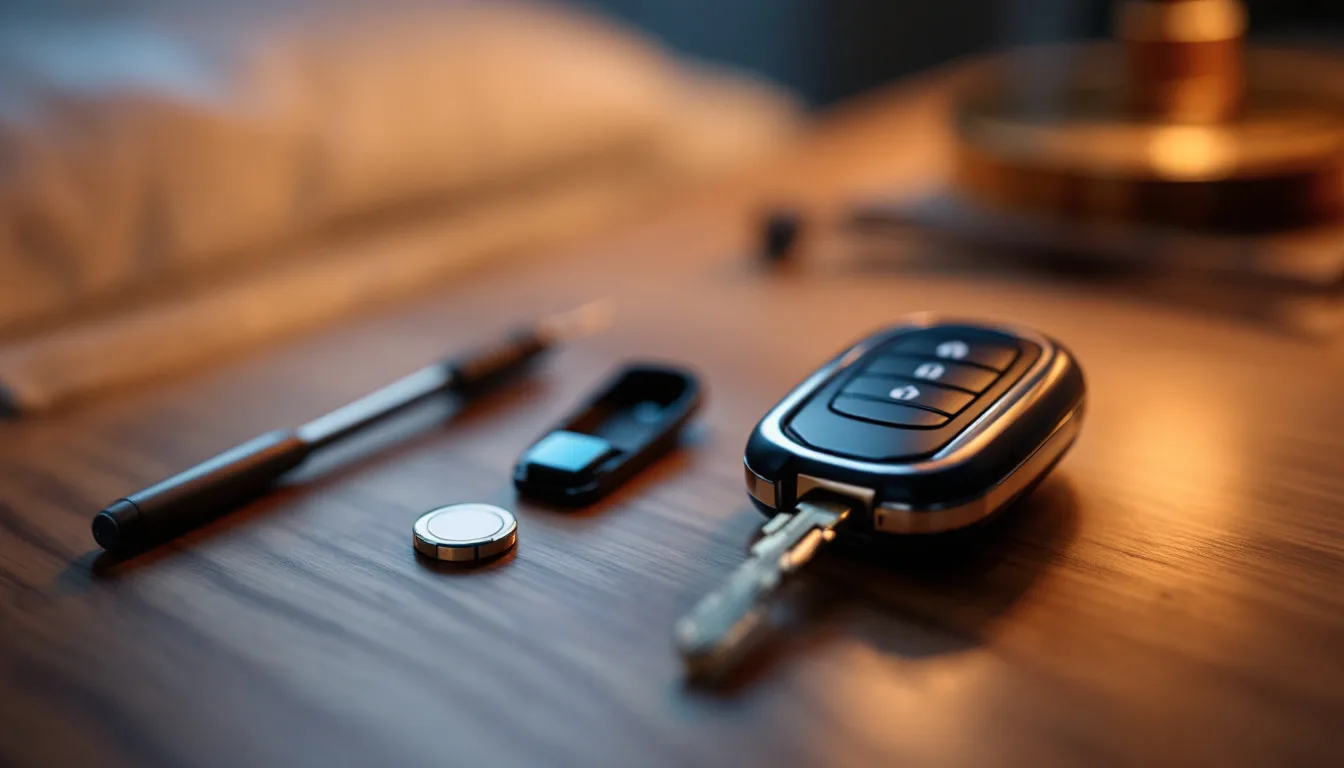
Nearly every fob opens without tools or with nothing more than the fob's own hidden key blade or a coin as a pry lever: there's a seam, a slot, or a release button; the halves separate; the cell sits in a visible cradle. Note the orientation (usually positive side marked and facing you), swap, snap shut. Our step-by-step, style-by-style walkthrough is here: how to change a car key fob battery — five minutes, including the trip to the store's battery aisle.
Two traveler-specific tips. First, buy two cells — the second lives in your luggage as trip insurance, and coin cells have long shelf lives. Second, after the swap, test both functions: the remote buttons (lock/unlock at range) and the proximity start. If buttons revive but starting doesn't, or nothing revives at all, keep reading — you've learned something diagnostic.
Step Three: The Two Escape Hatches Your Car Already Has
While you're sorting out the battery — or if the swap didn't fix it — your car has two built-in fallbacks that most drivers have never used. These are what get you into and starting the car tonight, whatever's wrong with the fob.
The hidden mechanical key blade. Nearly every proximity fob conceals a physical key inside it — a small release slides or clicks, and a metal blade emerges. And nearly every car with keyless entry retains a mechanical lock cylinder on the driver's door, though many hide it beneath a plastic cap next to or beneath the handle (the blade itself usually pries the cap off; check your owner's manual for the exact spot). Dead fob electronics don't affect the blade: it will open the driver's door regardless. Expect the alarm to sound on some vehicles until the car sees a valid start — that's normal, not a malfunction.
The backup start position. Once inside, push-button cars have a documented dead-fob start procedure: hold the fob directly against the start button on many models, or place it in a marked console pocket, slot, or against the steering column on others. It works through a short-range backup coupling that functions even with a completely dead fob battery — a deliberate design feature of passive-start systems (sae.org). The location is in the owner's manual under "starting with a dead key fob"; the manual is almost certainly also in your automaker's phone app if the paper copy is in a glovebox you can now open.
Blade plus backup position means a dead battery is never a stranding — just an inconvenience with extra steps. Use them, drive to the battery aisle, do the swap.
Step Four: When a Battery Won't Fix It
Sometimes the ladder ends and the fresh cell changes nothing. The usual culprits:
Water. Fobs go through pockets into pools, lakes, washing machines, and Texas summer downpours. Immediate symptoms after a soaking, or corrosion visible on the board when you open the case, point to water damage. Quick rescue attempts (remove battery, dry thoroughly) occasionally work for brief splashes, but a fob that swam is on borrowed time even if it revives — corrosion progresses.
Impact. Dropped on concrete, run over, crushed in a door. Cracked cases can be cosmetic, but a fob that stopped working after a hard impact likely has board or component damage. Buttons that feel different — mushy, stuck, rattling — after a drop are corroborating evidence.
Plain electronic failure. Components age; solder joints fatigue with years of pocket heat and vibration. A high-mileage fob can simply die of old age, mid-trip, with no story attached.
A de-synced or damaged transponder. Rarer: remote functions work but the car refuses to authorize starting even fob-against-button. That pattern suggests trouble on the immobilizer side of the fob rather than the remote side — the encrypted chip the car's anti-theft system interrogates before allowing a start, the architecture that's been central to the long decline in vehicle theft (nhtsa.gov, iihs.org).
In all of these, the fix is a replacement fob programmed to your car — which brings us to the question every stranded visitor asks.
You Don't Need the Dealer Back Home
The instinct when a fob dies far from home is that only "your" dealer — the one with your service records, in your city — can fix it. That's not how key programming works. Your car carries its identity in its VIN and its immobilizer, both of which are right here in Irving with you. Any properly equipped, licensed automotive locksmith can source the correct fob for your year/make/model, cut the emergency blade, and program the fob to your car on the spot — the security-data access frameworks that make this possible for legitimate professionals are exactly what the trade's standards bodies maintain (aloa.org, nastf.org). In Texas, the license to look for is issued under the Department of Public Safety's Private Security Program (dps.texas.gov) — ask for it, along with an up-front price, which is precisely what the FTC's consumer guidance on locksmith services tells you to demand anywhere in the country (ftc.gov).
One thing no legitimate locksmith will skip: ownership verification. Photo ID plus registration, insurance card, or title matching you and the vehicle, before any key is made. As a traveler, your registration is probably in the glovebox — which the hidden blade can now open, or which we open non-destructively as part of the visit. The verification rule can feel like friction when you're stressed and far from home; it's also the only thing standing between your car and someone else claiming keys to it in your driveway. Travelers should love this rule.
Here's what replacement looks like on the road, with our July 2026 bands:
| Situation | Path | Band / Cost Logic (July 2026) |
|---|---|---|
| Weak or intermittent fob | Coin-cell swap, today | A few dollars, DIY in minutes |
| Dead fob, battery fixes it | Swap + test both functions | A few dollars; carry a spare cell |
| Dead fob, battery doesn't fix it — basic transponder key | Mobile replacement + programming | $150–$275 |
| Dead fob — smart/proximity, domestic or Asian brand | Mobile replacement + programming | $300–$500 |
| Dead fob — European smart key (BMW, Mercedes, Audi class) | Mobile replacement + programming; some models need VIN-ordered parts | $400–$700 |
| Dealer path, any of the above | Tow + dealer queue | $500–$800 single key typical, plus $150–$300 tow, plus days |
For most mainstream vehicles this is a same-day, come-to-your-hotel visit — see key fob programming for the full service and car key replacement cost in Irving for the deeper cost breakdown. European platforms are sometimes next-day if components must be ordered against the VIN; we tell you which case you're in on the first call, not after arrival — and if you're driving one, our European car specialists page covers the brand-specific details.
"Visitors always apologize on the phone — 'sorry, I'm not from here, I don't know anyone.' You don't need to know anyone. Your car's identity travels with it: VIN, immobilizer, done. I program fobs in hotel parking lots along 114 every month for people whose home dealer is three states away. The car doesn't know it's on a trip." — a Texas DPS-licensed automotive locksmith technician on our team
The Traveler's Fob Kit (Read Before the Next Trip)
Five minutes of preparation makes this entire article unnecessary:
- Swap the coin cell before any long trip if it's more than a year old. Cells are cheap; stranded evenings aren't.
- Find your blade and backup start position now — at home, calm, manual in hand. Doing it for the first time at night in a strange parking garage is the hard mode.
- Carry the second fob when two drivers travel. One fob per pocket, never both in the same bag.
- Keep a spare coin cell in your luggage. The two-dollar part, pre-positioned.
- Photograph your registration and insurance card. Speeds every verification conversation on the road.
And the one that outlasts the trip: if your household owns exactly one working fob, fix that this month at spare-key prices — every scenario in this guide is dramatically cheaper and calmer when a second key exists.
Fob Dead in Irving Right Now?
If the battery swap didn't save it — or you'd just rather have a professional confirm what's wrong before you spend anything — we come to your hotel, your relative's driveway, or wherever the car sits across Irving, Las Colinas, and our DFW service radius. Straight diagnosis first: if it's a two-dollar battery, we'll say so. If it's a real replacement, it's $150–$275 (basic transponder), $300–$500 (smart/proximity), or $400–$700 (European), programmed on-site, ownership verification always required.
Call or text 817-842-1751 or email contact@irvinglocksmithpros.com with your year, make, model, and what the fob is (and isn't) doing. Visiting drivers welcome — the car doesn't care whose city it's in, and neither do we.
Frequently Asked Questions
My key fob suddenly stopped working while traveling. What's the most likely cause?
The coin-cell battery, by a wide margin — especially if you noticed shrinking remote range or intermittent behavior in the days before. Replace the cell first (a CR2032-class battery sold at any drugstore, swapped in minutes) and test both the remote buttons and proximity start. Only if a fresh battery changes nothing should you suspect fob damage or failure.
How do I get into my car with a completely dead fob?
Use the hidden mechanical key blade — nearly every proximity fob contains one behind a small release. The driver's door has a mechanical lock cylinder, often concealed under a plastic cap near the handle that the blade itself pries off. The blade works regardless of the fob's electronics. The alarm may sound on some vehicles until a valid start occurs; that's expected.
How do I start a push-button car when the fob battery is dead?
Every push-button vehicle has a documented backup: hold the fob directly against the start button, or place it in a designated console pocket, slot, or against the steering column, then press start. A short-range backup coupling reads the fob even with a dead battery. The exact position for your model is in the owner's manual — also available in most automakers' phone apps.
The new battery didn't fix my fob. Now what?
Then the fob itself is the problem — water damage, impact damage, or plain electronic failure. It needs replacement and programming to your vehicle, which a licensed mobile locksmith does on-site: $150–$275 for basic transponder keys, $300–$500 for smart/proximity fobs, $400–$700 for European smart keys as of July 2026. No tow and no dealer visit required for most vehicles.
Can a locksmith in Irving program a fob for my out-of-state car?
Yes. Key programming keys off the vehicle's VIN and immobilizer, both of which are present wherever the car is — your home dealer holds nothing that's needed. A licensed Texas locksmith sources the correct fob for your year, make, and model and programs it at your location. Ownership verification (photo ID plus registration, insurance, or title) is required before any key is made, exactly as it would be at home.
My fob got wet. Can it be saved?
Sometimes, briefly: remove the battery, dry the fob thoroughly, and hope the exposure was short. But water-damaged fobs are unreliable even when revived — corrosion on the board progresses over time. If the fob swam rather than got splashed, plan on replacement soon even if it's working today, and treat any post-soaking flakiness as the failure announcing itself.
Is it cheaper to wait and use my dealer back home?
Usually not, once you count everything. The dealer path typically runs $500–$800 for a single key — and if the fob is fully dead and the car can't be driven, add a $150–$300 tow and days of queue time, or the cost and hassle of completing your trip without the car working properly. Mobile replacement in the $150–$700 bands, done same-day where you are, is generally the better math for travelers.
References
- SAE International — passive start, keyless entry, and backup coupling design: https://www.sae.org
- National Highway Traffic Safety Administration — immobilizers and vehicle theft prevention: https://www.nhtsa.gov
- Insurance Institute for Highway Safety — vehicle security technology: https://www.iihs.org
- Associated Locksmiths of America (ALOA) — professional standards: https://www.aloa.org
- National Automotive Service Task Force (NASTF) — secure vehicle security-data access: https://www.nastf.org
- Texas Department of Public Safety — Private Security Program licensing: https://www.dps.texas.gov
- Federal Trade Commission — hiring a locksmith and avoiding scams: https://www.ftc.gov
Reviewed by a licensed automotive locksmith technician at Irving Locksmith Pros. Texas DPS Private Security regulated. Mobile service; ownership verification required.