
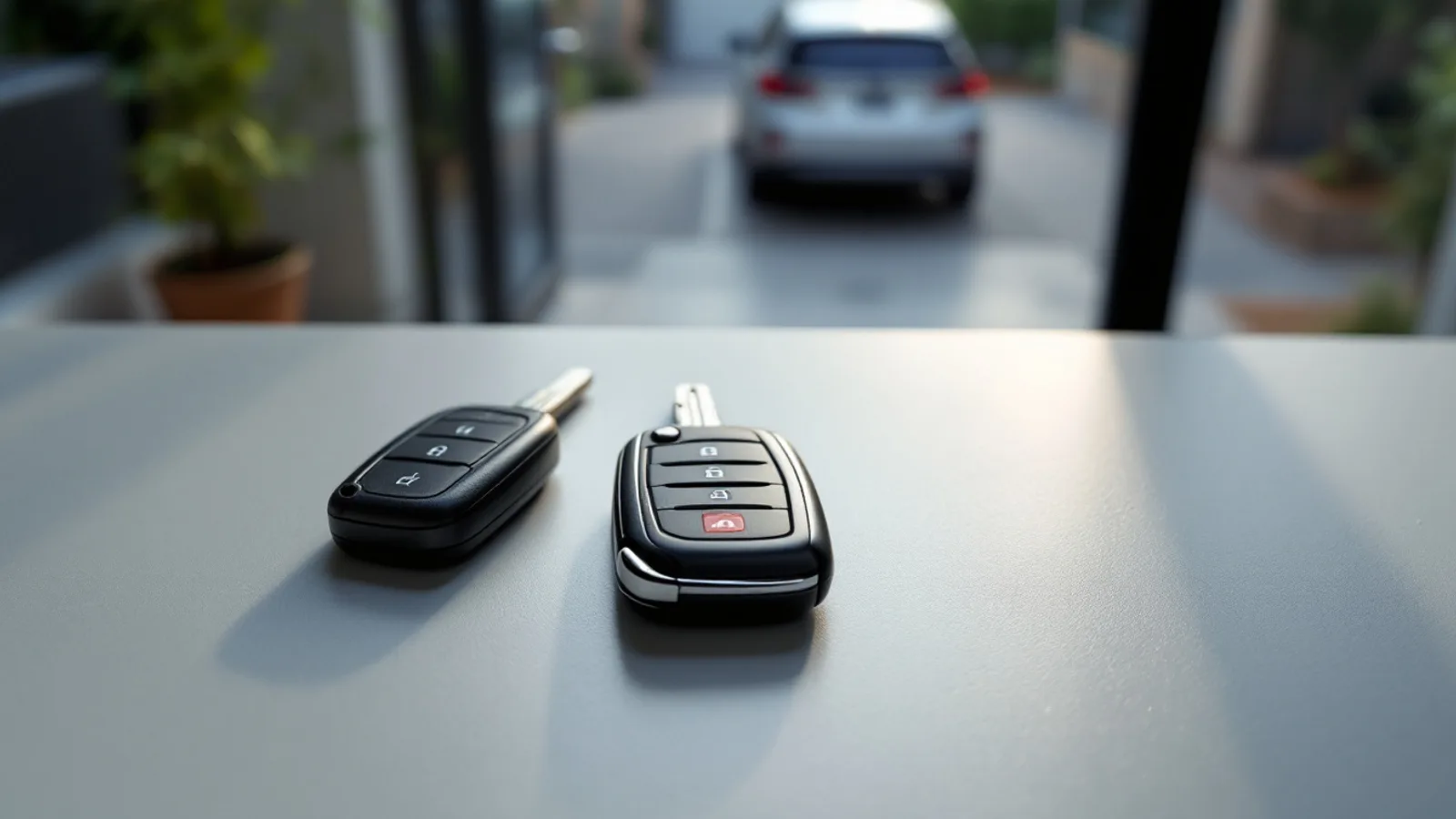
Old Key Stopped Working After a New Key Was Programmed in Irving, TX
Your spare stopped working the day a new key was programmed. Why all-keys-erase procedures do that, when it is correct, and how to avoid losing a good key.
The Short Answer
As of September 2026, if a spare stopped working the moment a new key was programmed, the cause is almost always an all-keys-erase procedure. On many vehicles the only way to add a key is to wipe every key the immobilizer holds and re-teach the ones physically present. Any key not in the technician's hand at that moment is deleted. This is designed behaviour, not a mistake — but it means a spare left at home during the appointment is now scrap unless it is re-learned. Bring every key to the job. Call 817-842-1751 and we will tell you in advance whether your VIN requires it.
This catches people out constantly, and the reason it feels like a fault is that the outcome is invisible until later. The new key works. The technician leaves. Three weeks on you reach for the spare in the kitchen drawer and the engine will not start.
Nothing broke. The vehicle did exactly what the manufacturer designed it to do.
Why an "Erase Everything" Procedure Exists At All
It looks hostile to the owner until you consider the alternative.
An immobilizer holds a list of keys it trusts. If a vehicle allowed a new key to be added without disturbing that list, then anyone who could run an add-key procedure could quietly append a key of their own — and the owner would never know, because every existing key would keep working normally. There would be no symptom. The vehicle would simply start for a stranger.
Erasing the whole list and re-teaching only the keys physically present closes that hole completely. After the procedure, the set of keys that start the vehicle is exactly the set that was in the room. Nothing can hide in the list.
That is why the Insurance Institute for Highway Safety has consistently found immobilizers to be one of the more effective anti-theft measures introduced in modern vehicles, and why federal theft-protection standards administered by the National Highway Traffic Safety Administration push in the same direction. The inconvenience you hit is the mechanism doing its job.
Which Vehicles Do This
There is no clean brand-by-brand rule, which is precisely why it needs checking per VIN rather than per badge. What is reliable is the pattern:
Always erases every key:
- All-keys-lost procedures, on essentially every vehicle. With no trusted key present there is nothing to build on, so the list is rebuilt from zero.
- Security module replacement or re-initialisation.
- Many older bladed transponder systems, where "add a key" was never implemented as a distinct operation.
Usually erases every key:
- Vehicles where the only documented programming path is an erase-and-relearn sequence, common across a range of Asian and domestic models from roughly the mid-2000s onward.
Usually adds without erasing:
- Many current proximity systems, where adding a key with a trusted key present is a supported, distinct operation.
Always erases, by request:
- Any job where you want the list cleared — a used purchase, a stolen key, a departed employee, an ex-partner. Here the erase is the entire point.
Because the pattern varies by model year and even by trim, we decode the VIN before the visit and tell you which category you are in. That single phone call is the whole prevention.
The Rule That Prevents It: Bring Every Key
If you take one thing from this page: bring every key you own to the appointment.
Not the ones you use. All of them. The one in the kitchen drawer. The one in your partner's bag. The one taped inside the glovebox by a previous owner. The valet key. The spare that lives at your parents' house across town.
Every key physically present when the procedure runs gets re-taught in the same visit at no additional programming cost — they are part of the same job. Every key absent is deleted and has to be brought back later as its own appointment, at its own price.
That asymmetry is the whole cost of the mistake. Present keys are free to keep. Absent keys become a second dispatch.
The one exception worth stating: if a key is missing because it was lost or stolen, leave it out deliberately. Deleting it is exactly what you want, and re-teaching it would defeat the purpose.
"Nobody Told Me" — What Should Have Happened
You should have been asked, before the work started, how many keys exist and whether they were all present. That question is part of the job, not a courtesy. Any competent shop or locksmith knows which procedure a given VIN requires and knows what it will do to the key list.
If you were not asked and a good key was lost as a result, that is a communication failure on the service side. It is not, however, usually recoverable by argument — the key is erased, and re-teaching it means another visit regardless of who pays.
What you can do is verify before the next job. Two questions, asked on the phone:
- "Does my VIN require an all-keys-erase to add a key?"
- "If I bring every key I own, will they all still work afterwards?"
A straight answer to both is a reasonable expectation and a decent proxy for whether the person on the phone knows the vehicle. Standards bodies like the Associated Locksmiths of America treat exactly this kind of disclosure as basic practice.
Ruling Out the Other Causes First
Before concluding the key was erased, rule out the boring explanations. Two of the three are free to check.
Dead coin cell. By far the most common reason a spare that sat in a drawer for a year stops working. A spare that is rarely used still drains slowly, and a dead battery kills the remote buttons first. On a push-to-start vehicle, a fob with a flat battery often still starts the engine when held directly against the start button — a separate short-range backup coil reads it there. If that works, it is the battery, not an erase. Our guide on changing a key fob battery covers the five-minute fix.
Physical damage or moisture. A key that spent a cycle in a washing machine, lived in a gym bag, or was dropped on concrete can fail on its own schedule and coincidentally around the same time. Water-damaged fobs and modules are their own repair path.
The vehicle, not the key. If neither key works now, the problem is not an erase — an erase would leave the new key working perfectly. Suspect the antenna ring, the receiver, or a module fault instead. On Nissan and Infiniti specifically, a wheel locked rigid with a live dash points at a steering lock ESCL failure rather than anything to do with your keys.
That last test is the decisive one and takes ten seconds: does the new key still start the car normally? If yes, the old key was erased or has failed on its own. If no, the vehicle needs diagnosis, not keys.
What It Costs to Re-Learn an Erased Key
The good news is that an erased key is almost always still a perfectly good key. The chip and the electronics are unharmed; the vehicle has simply forgotten it.
Re-teaching it is a programming job, not a new-key job, and it prices within the normal bands: $150–$275 on a transponder vehicle, $300–$500 on a domestic or Asian proximity vehicle, $400–$700 on a European one. You are not buying hardware again, so it is the lower end of the band rather than the top.
What you cannot recover is the dispatch. Re-learning two erased keys in one visit costs the same trip as one; that is why bringing everything the first time is worth the fifteen minutes it takes to round the keys up.
If the re-learn itself refuses to complete, that is a separate problem with its own list of causes — why a new key will not program ranks them by how often we actually find each one, and low system voltage tops that list more often than any part does. For an all-keys-lost example with real numbers, see Toyota Camry and Corolla all keys lost cost.
A blunt caveat: a key that was erased and has a dead coin cell and has water damage is not worth re-learning. We will tell you if we think it will fail again next month rather than take your money twice.
The Version Where the Erase Is the Point
Everything above treats the erase as an inconvenience. Sometimes it is the entire reason to book the job.
You bought the car used. One key came with the sale. That tells you nothing about how many exist. Previous owners, dealer loaner programs, valet services and fleet operations all leave keys in circulation, and every one still starts your vehicle until the list is cleared. The Federal Trade Commission's Used Car Rule governs what a dealer must disclose about condition — it says nothing about key count, because nobody can know it. Clearing the list is the only way to make the number knowable. Our used-car one-key checklist covers the rest of the day-one list.
A key was stolen. Not lost — stolen. Someone has a working key to your vehicle and knows where you park. This is urgent, and the correct response is to clear the list the same day, not to wait and see. Stolen car keys and deprogramming covers the full security response.
Someone left. An employee with a fleet vehicle key, a housemate, an ex-partner. Same procedure, same reasoning.
In each case, the behaviour that erased your spare by accident is the feature you are deliberately buying.
While You Are There: Make a Spare
The most common version of this call is someone down to exactly one working key. They came to us because a key stopped working, and the outcome is a single point of failure they did not have last month.
A spare programmed during the same visit costs meaningfully less than the same key programmed alone on an emergency call later, because the vehicle only has to be set up once and there is only one dispatch. AAA handles tens of millions of roadside calls a year across the United States, and key and lockout events make up a persistent share of them — they do not arrange themselves around business hours.
If you are already paying for the visit, the marginal cost of the second key is the cheapest insurance on the vehicle. Our page on why a second key matters makes the arithmetic case.
Frequently Asked Questions
Why did my old key stop working when a new one was programmed? Almost certainly an all-keys-erase procedure. On many vehicles the only supported way to add a key is to wipe every key the immobilizer holds and re-teach the ones physically present. Any key not in the room at that moment is deleted. It is designed behaviour, not a fault.
Is my erased key ruined? No. The chip and electronics are undamaged — the vehicle has simply forgotten it. Re-teaching an erased key is a programming job priced within the normal bands ($150–$275 transponder, $300–$500 domestic and Asian smart key, $400–$700 European), and you are not buying hardware again.
How do I stop this happening next time? Bring every key you own to the appointment, including the one in a drawer and the one at a relative's house. Keys present during the procedure are re-taught in the same visit at no extra programming cost. Keys absent are deleted and need their own appointment later.
Which cars erase all keys when you add one? It varies by model year and sometimes by trim, so it has to be checked per VIN. Reliably: all-keys-lost erases everything on essentially any vehicle, as does security module replacement. Many older bladed transponder systems erase on every add. Many current proximity systems can add a key without erasing when a trusted key is present.
My spare stopped working but nobody programmed anything. What then? Check the coin cell first — that is the most common cause on a rarely-used spare. On a push-to-start vehicle, if the fob still starts the engine when held against the start button, it is the battery. If neither key works, the problem is the vehicle rather than the keys, and it needs diagnosis before any programming.
Can I ask for a procedure that does not erase my other keys? You can ask, and on many current proximity vehicles the answer is yes. On vehicles where the manufacturer only documents an erase-and-relearn path, there is no alternative procedure — and anyone claiming to have one is not using a sanctioned method. We tell you which category your VIN falls into before the visit.
I bought a used car with one key. Should I deliberately erase everything? Yes, and it is a single visit. One key at the sale tells you nothing about how many exist — previous owners, loaner fleets and valet operations all leave keys in circulation. Clearing the list while you still have a working key costs within the normal band; doing it after something goes missing is an emergency call plus a police report.
References
- Insurance Institute for Highway Safety (IIHS) — immobilizer effectiveness and vehicle theft research.
- National Highway Traffic Safety Administration (NHTSA) — federal vehicle theft protection standards.
- National Automotive Service Task Force (NASTF) — Vehicle Security Professional registry and secure key data access.
- Associated Locksmiths of America (ALOA) — industry practice and customer disclosure standards.
- Federal Trade Commission (FTC) — Used Car Rule and dealer disclosure requirements.
- AAA — roadside assistance volume and lockout/key call data.
Irving Locksmith Pros — mobile automotive locksmith serving Irving, Las Colinas, Farmers Branch, Coppell and the surrounding DFW area. Call or text 817-842-1751 with your VIN and we will tell you whether your vehicle requires an all-keys-erase before you book. See key fob programming, lost car keys, or no key detected and immobilizer diagnosis.