Box Truck & Medium-Duty Key Replacement Cost in Irving, TX (2026)
2026 box truck and medium-duty key replacement cost in Irving TX. Isuzu NPR, Hino, Freightliner M2 and Ford F-650 price bands, plus mobile fleet service.
The Short Answer
As of August 2026, a replacement key for most medium-duty box trucks in Irving prices below a modern car key, not above it. Many Isuzu NPR, Hino and Freightliner M2 cabs use a mechanical, non-transponder key — cut to code or decoded from the lock, with no programming step at all. Where a chip or fob is involved, our published bands apply: $150–$275 for a transponder key and $300–$500 for a proximity smart key. Call 817-842-1751 with the VIN for the exact figure.
That surprises almost every fleet manager who calls us. The instinct is that a bigger truck means a bigger bill. In practice the opposite is usually true, because the thing that drives car-key pricing in 2026 is not the metal — it is the immobilizer, the security-data access, and the programming session. Strip those out and what is left is skilled key cutting.
This guide covers what a medium-duty key job actually involves in Irving and the surrounding DFW freight corridor, which chassis carry an immobilizer and which do not, what pushes a quote up, and how to stop a single lost key from parking a loaded truck for a day and a half.
Why Medium-Duty Is a Different Job From a Pickup
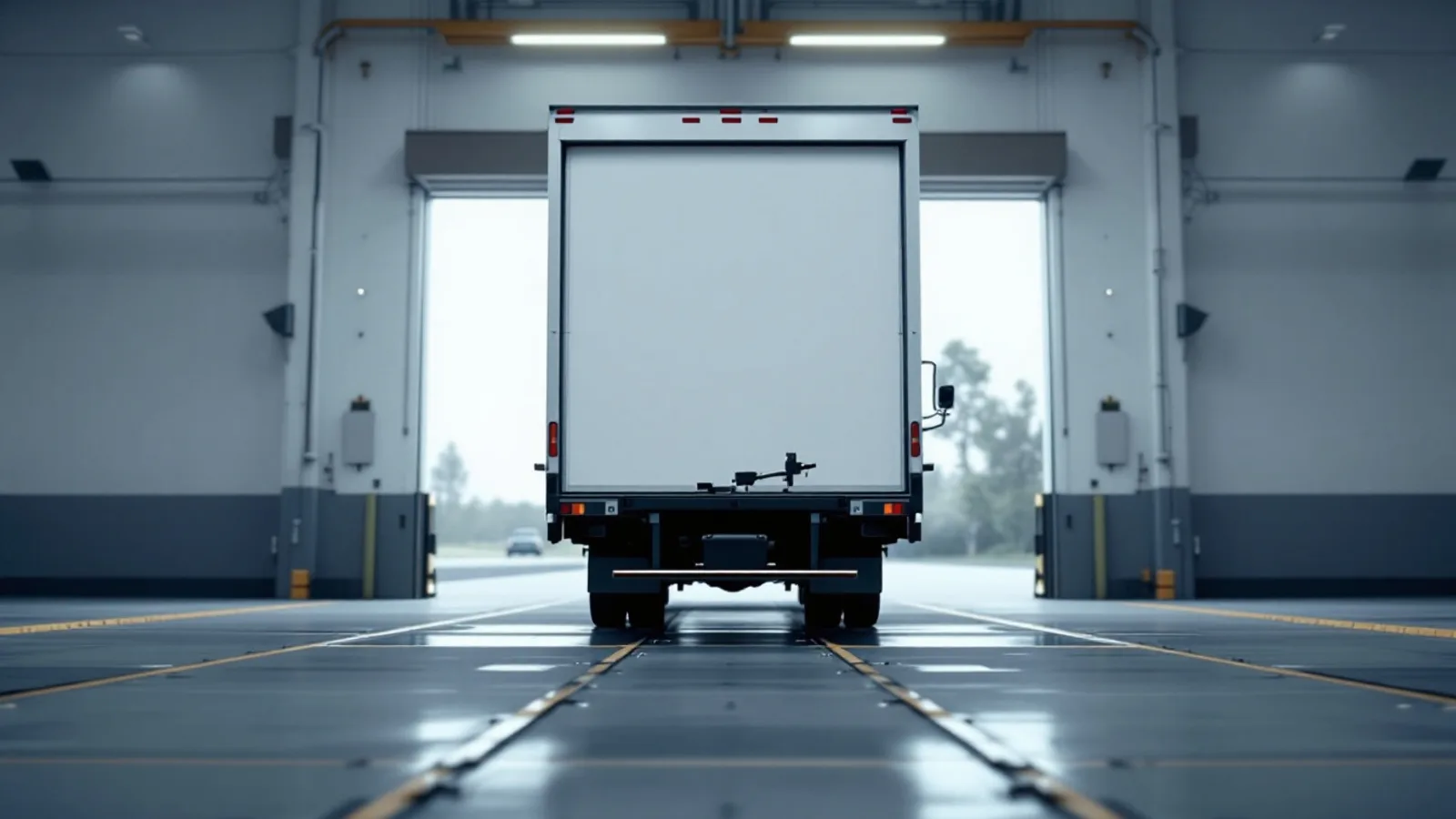
Irving sits in the middle of one of the densest logistics footprints in Texas. Between the DFW Airport freight belt, the Las Colinas commercial core, and the warehouse rows running south toward Grand Prairie, the trucks we get called to are rarely the ones people picture when they say "car key." They are 14- to 26-foot box bodies on an Isuzu N-series or Hino 195 chassis, Freightliner M2 cabs pulling equipment, Ford F-650 and F-750 units with a service body, and a long tail of older cab-overs that have run the same route for a decade.
Three things make these jobs different from a half-ton pickup.
The security architecture is often simpler. A 2018 F-150 has PATS, a body control module, and a coded fob. A 2018 Isuzu NPR very often has a lock cylinder, a blade, and nothing else standing between the key and the starter. Commercial chassis are engineered around fleet serviceability and long production runs, not consumer anti-theft marketing. That is not universal — see the chassis notes below — but it is the general rule.
The truck usually cannot come to us. A car with a lost key can be towed. A 24-foot box with 9,000 pounds of freight in it, parked nose-in at a dock, is not going anywhere without an expensive heavy-duty wrecker and somewhere to put the load. Mobile service is not a convenience on these jobs; it is the only sane option, which is exactly why we run mobile automotive locksmith service across Irving rather than a shop counter.
The downtime dwarfs the cost of the key. A missed delivery window, a driver on the clock doing nothing, and a customer who reschedules will cost more before lunch than the key ever will. That reframes the whole decision, and we will come back to it.
Does Your Truck Even Have an Immobilizer?
This is the single question that determines your price. An immobilizer is the electronic gate that checks a chip in the key before allowing fuel and spark. The National Highway Traffic Safety Administration has documented for years that engine immobilizers correlate with meaningful reductions in vehicle theft, which is why passenger cars standardized them (nhtsa.gov). Medium-duty commercial chassis adopted them far more unevenly, and later.
Here is how the common Irving-area chassis break down. Always confirm against your specific VIN — build variations are real on commercial trucks, and a fleet-spec unit can differ from a retail one in the same model year.
Isuzu N-Series (NPR, NPR-HD, NQR, NRR). The overwhelming majority of the ones we key in Irving take a mechanical blade key with no transponder. The job is decoding or cutting to code, and it is finished in minutes once we have access. Later-model and gas-engine variants sharing GM componentry are the exception worth checking.
Hino 155, 195, 258, 268. Also predominantly mechanical on the cab side. Hino keys are frequently available by code from the VIN, which makes an all-keys-lost situation dramatically less painful than it would be on a passenger vehicle.
Freightliner M2 106 / Business Class. Mechanical ignition and door keys are the norm. The wrinkle is that the M2 shares a parts lineage with Mercedes-Benz commercial products, and some cabs carry keyless entry hardware that is separate from starting the engine — losing the fob does not necessarily mean losing the ability to start.
Ford F-650 / F-750. These are the outlier that catches people. Since Ford brought the medium-duty line back in-house, the F-650/F-750 uses Ford PATS and Ford key architecture. A key for one of these is priced and programmed like a Super Duty key, not like an Isuzu key — which puts it squarely in our transponder or smart-key bands. If you run these, the Ford key and PATS programming page applies to your trucks in full.
Chevrolet and GMC low-cab-forward (4500/5500/6500). Modern versions are Isuzu chassis wearing GM badges, with GM electronics in places. Treat these as needing a VIN check before anyone quotes you.
What It Costs in Irving
Every figure below is a band we quote against, not a teaser. The variable is which row your truck lands in, and the VIN determines that.
| Truck / key type | What the job involves | Irving price band |
|---|---|---|
| Mechanical blade key, spare cut (Isuzu NPR, Hino, Freightliner M2) | Cut to code from VIN or decoded from an existing lock; no programming | Below the transponder band — quoted on the call |
| Mechanical blade key, all keys lost | Decode the ignition or door lock on site, originate the key, verify | Below the transponder band — quoted on the call |
| Transponder chip key (F-650/F-750, some GM LCF) | Cut plus immobilizer programming session | $150–$275 |
| Proximity / push-to-start smart key (late-model medium duty) | Key origination plus module programming and relearn | $300–$500 |
| Commercial cab lockout, keys visible inside | Non-destructive entry, no key work | $75–$145 |
| Ignition lock cylinder repair or replacement | Cylinder removal, rebuild or replacement, key matching | Quoted after inspection |
| Module-level work (immobilizer, BCM, ECM to VIN) | Diagnosis, programming or bench work | Quoted after VIN and module ID |
Two notes on that table, both of which we say on the phone before we dispatch.
First, the mechanical rows genuinely price below our $150–$275 transponder band because there is no programming step and no security-data session to pay for. We will not publish a fixed number for a job whose price depends on whether a code comes back clean from the VIN or we have to decode a worn lock in a dock lane — but we commit to the figure on the call, before anyone drives out.
Second, module work is quoted after we know the VIN and the specific module. Anyone quoting you ECM or PCM programming sight-unseen over the phone is guessing, and on a commercial truck a guess is how a job doubles halfway through.
What Actually Changes the Price
Whether any working key survives. This is the biggest single lever on any key job, medium-duty included. With a working key in hand, a spare is a duplication. With nothing, we are originating from scratch — decoding a lock or pulling a code, and on immobilizer-equipped trucks running a full all-keys-lost programming session.
Whether the code is available from the VIN. Commercial manufacturers are comparatively generous with key codes, which is a real advantage. When a code comes back clean, an all-keys-lost box truck can be back in service in well under an hour. When it does not, we decode, and that takes longer.
Lock wear and mileage. A route truck with 400,000 miles has an ignition cylinder that has been cycled tens of thousands of times. Brass wafers wear. A freshly cut, dimensionally correct key can still feel rough or refuse to turn in a badly worn cylinder — at which point the honest answer is that you need ignition repair, not another key. We would rather say that at the truck than sell you a second key that fails next month.
Where the truck is sitting. A unit in a yard with room to work is straightforward. A unit backed tight into a dock at a Las Colinas distribution building at 6 a.m., in the rain, with a forklift queue behind it, is a harder job — and we would still rather do it there than watch you pay a heavy wrecker.
After-hours. Freight does not run bankers' hours. After-hours emergency calls carry a modest premium, and we disclose it before dispatch. That is a fixed policy, not a negotiation that happens when the tech arrives.
The All-Keys-Lost Scenario on a Loaded Truck
Here is the situation we get called for most, in almost identical form, a few times a month.
A driver finishes a drop, the key goes into a jacket pocket, the jacket goes onto a pallet, and the pallet goes into the building. Now there is a loaded truck at a dock with no key, a driver whose hours are burning, and a dispatcher deciding between a locksmith and a tow.
The tow math is bad. A medium-duty wrecker is a different rate class than a passenger tow, the truck has to go somewhere with a bay, the freight has to be transferred or babysat, and the dealer that ends up with it is not looking at it that afternoon. Our own published comparison holds here: dealers typically run $500–$800 for a single car key and $1,200–$2,500 for all-keys-lost on European vehicles, plus $150–$300 in towing and three to ten business days of waiting. On a commercial chassis, the waiting is the part that hurts.
The mobile path on a mechanical-key truck is genuinely quick. We arrive, confirm ownership, pull or decode the code, cut, verify in the ignition and the doors, and cut a second key while we are standing there — because sending a truck back on route with exactly one key is how you end up calling us again. On an immobilizer truck like an F-650, add the programming session; it is still same-visit work.
Ownership verification is not optional on commercial vehicles and we make no exceptions. Registration or title in the business name, plus identification tying the person on site to that business. The Federal Trade Commission's guidance on hiring a locksmith is worth reading if you have never vetted one before — a locksmith who does not ask for proof of ownership on a $90,000 truck is telling you something important about how they operate (ftc.gov). The Associated Locksmiths of America publishes professional standards on the same point (aloa.org), and the National Automotive Service Task Force governs how legitimate security-data access works on modern vehicles (nastf.org).
The Case for a Fleet Spare Program
If you run more than about three trucks, the reactive model is costing you money you cannot see.
The pattern that works: every truck gets two keys, one lives in a labeled cabinet at the office keyed to the unit number, and every key code gets recorded once while the truck still has a working key. That last part is the whole trick. Originating a key when the truck already has one is cheap; originating when it has none is the expensive scenario, and on a mechanical chassis you can eliminate that scenario entirely for the price of a duplicate.
We handle this as a scheduled visit rather than an emergency — one trip, every unit in the yard, spares cut and codes documented. If you are structuring this for the first time, our fleet vehicle key management guide walks through the record-keeping side, including who should hold the codes and how to handle driver turnover.
There is also a security dimension worth naming. When a driver leaves and their key does not come back, a mechanical-key fleet has a real exposure, because that blade will keep working forever. Rekeying the affected units — or at minimum knowing exactly which units that key opens — is a decision a fleet should make deliberately rather than discover later.
Getting a Straight Number Instead of a Bait Price
Commercial fleet work attracts the same low-ball advertising that plagues consumer locksmithing, and the tell is identical: a suspiciously round low price, no questions about the VIN, and a number that changes once the truck is already open. We covered the mechanics of that in what a locksmith in Irving should actually cost, and every word applies harder when the vehicle is a revenue asset.
A legitimate quote on a medium-duty key requires four things from you: the VIN, the model year, whether any working key exists, and where the truck is. Give us those and you get a committed number. A company that will quote without the VIN is quoting a job it has not identified.
"On commercial chassis the first thing I ask for is the VIN, not the make. Two box trucks that look identical from the dock can be a five-minute mechanical cut and a full immobilizer session, and the only way to know before I load the van is the VIN." — licensed automotive locksmith technician, Irving Locksmith Pros
Frequently Asked Questions
How much does a box truck key cost in Irving, TX? It depends entirely on whether the chassis has an immobilizer. Most Isuzu NPR, Hino and Freightliner M2 cabs use a mechanical key with no programming, which prices below our $150–$275 transponder band. Ford F-650/F-750 and some late-model units use a chip or proximity key and fall into the $150–$275 or $300–$500 bands. We quote the exact figure once we have the VIN.
Can you make a box truck key with no key at all? Yes. On mechanical chassis we either pull the key code from the VIN or decode the existing lock on site and originate the key there. On immobilizer-equipped trucks we add an all-keys-lost programming session. Both are done at your location — the truck does not need to be towed.
Is a commercial truck key cheaper than a car key? Usually, yes. Most medium-duty cabs skip the transponder that drives modern car-key pricing, so you are paying for skilled cutting rather than a programming session. The main exception is Ford's F-650/F-750, which uses Ford PATS and prices like a Super Duty key.
Do you come to the loading dock? Yes. We are fully mobile across Irving, Las Colinas, Grand Prairie, Euless, Coppell and the surrounding DFW cities. Dock lanes, yards, jobsites and roadside are all routine, and mobile response is included in the quoted job price during standard business hours.
What do I need to prove the truck is ours? Registration or title in the company name, plus identification connecting you to that business. We verify ownership on every commercial job without exception. If the truck is leased, a lease agreement naming your company works.
Can you cut spares for our whole fleet in one visit? Yes, and it is the cheapest way to buy keys. We schedule a yard visit, cut spares for every unit, and document the key codes while every truck still has a working key — which removes the expensive all-keys-lost scenario from your operation entirely.
A driver left and never returned their key. What now? Treat it as a security event, not a lost-key event. A mechanical key keeps working indefinitely. Depending on how your fleet is keyed, the right answer is rekeying the affected ignitions and door locks, and we will tell you honestly which units that outstanding key actually opens.
References
- National Highway Traffic Safety Administration — vehicle theft prevention and immobilizers: https://www.nhtsa.gov
- Associated Locksmiths of America (ALOA) — professional standards and automotive programming: https://www.aloa.org
- National Automotive Service Task Force (NASTF) — secure vehicle security-data access: https://www.nastf.org
- Federal Trade Commission — hiring a locksmith and avoiding scams: https://www.ftc.gov
- AAA — car key and lockout consumer guidance: https://www.aaa.com
- Insurance Institute for Highway Safety — vehicle anti-theft technology: https://www.iihs.org
- U.S. Environmental Protection Agency — medium- and heavy-duty vehicle standards: https://www.epa.gov
Reviewed by a licensed automotive locksmith technician at Irving Locksmith Pros. Texas DPS Private Security regulated. Mobile service; ownership verification required.