
Steering Lock (ESL/ELV) Module Replacement Cost in Irving TX by Make
2026 steering lock ESL and ELV module replacement cost in Irving TX by make. Mercedes, BMW, Nissan, Infiniti and Audi electronic steering column locks.
The Car Is Fine, and You Cannot Move It
There is a specific kind of stranded that only happens on cars with an electronic steering lock. The battery is healthy. The lights work. The radio plays. The key is in your hand and the car acknowledges it. You press the start button and nothing happens at all, and when you reach for the wheel it will not move a degree in either direction. Sometimes a message appears reading "steering lock malfunction" or something close to it. Sometimes there is no message and just silence.
Nothing about this looks like a normal breakdown, which is why it gets misdiagnosed so consistently. Owners buy fob batteries. Then fobs. Then they pay to have the new fob programmed. Then somebody suggests the ignition switch. By the time the actual cause gets identified, several hundred dollars have gone to parts that were never the problem.
As of August 2026, Irving Locksmith Pros diagnoses and repairs electronic steering lock faults across Irving, Las Colinas, Grand Prairie, Coppell, Farmers Branch, Bedford, Euless, and the surrounding DFW cities. This guide explains what the part does, which manufacturers actually fitted one, how to separate it from the things it gets confused with, and why the price is quoted after the VIN rather than off a menu.
Call or text 817-842-1751 and tell us the make, the model year, and exactly what the dash displays. On this particular fault, the dash message is most of the diagnosis.
What an Electronic Steering Lock Actually Is
Every car has some way of locking the steering column when it is parked. On an old bladed-key car it is purely mechanical: turning the key to the off position releases a spring-loaded pin into a slot on the steering shaft, and turning it back retracts the pin. No electronics involved, nothing to fail electrically.
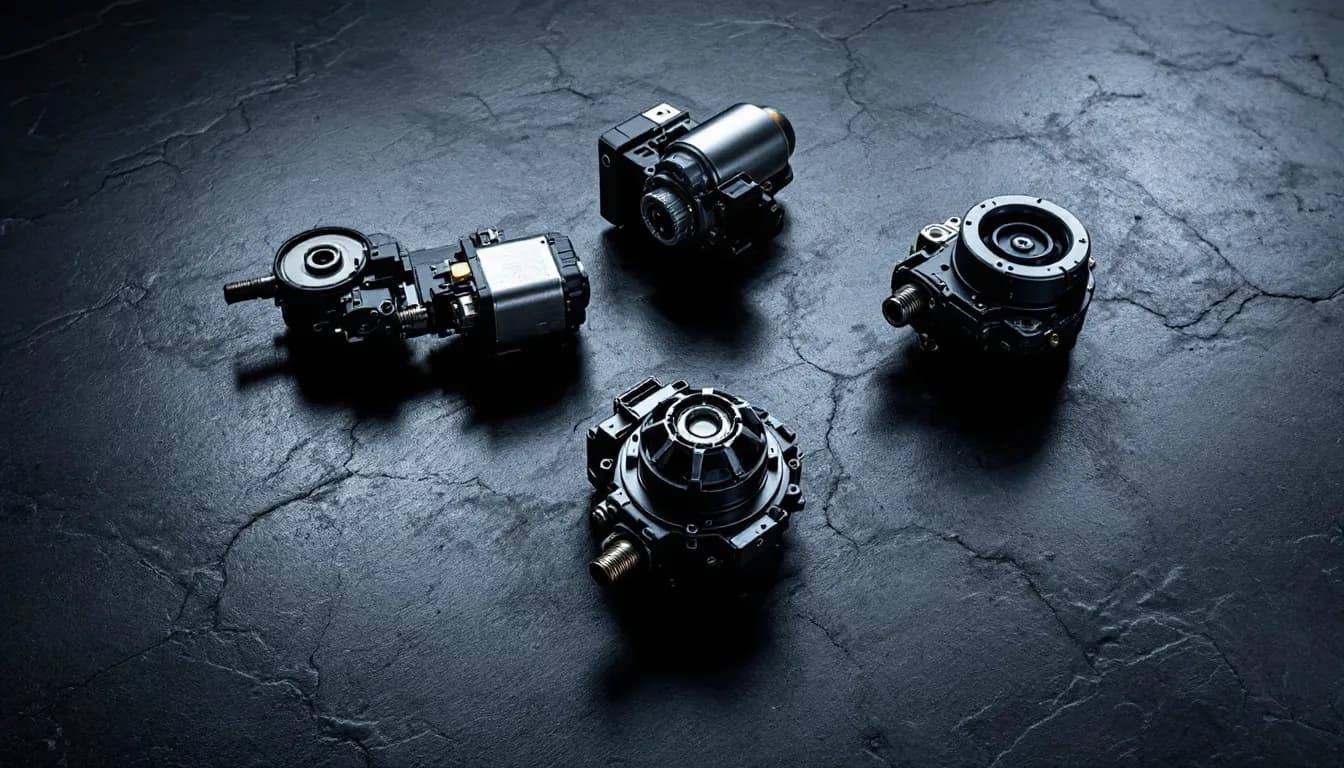
When manufacturers moved to push-button start there was no longer a key rotating anything, so the same function had to be motorized. That motorized assembly is the electronic steering lock. Depending on the manufacturer it is called an ESL, an ELV, an ESCL, or simply a steering column lock, but the hardware concept is the same: a small motor, a pin, a position sensor, and a control circuit that talks to the rest of the car.
The sequence at startup is straightforward and unforgiving. You press the brake and the start button. The vehicle authenticates your key. It then commands the steering lock to retract and, crucially, waits for confirmation that the pin has actually withdrawn. Only then does it permit the starter to engage. If the motor fails, the pin binds, the sensor stops reporting, or the control circuit loses communication, that confirmation never arrives and the car will not crank. It is doing exactly what it was designed to do: refusing to let an engine run with a locked steering column.
The reason manufacturers fitted these at all is theft deterrence. Electronic immobilization plus a steering lock the driver cannot bypass proved highly effective at reducing the theft methods that dominated earlier decades, a shift documented in vehicle theft research from the Insurance Institute for Highway Safety (iihs.org). The trade-off is a component that, when it fails, immobilizes the legitimate owner just as effectively.
The Symptoms, Precisely
The failure has a recognizable fingerprint, and knowing it prevents most of the wasted spending.
The wheel is locked solid. Not stiff, not heavy. Locked, with the small amount of rotational play the pin allows and no more. This alone separates it from most electrical faults.
The car does not crank at all. No starter engagement, no click, no attempt. Accessories, lights, dash, and radio behave normally, which is what makes owners assume the car is basically healthy.
The key is accepted. The dash does not complain about the key. On many vehicles you will see a steering-related message instead, and the absence of a key warning is a meaningful clue.
It may be intermittent at first. A failing actuator often works nine times out of ten before it stops entirely. Owners describe a car that "did it once last month" and then did it permanently three weeks later. Intermittent steering lock behavior is a warning, not a fluke.
On some cars the wheel is locked but the engine still starts. This happens on platforms where the lock and the start authorization are less tightly coupled, and it is arguably more dangerous because the vehicle appears drivable and is not.
Telling It Apart From the Things It Gets Confused With
Three other faults produce a car that will not start. They are separable without guessing, and separating them is free.
A dead or unrecognized key fob normally announces itself with a key-not-detected symbol or message. Manufacturers build a backup for exactly this: holding the fob physically against the start button, or placing it in a designated slot, lets the vehicle read the transponder at close range without relying on the battery-powered radio link. If that starts the car, your fob is the issue and the steering lock is healthy. That is key work.
A failed ignition switch on a bladed-key car produces a different pattern entirely. The key turns fully through every position and nothing electrical happens, or accessories work and crank does not. On those cars the steering lock is mechanical, so a locked wheel with a key that will not turn is usually the mechanical lock loaded against the column rather than an electronic fault. Our ignition repair service page covers that side of the diagnosis.
A weak battery deserves attention before anything is condemned. The steering lock motor draws current, and the modules that supervise it are voltage-sensitive. A battery that starts the car on a warm afternoon can fail to support the lock retraction sequence on a cold morning, producing a steering lock message on entirely healthy hardware. Testing the battery costs nothing and gets skipped constantly.
The clean test sequence is therefore: check the dash message, try the fob against the start button, verify battery condition, and only then treat the steering lock as the suspect.
"The tell I trust most is what the wheel does. If the wheel is locked and everything else in the car is normal, I am already thinking about the column lock before I plug anything in. A dead fob does not lock a steering wheel." — a senior automotive locksmith on the Irving Locksmith Pros team
Which Makes Actually Fitted a Separate Steering Lock
This is the part most owners have never been told, and it changes what a quote should look like.
Mercedes-Benz used a dedicated electronic steering lock through the W204 and W212 era, and it became one of the better-known failure points of that generation. On these cars the steering lock is closely tied to the electronic ignition switch assembly, and the two are frequently discussed together because a fault in that area can present through either. The related guide on Mercedes EZS and EIS ignition module repair covers that assembly directly, and on Mercedes especially the correct first step is establishing which of the two components is actually at fault rather than assuming.
BMW fitted an ELV on a range of models, and it too developed a reputation. The BMW presentation is usually a locked wheel with a steering-lock message and no crank, matching the general pattern. The guide on BMW 5 Series and 7 Series ignition and ELV repair goes into that platform in detail.
Nissan and Infiniti used an ESCL on a wide range of push-button models, and this is probably the highest-volume version of this failure in the DFW area simply because of how many of these vehicles are on the road. The dedicated write-up on Nissan steering lock ESCL failure and the no-start it causes covers that specific fault more thoroughly than this page can.
Audi and Volkswagen fitted electronic steering locks on a number of models, with the added complication that on these platforms the lock is integrated into a security architecture that may require adaptation rather than a plain part swap.
Most Asian and domestic brands never fitted a separate motorized lock at all. This matters enormously and is rarely mentioned. Toyota, Honda, Ford, Chevrolet, and many others largely accomplished the same theft-deterrent goal through immobilization and, on many push-button models, through an electronic function integrated into a larger assembly rather than a discrete motorized column lock. On those vehicles, a no-crank complaint is almost never a steering lock, and anyone quoting you a steering lock replacement for a Camry should be asked to explain their reasoning.
Some FCA vehicles handle the column lock function inside the Wireless Ignition Node rather than as a standalone actuator, which is why a WIN failure on those platforms can produce steering-lock-flavored symptoms without a separate lock module existing at all.
Cost by Make
Irving-area planning guidance as of August 2026. There are no flat prices on this table and that is deliberate. The cost of a steering lock repair depends on the make, the model year, whether the part is available separately or only as part of a larger assembly, whether it requires adaptation to the vehicle, and whether the access is reachable by independent tooling. Anyone quoting a single flat number for "steering lock replacement" without your VIN is guessing.
| Make | Steering Lock Design | What the Repair Involves | Cost Guidance |
|---|---|---|---|
| Mercedes-Benz (W204, W212 era) | Dedicated ESL tied closely to the EZS/EIS assembly | Determine ESL versus ignition module first, then repair or replace and adapt | Quoted after VIN and module confirmation |
| BMW (ELV-equipped models) | ELV column lock module | Confirm ELV versus supply or communication fault, replace and code | Quoted after VIN and module confirmation |
| Nissan and Infiniti (push-button) | ESCL actuator on the column | Confirm actuator versus BCM or circuit, replace and verify | Quoted after VIN and module confirmation |
| Audi and Volkswagen | Electronic lock within a wider security architecture | Diagnose, replace, then adapt to the vehicle | Dealer or specialist — may require an OEM server session |
| FCA twist-knob and push-button (Dodge, Chrysler, Jeep, Ram) | Column lock function handled inside the WIN | Diagnose WIN, then configure and program with vehicle PIN | Quoted after VIN and module confirmation |
| Toyota, Honda, Ford, Chevrolet and most mainstream models | Generally no separate motorized column lock | No-crank is diagnosed elsewhere in the start system | Quoted on-site after inspection |
| Bladed-key vehicles of any make | Mechanical steering lock pin, no electronics | Free the column, inspect cylinder and switch | Diagnostic visit only |
| Any make, current model year or secure-gateway platform | Access controlled by the manufacturer | Feasibility confirmed from VIN before any work begins | Dealer or specialist — may require an OEM server session |
The bottom-left cells are the honest ones. On a bladed-key car with a locked wheel, the answer is frequently free: the mechanical pin is loaded against the column because the car was parked with the wheels turned, and steady pressure on the wheel while gently turning the key releases it. That is not a repair. That is a technique, and any shop that sells you a module for it has not earned the money.
Why This Is a Module Job and Not a Key Job
The distinction determines who you should call and what should happen in your driveway.
Key work is self-contained. Cut a blade, enroll a transponder, register a proximity fob, and the vehicle's existing security system accepts a new credential. Nothing else in the car changes.
A steering lock repair is a different category. The actuator is a powered device operating under the supervision of the vehicle's electronics, and on most affected platforms a replacement is not a part you simply bolt on. It commonly has to be recognized by the vehicle, matched to the vehicle's identity, or brought into the security relationship before the car will accept it and release the column. That is programming, and it places the work alongside our module repair and programming service rather than with key cutting.
Access to the secured data behind that adaptation, for many manufacturers, runs through the National Automotive Service Task Force and its credentialing framework for qualified independent professionals (nastf.org). That framework is the reason a properly credentialed mobile specialist can legitimately do work that people assume must go to a dealer, and it is equally the reason an honest specialist will tell you when your specific platform sits outside what independent tooling reaches.
There is one more reason diagnosis has to come before parts, and it is the expensive one. On a meaningful share of these vehicles the actuator itself is healthy and the fault is a connector, a damaged wire in the column harness, a supply problem, or a supervising module that has stopped commanding the lock correctly. Ordering an actuator on the strength of a dash message alone is how people end up paying for a part and still having a car that will not start.
What a Mobile Visit Looks Like
We come to the vehicle, and on this fault that is not a convenience feature. A car with a locked steering column often cannot be winched or steered onto a flatbed without additional effort, and towing adds real cost and delay to any repair, which the American Automobile Association's roadside guidance sets out plainly (aaa.com).
The visit begins with the free checks in front of you. What the dash actually says. Whether the fob starts the car when held against the button. What the battery and charging system are doing under load. Whether the wheel is genuinely locked or merely heavy. On more visits than you would expect, this stage ends the job.
If the fault is genuinely the steering lock, expect the technician to confirm it through the vehicle's own data rather than by symptom alone, to tell you whether the part is available separately or only as part of a larger assembly on your platform, and to say clearly whether the adaptation is reachable independently or requires a manufacturer session. That conversation should happen before a part is ordered, and the Federal Trade Commission's consumer guidance on estimates and scope in auto repair is a fair standard to hold any shop to including this one (ftc.gov).
Two smaller points belong in any honest version of this. It is worth checking whether your vehicle has an open manufacturer service action related to the fault, since the National Highway Traffic Safety Administration maintains that public record and some steering and starting complaints trace to published actions rather than to ordinary wear (nhtsa.gov). And the engineering standards describing how these electrical assemblies and their diagnostic interfaces are specified are maintained publicly by the Society of Automotive Engineers if you want to understand the design intent (sae.org).
Ownership verification is required without exception. Anyone who can service a steering lock can also create the ability to start and move a vehicle, so we ask for photo identification matching the vehicle paperwork plus registration, title, insurance, or a lease tied to the VIN. Professional standards bodies including the Associated Locksmiths of America build their guidance around exactly that requirement (aloa.org).
Frequently Asked Questions
What does a steering lock malfunction message mean?
It means the vehicle could not confirm that the electronic steering column lock retracted its pin. Push-button vehicles will not permit the starter to engage until that confirmation arrives, so the result is a no-crank with the wheel usually locked solid. The key is typically recognized normally, which is why replacing a fob does not resolve it.
How do I tell a steering lock failure from a dead key fob?
Read the dash and then test the fob. A key problem normally shows a key-not-detected symbol, and holding the fob physically against the start button while pressing it will usually start the car because the vehicle can read the transponder at close range. A steering lock fault shows a steering-related message, the wheel is generally locked, and holding the fob to the button changes nothing.
Which makes actually have an electronic steering lock?
Mercedes-Benz through the W204 and W212 era, a range of BMW models with an ELV, many push-button Nissan and Infiniti vehicles with an ESCL, and a number of Audi and Volkswagen models. Most mainstream Asian and domestic brands never fitted a separate motorized column lock, so on those vehicles a no-crank is almost always something else in the start system.
Can a weak battery cause a steering lock fault?
Yes. The lock motor draws current and the modules supervising it are sensitive to voltage, so a marginal battery can fail to support the retraction sequence even when the hardware is healthy. This is especially common on cold mornings on a battery that seems adequate the rest of the time. Testing the battery is free and should always come before condemning a module.
Is a steering lock repair a key job or a module job?
It is a module job. The actuator is a powered device under electronic supervision, and on most affected platforms a replacement must be recognized or matched to the vehicle before the car will accept it and release the column. That makes it programming work rather than key work, and on some platforms the adaptation requires manufacturer-level access confirmed from the VIN.
Why will you not quote a flat price for steering lock replacement?
Because the cost genuinely varies by make, model year, whether the part is sold separately or only within a larger assembly, whether adaptation is required, and whether the access is reachable by independent tooling. On top of that, a real share of these complaints turn out to be a connector, a harness, a supply problem, or a supervising module rather than the actuator. A number quoted before diagnosis would be a guess.
My steering wheel is locked on an older car with a regular key. Is that the same problem?
No. Bladed-key vehicles use a purely mechanical steering lock pin with no electronics, and a locked wheel there usually means the pin is loaded against the column because the car was parked with the wheels turned or on a slope. Apply steady rotational pressure to the wheel in one direction while gently turning the key, then try the other direction. That releases it in most cases at no cost.
References
- IIHS — vehicle anti-theft technology and theft-pattern research: https://www.iihs.org
- NASTF — credentialed vehicle security data access for independent professionals: https://www.nastf.org
- ALOA — professional locksmith standards and ownership verification guidance: https://www.aloa.org
- SAE — vehicle electrical systems and diagnostic interface standards: https://www.sae.org
- NHTSA — vehicle recalls and manufacturer service actions: https://www.nhtsa.gov
- FTC — auto repair estimates, scope and consumer rights: https://www.ftc.gov
- AAA — roadside assistance and towing cost guidance: https://www.aaa.com
If your steering wheel is locked and the car will not crank, call or text 817-842-1751 with the make, model year, and the exact wording on the dash before you buy a fob or a part. We will tell you whether you are looking at a steering lock, a key, a battery, or something else entirely, and whether the repair is reachable without a dealer session on your specific vehicle. Mobile service throughout Irving, Las Colinas, and the surrounding DFW cities.
Reviewed by a licensed automotive locksmith technician at Irving Locksmith Pros. Texas DPS Private Security regulated. Mobile service; ownership verification required.