Work Truck Won't Start After a Winch, Inverter or Upfitter Install (Irving, TX)
Truck ran fine until the upfit. How winches, inverters, remote start and telematics cause immobilizer no-starts in Irving TX, and the fix.
The Short Answer
As of August 2026, the pattern is consistent: if your truck started fine last week and refuses today, and the only thing that changed is a winch, inverter, remote start, ladder rack, telematics box or utility-bed upfit, the install is the prime suspect — not the key. Three mechanisms cause it: a voltage event during the install that scrambled the immobilizer's stored data, a splice into the ignition or security circuit, or an aftermarket remote-start bypass module that has failed. All three are fixable, and the order you attack them in decides the bill.
Call 817-842-1751 with what was installed and when. That one detail usually shortens the diagnosis dramatically.
Why Upfits Break Immobilizers So Reliably
Work trucks in Irving get modified constantly. A truck leaves the dealer as a bare chassis and arrives on a jobsite in Las Colinas with a service body, a winch, a 2,000-watt inverter, an amber light bar, a telematics unit and a remote start. Every one of those touched the electrical system.
The immobilizer is unusually sensitive to that, for a reason worth understanding. It stores cryptographic key data in non-volatile memory and it participates in a timed handshake across the vehicle's data network every time you start the engine. That makes it vulnerable to exactly the things an upfit does: interrupting power, introducing electrical noise, adding parasitic loads, and splicing new devices into circuits the security system depends on.
Manufacturers and standards bodies specify vehicle electrical behavior — voltage tolerances, transient limits, network timing — precisely because these systems assume a clean environment (sae.org). Good upfitters respect that. Rushed ones do not, and the immobilizer is often the first thing to complain.
The Three Mechanisms, In Order of Likelihood
1. A voltage event during installation
This is the most common by a wide margin, and it is usually invisible because nobody thinks of it as damage.
The installer disconnected the battery — or should have, and did not. A winch got wired to the battery with the key on. Someone welded a bracket to the frame or bed without disconnecting both batteries and isolating the electronics. A big inverter got connected and drew a hard inrush current. A dead battery got jumped from a running truck with the leads briefly reversed.
Any of those can corrupt what the immobilizer or body control module has stored. The truck then rejects a key that is physically perfect, which is maddening because the key looks and feels fine and worked yesterday. This is the same failure family we cover in the no-start after a battery change guide; an upfit is simply a battery disconnection with more current involved.
The fix is usually a relearn or reprogramming session rather than new hardware, which is the good news.
2. A splice into the ignition or security circuit
Aftermarket devices need to know when the truck is running. The correct way to get that signal is a manufacturer-supported connection point. The fast way is to find a wire that goes hot with the key and tap it.
When that tapped wire happens to be in the ignition switch circuit, the immobilizer antenna circuit, or a network line, you get a truck that starts intermittently, starts only when the accessory is off, or stops starting entirely once a connection corrodes. Scotchlok-style taps are especially prone to this — they nick the conductor, and six months of vibration and Texas humidity finish the job.
The signature to look for: the fault correlates with the accessory. The truck will not start with the light bar switched on, or it started fine until the inverter was used hard, or the problem appeared exactly one week after the install when a marginal splice finally opened up.
3. An aftermarket remote-start bypass module
This one deserves its own explanation because it surprises people, including some mechanics.
An aftermarket remote start has to solve a problem: the truck will not run without a valid key present, but there is no key in the ignition when you start it from the parking lot. Installers solve it with a bypass module — a small box, usually hidden behind the dash, which either holds a cloned transponder or is programmed to emulate the security handshake.
That module is now a permanent participant in your truck's security system. When it fails, when its harness comes loose, when its stored data corrupts after a voltage event, or when it is disturbed by the next upfit, the truck can refuse to start with the real key in your hand. Nothing is wrong with your key at all.
This is why we ask "does this truck have remote start?" early on every no-start call. If the answer is yes and it was aftermarket rather than factory, that box moves straight to the top of the suspect list.
What To Check Before You Call Anyone
Ask what was installed, by whom, and when. Write it down. If the no-start began within a couple of weeks of an install, that is not coincidence.
Watch the security light with the key on, before cranking. If it stays lit, flashes persistently, or lights the moment the engine dies, the anti-theft system is involved and you are in immobilizer territory.
Try the spare key. If the spare works, the problem is that key. If both behave identically, the truck is the problem.
Test with accessories off, then on. Kill the inverter, the light bar and any switched accessory, then try. A difference is a strong pointer at a splice.
Check battery voltage and both grounds. Upfits add load, and a truck that has been living at low voltage will produce security faults that look like key faults. Corroded or shared grounds are a classic upfit shortcut.
Do not start buying modules. This is the expensive mistake, and we will come back to it.
How We Diagnose It
We read the security and network fault data first. The module usually records why it refused: no transponder detected, invalid transponder, or a communication failure between modules. Those are three different repairs and guessing between them is how people pay for parts they never needed.
If the truck reports it saw no transponder at all, the antenna circuit or the key is suspect — and on a truck with aftermarket remote start, so is the bypass module sitting between them. If it reports an invalid transponder, stored data is the issue and a relearn is the likely fix. If modules cannot talk to each other, we are looking at wiring, a module that was never coded, or a genuinely failed module, which is where immobilizer control module work comes in.
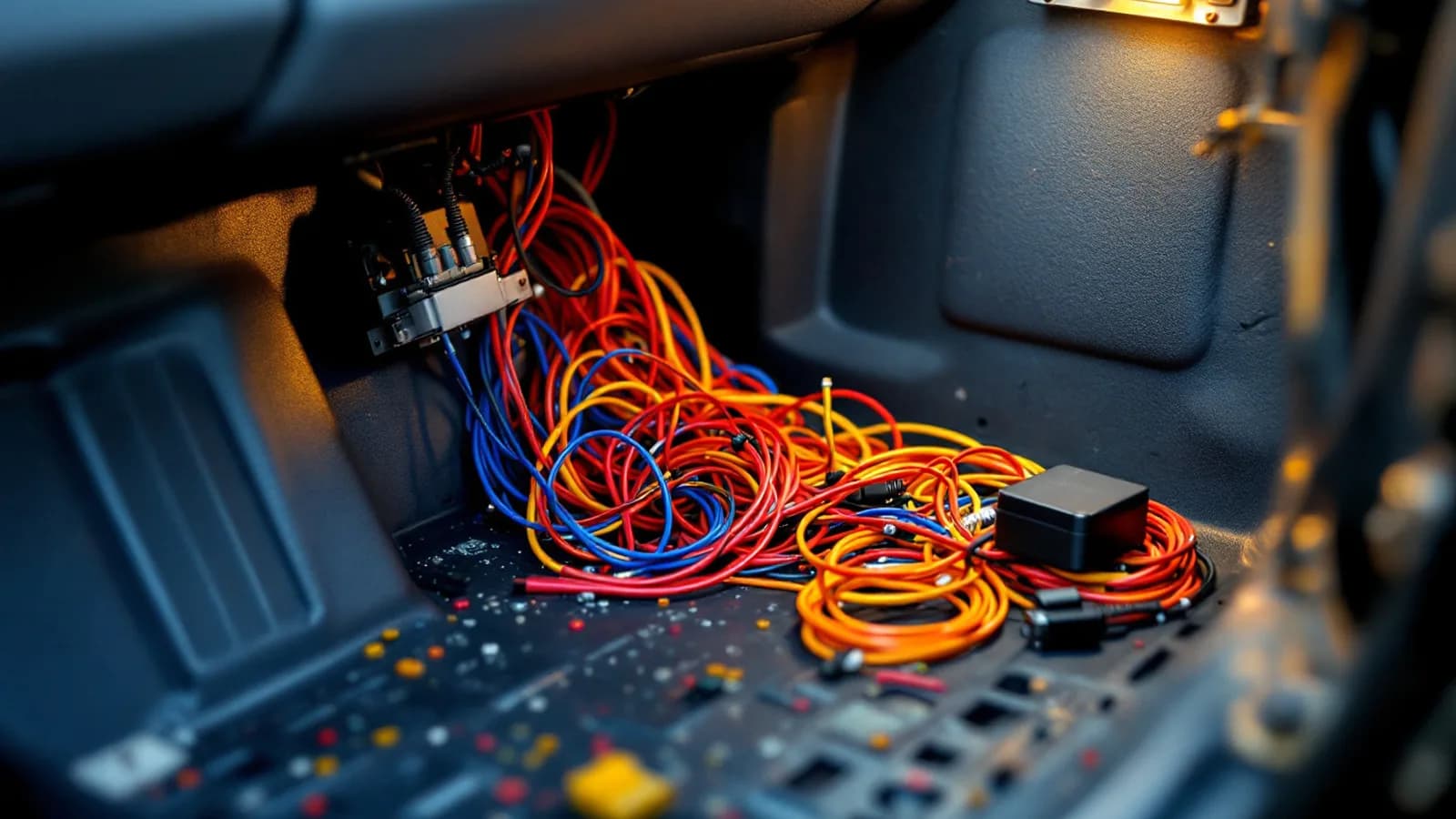
On upfitted trucks we also physically inspect what was added. Behind the kick panel and above the fuse box is where the evidence lives: tap connectors on ignition wiring, a bypass module dangling on its harness, grounds stacked onto a single screw, an inverter feed run alongside a data line. Ten minutes with a panel off answers questions a scan tool cannot.
What It Costs in Irving
| Root cause | What the fix involves | Irving price band |
|---|---|---|
| Immobilizer data corrupted by a voltage event | Key relearn / reprogramming session | Quoted after diagnosis |
| Failed or unreadable transponder key | New key cut and programmed | $150–$275 |
| Proximity / push-to-start key failure | Smart key origination and programming | $300–$500 |
| Failed aftermarket remote-start bypass module | Identify, remove or replace, restore correct security path | Quoted after inspection |
| Bad splice or tap in the ignition circuit | Trace, repair to a proper connection, verify | Quoted after diagnosis |
| Ground or low-voltage fault from added load | Correct grounding, verify security behavior | Quoted after diagnosis |
| Module replaced but never coded to VIN | Module programming to the VIN | Quoted after VIN and module ID |
| Truck open but keys locked inside | Non-destructive entry | $75–$145 |
Diagnosis-dependent rows are quoted after we look, because that is the only honest way to price them. Anyone who gives you a firm number for "immobilizer problem after an upfit" over the phone is quoting a job nobody has identified yet.
The Sequence That Saves the Most Money
The costly version of this story is always the same. Truck will not start, somebody says "bad immobilizer" or "bad ECM," a replacement gets bought, it goes in, and the truck is exactly as dead as before — because the real fault was a $4 tap connector, or because the new module was never coded to the VIN.
The order that works:
- Document what was installed. Free, and often decisive.
- Read the security fault data. Let the truck say why it refused.
- Rule out the key with a spare or a known-good key.
- Inspect the aftermarket wiring physically.
- Only then consider hardware — and confirm a programming path exists for that module before buying it.
Steps one through four cost a diagnostic visit. Step five, done out of order, costs a parts bill plus a diagnostic visit anyway.
There is a security-architecture reason modules must be coded to a specific vehicle: it stops a stolen truck from being revived with donor parts. Legitimate access to that security data runs through the National Automotive Service Task Force framework (nastf.org), and the Associated Locksmiths of America publishes the professional standards for who should be performing it (aloa.org). A provider working outside those channels should not be receiving your VIN.
Preventing It on the Next Upfit
If you run a fleet and you upfit regularly, three rules eliminate most of these calls.
Disconnect both batteries before electrical work or welding, every time. This is the single highest-value habit. It is also the one most often skipped because it costs ten minutes.
Require manufacturer-supported connection points in writing. No tap connectors on ignition or network wiring. Put it in the upfitter's scope of work. It is a reasonable ask and good shops already do it.
Verify a start-and-run cycle before the truck leaves the upfitter. Not just "it turned on" — a full start, run, shut down, restart. Immobilizer faults introduced during an upfit frequently do not surface until the next cold start, by which time the truck is on a jobsite and the upfitter is a phone call away.
And keep a spare key for every truck. It is the cheapest diagnostic tool in the fleet, it turns a guess into a fact in thirty seconds, and it removes an entire failure mode from your operation. The same logic applies to any vehicle you depend on, which is why we make the case in the spare key cost guide for daily drivers as strongly as we do for fleets.
"When somebody tells me the truck was fine until the upfit, I take the kick panel off before I take a scan tool out. Most of the time the answer is hanging right there on a tap connector, and no amount of module swapping was ever going to fix it." — licensed automotive locksmith technician, Irving Locksmith Pros
Frequently Asked Questions
My truck stopped starting right after a winch install. Is that a coincidence? Very unlikely. Winch installs involve high-current connections at the battery and are often done without disconnecting the batteries first. That kind of voltage event can corrupt the immobilizer's stored key data, so the truck rejects a key that is physically fine. It usually resolves with a relearn rather than new hardware.
Can aftermarket remote start stop my truck from starting with the real key? Yes. Aftermarket remote start relies on a bypass module that participates in the security handshake. If that module fails, comes loose, or has its data corrupted, the truck can refuse a perfectly good key. On any no-start we ask whether remote start was factory or aftermarket, because it changes the diagnosis.
How do I tell an upfit problem from a bad key? Try the spare. If the spare starts the truck, the first key is the issue. If both fail identically, the truck is the issue, and if the fault appeared within a few weeks of an install, the install is the leading suspect.
Should I just replace the immobilizer module? Not before diagnosis. Most upfit-related no-starts are wiring, a bypass module, or corrupted data rather than a failed module. Replacing hardware first commonly leaves you with a parts bill and the same symptom, plus the coding work still to do.
Do you come to jobsites? Yes. We are fully mobile across Irving, Las Colinas, Grand Prairie, Euless, Coppell and the surrounding DFW cities. Diagnosis, key programming, relearns and most module coding happen at the truck, so it does not need to be towed.
Will you work on a truck that another shop already worked on? Yes, and it is a large share of what we do. We read the fault data and inspect the wiring rather than assuming the previous diagnosis was right or wrong, and we tell you plainly what we find.
What do I need to prove the truck is ours? Registration, title, or a lease agreement in the company name, plus identification connecting you to that business. We verify ownership on every job without exception.
References
- SAE International — vehicle electrical, network and control module engineering standards: https://www.sae.org
- National Automotive Service Task Force (NASTF) — secure vehicle security-data access: https://www.nastf.org
- Associated Locksmiths of America (ALOA) — professional standards and automotive programming: https://www.aloa.org
- National Highway Traffic Safety Administration — vehicle theft prevention and immobilizers: https://www.nhtsa.gov
- Federal Trade Commission — hiring a locksmith and avoiding scams: https://www.ftc.gov
- AAA — roadside breakdown and no-start consumer guidance: https://www.aaa.com
- Insurance Institute for Highway Safety — vehicle anti-theft technology: https://www.iihs.org
Reviewed by a licensed automotive locksmith technician at Irving Locksmith Pros. Texas DPS Private Security regulated. Mobile service; ownership verification required.