Hyundai & Kia SMARTRA Immobilizer Module Programming in Irving TX (2026)
2026 guide to the Hyundai and Kia SMARTRA immobilizer control module in Irving TX. What it does, failure symptoms, programming vs replacement, real costs.
The Part Nobody Knows They Own Until It Stops Working
There is a moment in a lot of Hyundai and Kia no-start calls where the conversation changes direction. The owner has already replaced the key. Sometimes twice. The engine cranks confidently, catches for a heartbeat, and dies. The immobilizer light on the cluster is doing something it never used to do. And the new key, which cost real money, behaves exactly like the old one.
At that point the key was never the problem. The problem is the module that judges the key.
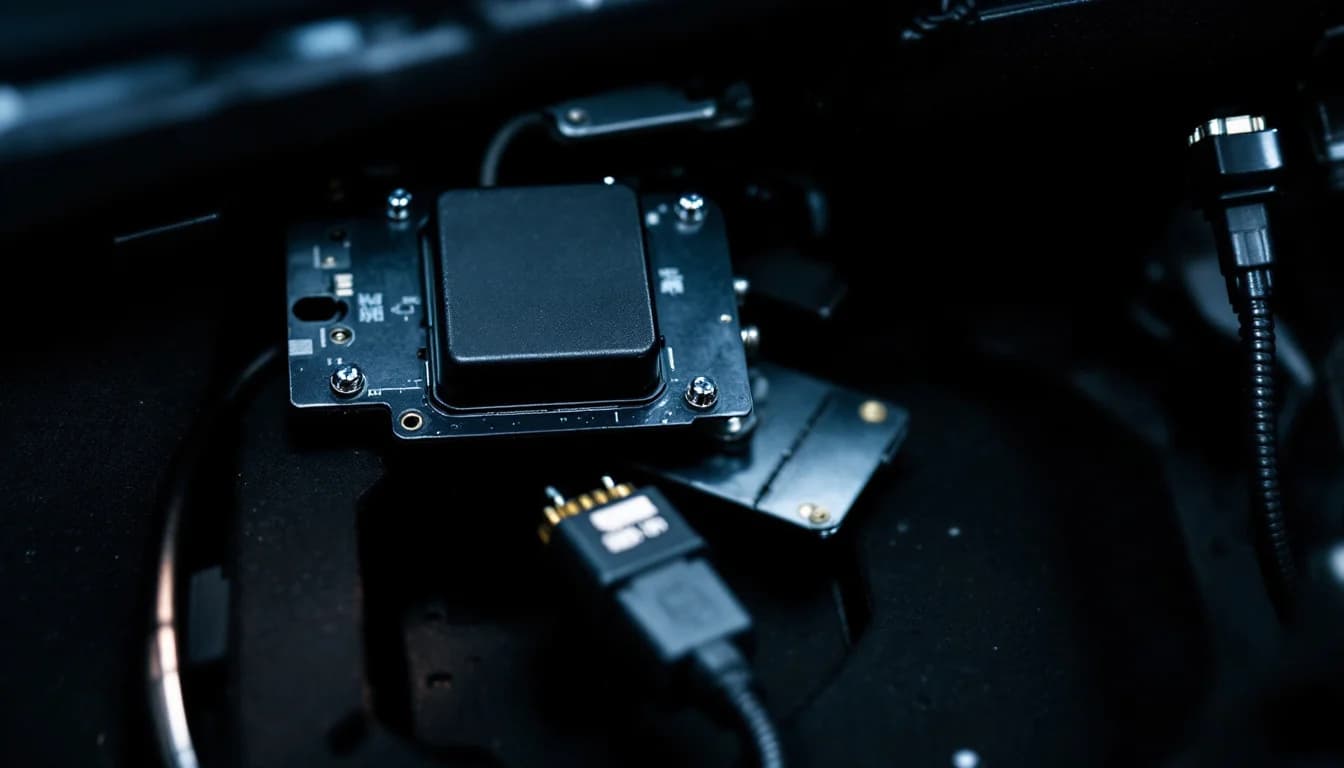
On many Hyundai and Kia vehicles that module is the SMARTRA immobilizer control unit — the name is a contraction of smart transponder antenna, and it is the small control unit that sits between your key and your engine control module and decides whether the engine is allowed to keep running. Reviewed and updated as of August 2026, it remains one of the most commonly misdiagnosed components in this entire category, because every symptom it produces looks exactly like a key problem from the driver's seat. Current pricing is unchanged: key generation prices under our published $150-$275 transponder and $300-$500 smart key bands, while module programming labor runs $100-$400 plus the part.
This is a module article rather than a key-price article. If you are here for key costs, Hyundai Kia key replacement and immobilizer cost is the page you want. If your car cranks and dies and you have already bought a key that did not fix it, keep reading. The same misdiagnosis happens on other platforms - the pattern where a control unit comes back from a power interruption refusing to recognize a perfectly good key is one we now see most often on dual-battery trucks, documented in HD diesel will not start after a battery swap or jump, and the broader engine-computer version of the same money question is in diesel ECM and PCM programming cost. Call or text 817-842-1751 with the year, the VIN and the exact symptom.
Where SMARTRA Sits in the System
Think of a modern Hyundai or Kia immobilizer as a three-party conversation, and every party has to agree.
The key carries a transponder — a passive chip with no battery of its own that responds when it is energized by a coil antenna around the ignition lock. That antenna and its ring are the first physical link in the chain.
The immobilizer control unit reads what the transponder says, checks it against the credentials it has been taught to trust, and then vouches for the key to the engine side. On bladed-ignition Hyundai and Kia vehicles this role is filled by the SMARTRA unit, typically tucked behind the dash near the steering column. On push-button-start vehicles the equivalent role is handled by a smart key control module that talks to a proximity fob by radio rather than to a chip on an antenna ring — different hardware, same job description.
The engine control module does the actual enforcement. It receives the verdict and either permits fuel and spark to continue or shuts the engine down after a second or two. That "catches and dies" behavior is not a fuel problem or an ignition problem. It is the engine control module obeying an immobilizer that said no.
The crucial detail: the immobilizer unit and the engine control module are paired to each other. They are not two independent parts that happen to be installed in the same car. They hold a shared relationship established when the vehicle was built or when they were last taught to each other, and that pairing is exactly what makes an immobilizer worth having.
The Insurance Institute for Highway Safety (iihs.org) has documented for years how strongly immobilizer coverage tracks with reduced theft losses on the covered models, and the National Highway Traffic Safety Administration (nhtsa.gov) maintains the federal theft-prevention framework that drove this hardware into ordinary economy cars rather than leaving it on luxury models. The system is doing its job. Sometimes it does it to you.
Symptoms That Point at the Module Rather Than the Key
No single symptom is conclusive. Patterns are.
Engine cranks, starts, and dies within one to three seconds — repeatedly, with every key. This is the signature immobilizer denial. A worn ignition switch or a fuel problem rarely produces this exact rhythm this consistently.
The immobilizer or key-shaped warning lamp behaves abnormally. It should illuminate briefly at key-on and then extinguish. A lamp that stays lit, flashes in a pattern, or blinks continuously after the engine dies is the system telling you it did not accept a credential.
A brand-new, properly cut and properly programmed key behaves identically to the old one. If two independently produced keys fail the same way, the common element is not the keys.
Intermittent starting that correlates with temperature, humidity or vibration. Failing electronics often work cold and fail warm, or vice versa. An immobilizer fault that comes and goes with weather is a strong signal for a hardware problem rather than a lost credential.
Communication faults on a scan tool. A tool that cannot establish communication with the immobilizer unit at all, or reads implausible data from it, is a much stronger signal than any dashboard behavior.
Symptoms that started immediately after unrelated work. Water intrusion under the dash, a jump-start done backwards, an aftermarket alarm or remote-start installation, or a collision repair near the column can all take out a module that was fine the week before.
"The tell I trust most is two different keys failing the same way. Keys fail randomly. Modules fail consistently — and consistency is what tells you which side of the conversation went quiet." — a senior automotive locksmith on the Irving Locksmith Pros team
Programming, Repair, or Replacement — Three Different Jobs
These get used interchangeably in conversation and they are not the same work.
Programming or re-coding an existing module. The hardware is fine but the stored data is wrong: keys were removed, a pairing was disturbed, or a previous repair left the module in an inconsistent state. This is the least invasive outcome and the one worth ruling in first.
Component-level repair. The module has a specific, addressable hardware fault — a damaged solder joint, a failed component, corrosion from water intrusion. Repair keeps the module's original identity intact, which is frequently a meaningful advantage because the pairing information lives inside it.
Replacement plus programming. The module is not recoverable. A replacement has to be installed and then taught to this specific vehicle — VIN-coded where applicable, paired to the engine control module, and taught the keys you intend to use. A replacement module that is simply plugged in will not start the car. That step is not optional and it is the majority of the labor.
The used-module trap deserves its own paragraph. Owners regularly find a cheap immobilizer unit from a salvage vehicle and assume it is a drop-in part. It usually is not. That unit typically arrives still holding the relationship it had with its original engine control module and its original keys. Installing it commonly produces a car that is no closer to starting and a diagnostic picture that is now harder to read than it was before. If a donor part looks like the answer, get the plan confirmed before you buy — not after.
Security Access, Honestly Explained
This is the part of module work that surprises people, so it is worth being direct about.
Manufacturers deliberately restrict the data and procedures required to teach credentials to an immobilizer. That restriction is the entire point — an immobilizer anyone could re-teach in a parking lot would not deter anything. Legitimate independent service providers obtain that access through structured, identity-verified channels rather than around them. The National Automotive Service Task Force (nastf.org) exists specifically to formalize how qualified, vetted providers request vehicle security information, and ownership verification is the front door of that entire framework.
The practical consequences for you:
Ownership verification is mandatory, not decorative. Photo identification plus documentation tying you to that exact VIN — registration, title, insurance card or a lease. A provider willing to skip that step for you would skip it for someone else standing at your car next week. The Federal Trade Commission (ftc.gov) treats a skipped ownership check, along with a phone quote far below everyone else's, as the two clearest signs of a locksmith worth walking away from.
Some work is diagnostic-port work and some is bench work. Where the vehicle and the fault allow it, everything happens through the diagnostic connector — a physical and signaling interface standardized in large part through SAE International (sae.org) work, which is why one tooling platform can serve many brands. Where the module cannot be reached that way, the job becomes component-level work with a different scope and a different price. Our fuller explanation of that split is OBD programming vs EEPROM bench work.
A real diagnosis precedes a real quote. Anyone quoting a firm module price over the phone before seeing the vehicle is guessing.
What This Costs in Irving
Module work does not price like a key, because the work is not uniform. Here is how we quote it honestly.
| Job component | What determines it | How we price it |
|---|---|---|
| Diagnosis | Confirming module vs key vs wiring | Quoted before work begins |
| Re-coding an existing module | Whether the hardware is sound | Depends on the fault found |
| Component repair | The specific failure and access required | Quoted after inspection |
| Replacement module | Part availability and VIN coding required | Part cost varies widely by model |
| Key or fob re-marrying | Transponder vs smart key | $150 – $275 transponder / $300 – $500 smart key |
| Emergency lockout, if applicable | Access method only | $75 – $145 |
The key portion follows our published bands because keys are a known quantity. The module portion does not, because "replace a module" can mean a routine coding job or a part that is difficult to source. We give an exact quote after we see the VIN and the module — that is not a hedge, it is the only honest way to price this work.
If your diagnosis lands on a different module entirely, we have dedicated walkthroughs for the two most common neighbors: BCM programming and replacement for body control module faults, and TCM programming for transmission control module work. The service page covering all of it is module repair and programming.
Before You Spend Anything, Rule Out the Cheap Causes
A surprising share of "immobilizer failure" calls end without any module work at all. Check these first.
Vehicle battery voltage. Low or marginal voltage produces bizarre electronic behavior across every module in the car and causes programming routines to fail midway. A car that has sat for two weeks may be presenting a voltage problem wearing an immobilizer costume.
The key itself, physically. A transponder chip can be cracked by a hard drop. A fob can be killed by water. If a second key exists and behaves differently, that is real information — write down exactly how each one behaves.
Recent electrical work. Aftermarket alarms, remote starters, stereo installations and improvised repairs near the column are a recurring source of immobilizer faults. Mention any of it up front.
Aftermarket or previously repaired modules already in the car. If the vehicle has a history you did not create — a rebuilt title, a prior theft recovery, a salvage record — say so. That history changes both the diagnosis and the expected procedure, and it is far better raised on the phone than discovered halfway through.
We serve Irving, Las Colinas, Grand Prairie and the surrounding cities, and because an immobilizer fault usually leaves the vehicle undriveable, mobile diagnosis is the practical option — AAA (aaa.com) roadside guidance makes the same general point, that relocating an immobilized vehicle frequently costs more than the work itself. Our brand page for Hyundai is Hyundai, and the Kia page is Kia.
Frequently Asked Questions
What is the SMARTRA module in a Hyundai or Kia?
It is the immobilizer control unit — the name comes from smart transponder antenna. It reads the transponder chip in your key through the coil antenna at the ignition, checks it against credentials it has been taught to trust, and then tells the engine control module whether the engine is allowed to keep running. Push-button-start vehicles use a smart key control module in the same role, communicating with a proximity fob by radio instead.
Can a bad immobilizer module stop my car from starting?
Yes, and it produces a very specific pattern: the engine cranks, catches for one to three seconds, and dies, usually with abnormal behavior from the immobilizer warning lamp. Because the engine control module enforces the shutdown, it looks like a fuel or ignition problem from the driver's seat when it is actually an authorization failure.
How do I know it is the module and not my key?
The strongest signal is two independently produced keys failing in exactly the same way. Keys fail randomly; modules fail consistently. Other strong signals are a scan tool that cannot communicate with the immobilizer unit, symptoms that track with temperature or vibration, and a fault that appeared immediately after water intrusion, a bad jump-start or an aftermarket alarm installation.
Does a replacement immobilizer module need programming?
Always. A replacement arrives knowing nothing about your vehicle. It must be installed, VIN-coded where applicable, paired to your engine control module, and taught the keys you intend to use. A module that is simply plugged in will not start the car, and that programming is the majority of the labor on the job.
Can I install a used module from a salvage vehicle?
Usually not successfully. A used immobilizer unit typically still holds the relationship it had with its original engine control module and its original keys, so installing it commonly leaves you no closer to starting and with a harder diagnostic picture than before. If a donor part looks like the answer, confirm the plan before buying rather than after.
How much does SMARTRA module work cost in Irving TX?
It depends on whether the job is a re-code, a component repair, or a replace-and-program, and on how much key work is involved. The key portion follows our published bands — about $150 to $275 for a transponder key and $300 to $500 for a smart key. The module portion varies with part availability and access, so we give an exact quote after we see the VIN and the module.
Can this work be done at my location?
Usually yes, and it is often the practical choice, because an immobilizer fault typically leaves the vehicle undriveable. We bring diagnostic and programming equipment to your driveway, workplace or roadside location in the Irving area and complete the work on-site whenever the job allows. Where the specific fault requires component-level bench work, we will tell you that during diagnosis.
Get an Actual Diagnosis Before Buying Another Key
The most expensive path through a Hyundai or Kia immobilizer fault is buying keys until one works. If two keys have already failed the same way, more keys will not change the outcome — the conversation between the module and the engine control module is where the fault lives.
Irving Locksmith Pros diagnoses immobilizer faults on-site, quotes the diagnosis before starting, and tells you plainly when a vehicle needs a dealer instead. Call or text 817-842-1751, email contact@irvinglocksmithpros.com, or use the contact page with your year, VIN, and a description of exactly what the engine and the immobilizer lamp are doing.
References
- Insurance Institute for Highway Safety — immobilizer coverage and vehicle theft loss data: https://www.iihs.org
- National Highway Traffic Safety Administration — vehicle theft prevention standards and anti-theft technology: https://www.nhtsa.gov
- National Automotive Service Task Force — secure vehicle security-data access and ownership verification: https://www.nastf.org
- SAE International — automotive engineering and diagnostic connector standards: https://www.sae.org
- Federal Trade Commission — hiring a locksmith and avoiding estimate scams: https://www.ftc.gov
- Associated Locksmiths of America — professional automotive locksmith standards: https://www.aloa.org
- AAA — consumer guidance on car keys, no-start situations and roadside service: https://www.aaa.com
Reviewed by a licensed automotive locksmith technician at Irving Locksmith Pros. Texas DPS Private Security regulated. Mobile service; ownership verification required.